Water leakage is one of the most frustrating problems homeowners face. Whether it’s a damp wall, ceiling stain, peeling paint, or mold growth, the visible damage is often far from the actual source of the leak. Many people spend money on repairs only to discover that the leakage returns because the root cause was never identified.
Understanding how to find the exact source of water leakage is the first step toward a permanent solution. Proper leakage detection can save time, reduce repair costs, and prevent long-term structural damage.
Why Finding the Exact Source of Water Leakage is Important
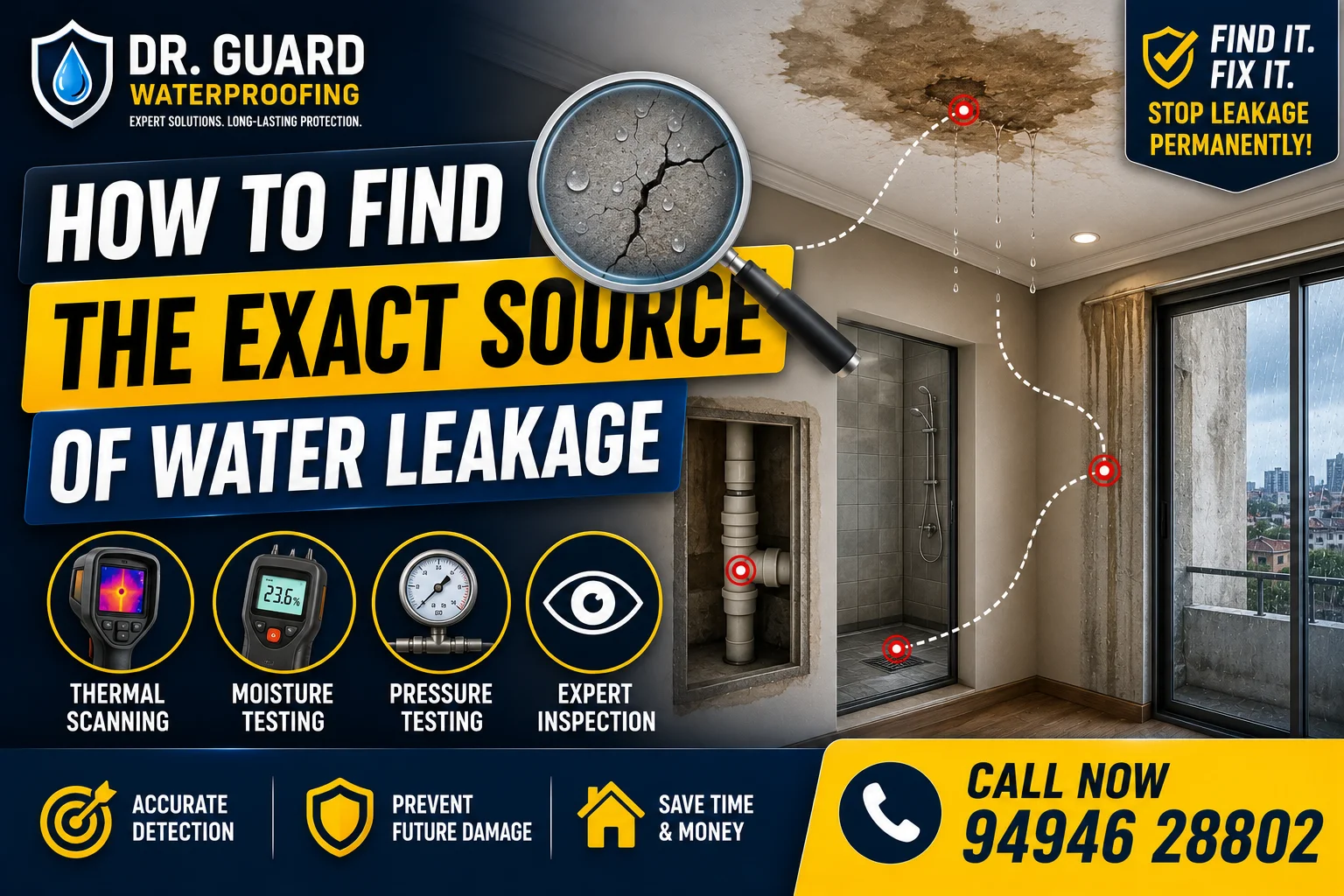
Water does not always appear where it enters the building. It can travel through concrete slabs, walls, pipes, and structural joints before becoming visible.
If the actual source is not identified:
- Leakage may continue after repairs
- Dampness can spread to other areas
- Repair costs increase
- Structural damage may worsen
- Mold and fungus can develop
This is why accurate leakage detection is essential before starting any waterproofing work.
Common Sources of Water Leakage
Before locating the exact source, it’s important to understand where leakage commonly originates.
Terrace Cracks
Rainwater enters through cracks and damaged waterproofing layers.
Bathroom Leakage
Water seeps through floor tiles, grout joints, and floor traps.
Hidden Plumbing Leaks
Concealed pipes inside walls and floors may leak without visible signs.
External Wall Seepage
Rainwater enters through cracks in exterior walls.
Water Tank Leakage
Damaged overhead or underground tanks can allow water to escape into surrounding structures.
Basement Seepage
Groundwater can enter through foundation walls and floors.
Signs That Indicate Hidden Water Leakage
The source of leakage is often hidden, but certain warning signs can help identify a problem.
Look for:
- Damp patches on walls or ceilings
- Peeling paint
- Bubbling plaster
- Mold and fungus growth
- Musty odors
- Water stains
- Unexplained increase in water bills
These signs indicate that moisture is entering the building somewhere.
How to Find the Exact Source of Water Leakage
1. Inspect the Area Above the Leakage Spot
A common mistake is assuming the source is directly above the visible damage.
Water can travel considerable distances before appearing.
Check:
- The floor above
- Bathrooms
- Terraces
- Balconies
- Plumbing lines
This often helps narrow down the possible source.
2. Check for Terrace Cracks and Waterproofing Damage
If leakage becomes worse during rain, the terrace may be responsible.
Inspect for:
- Hairline cracks
- Damaged waterproof coatings
- Water ponding
- Open joints
Terrace waterproofing failure is one of the leading causes of leakage in Hyderabad homes.
3. Examine Bathroom Areas
Bathrooms are a major source of hidden leakage.
Look for:
- Missing grout
- Loose tiles
- Floor trap issues
- Water accumulation around fittings
Leakage from bathrooms often affects ceilings and walls in lower floors.
4. Monitor Water Bills
A sudden increase in water consumption can indicate a concealed plumbing leak.
Hidden pipe leaks often continue unnoticed for long periods.
If water usage rises unexpectedly, professional inspection may be required.
5. Inspect External Walls
During the rainy season, water may enter through:
- Wall cracks
- Damaged plaster
- Open joints
- Window gaps
External wall seepage often causes damp patches inside the building.
Modern Methods Used to Find the Exact Source of Water Leakage
Thermal Scanning
Thermal scanning is one of the most advanced leakage detection methods available today.
Infrared cameras identify temperature variations caused by hidden moisture.
Benefits:
- Non-destructive inspection
- Accurate moisture detection
- Fast diagnosis
This method helps locate hidden leakage without breaking walls or tiles.
Moisture Meter Testing
Moisture meters measure the amount of moisture inside walls and ceilings.
They help determine:
- The severity of water damage
- Moisture spread patterns
- Potential leakage zones
Pressure Testing
Pressure testing is commonly used for plumbing systems.
It helps identify:
- Hidden pipe leaks
- Weak connections
- Damaged pipelines
This method is particularly useful in bathrooms and kitchens.
Visual Inspection by Experts
Experienced waterproofing professionals inspect:
- Structural cracks
- Waterproofing systems
- Drainage conditions
- Construction joints
A professional assessment often reveals issues that homeowners overlook.
Why DIY Leakage Detection Often Fails
Many homeowners attempt to fix visible dampness without identifying the source.
Common mistakes include:
- Repainting damp walls
- Applying temporary sealants
- Repairing the wrong area
Without proper diagnosis, the actual leakage source remains active.
When to Call a Professional Leakage Detection Expert
Professional assistance is recommended if:
- Leakage keeps returning
- The source cannot be identified
- Dampness spreads rapidly
- Multiple areas are affected
- Structural damage is visible
Advanced equipment can quickly locate hidden moisture and prevent unnecessary repairs.
How Dr. Guard Waterproofing Helps Detect Hidden Leakage
Professional companies like Dr. Guard Waterproofing use advanced leakage detection techniques including:
- Thermal scanning
- Moisture meter testing
- Structural inspections
- Waterproofing assessments
These methods help identify the exact source of leakage and recommend the most effective waterproofing solution.
Benefits of Finding the Exact Leakage Source
- Permanent leakage solutions
- Reduced repair costs
- Faster problem resolution
- Protection against structural damage
- Prevention of mold growth
- Improved indoor comfort
Also Read: Top Reasons for Ceiling Leakage in Hyderabad Apartments
Conclusion
Knowing how to find the exact source of water leakage is crucial for solving leakage problems permanently. Visible signs such as damp walls and ceiling stains are often only symptoms of a deeper issue hidden within the structure.
By using professional leakage detection methods such as thermal scanning, moisture testing, and detailed inspections, homeowners can identify the root cause of leakage and avoid costly recurring repairs. Early detection and proper waterproofing are the keys to keeping your home safe, dry, and damage-free.
Also, you can check out our social media handles on Instagram, YouTube.

