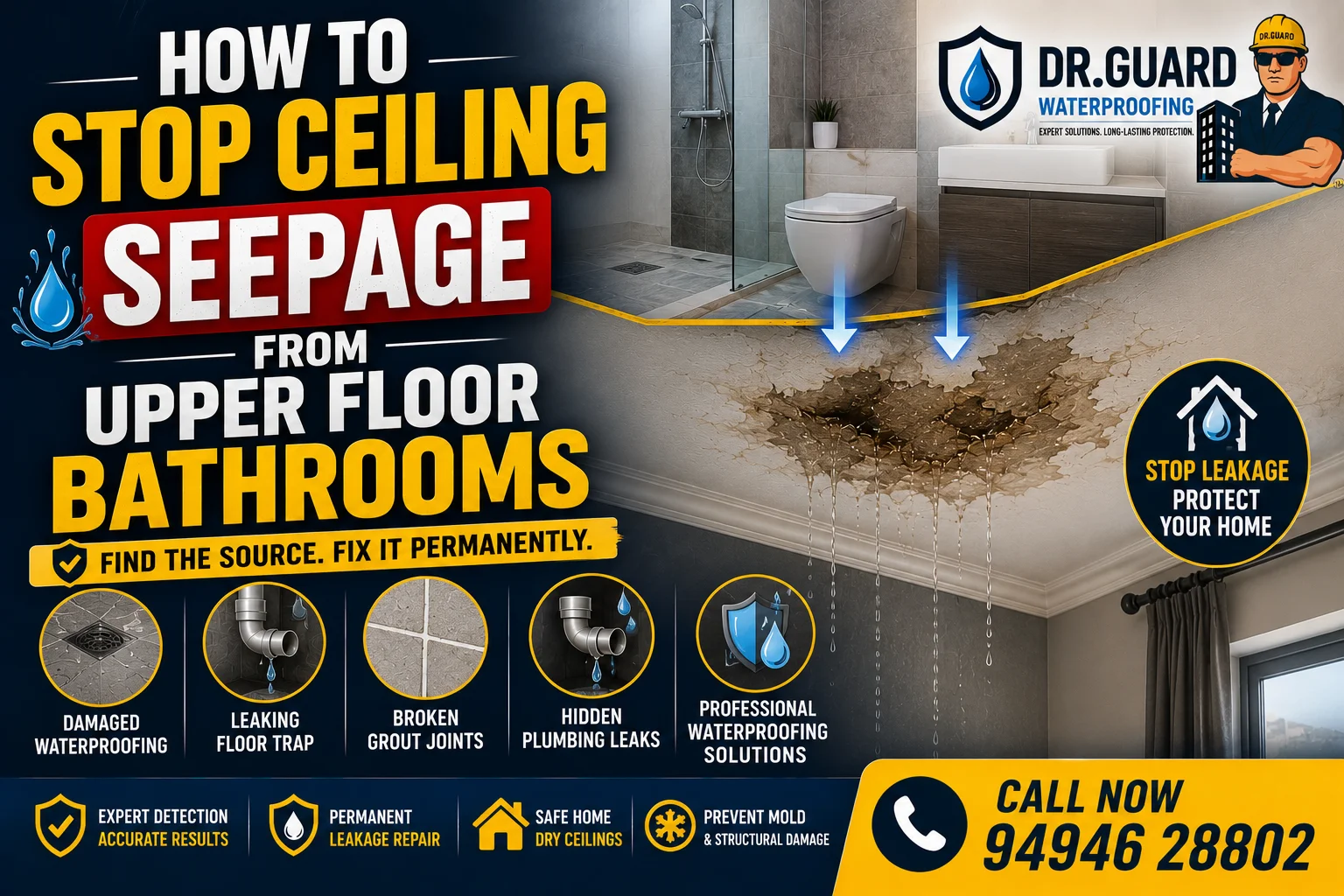
Ceiling seepage from upper floor bathrooms is one of the most common problems in apartments and multi-story buildings. Homeowners often notice damp patches, peeling paint, water stains, or mold growth on their bathroom or bedroom ceilings, only to discover that the actual source of the problem is the bathroom directly above.
Understanding how to stop ceiling seepage from upper floor bathrooms is essential for finding a permanent solution and preventing repeated repairs. Instead of treating only the visible damage, it is important to identify and fix the root cause of the leakage.
What Causes Ceiling Seepage from Upper Floor Bathrooms?
Bathroom areas are exposed to water every day, making them one of the most vulnerable parts of any building. If waterproofing fails or plumbing systems develop leaks, water slowly penetrates the concrete slab and eventually appears on the ceiling below.
Common causes include:
- Damaged bathroom waterproofing
- Broken tile grout joints
- Leaking floor traps
- Hidden plumbing leaks
- Cracked bathroom flooring
- Poor drainage systems
Identifying the exact cause is the first step toward a permanent repair.
Signs of Ceiling Seepage from Upper Floor Bathrooms
Homeowners should watch for early warning signs such as:
Water Stains on the Ceiling
Yellow or brown patches usually indicate moisture penetration from above.
Peeling Paint
Continuous moisture causes paint to bubble, crack, and peel.
Mold and Fungus Growth
Black or green patches are common in damp areas.
Musty Odors
Persistent damp smells often indicate hidden water leakage.
Wet Ceiling During Bathroom Use
If moisture increases when the upper bathroom is in use, seepage is likely coming from that area.
Early detection can prevent expensive structural repairs.
How to Stop Ceiling Seepage from Upper Floor Bathrooms
1. Identify the Exact Source of Leakage
Before starting repairs, it is important to determine where the water is coming from.
Professional methods include:
- Thermal scanning
- Moisture meter testing
- Plumbing pressure tests
- Bathroom leakage inspections
Accurate diagnosis prevents unnecessary repairs and saves money.
2. Check Bathroom Floor Waterproofing
One of the most common causes of seepage is failed waterproofing beneath the bathroom tiles.
Over time:
- Waterproof layers deteriorate
- Water penetrates the slab
- Leakage appears on the ceiling below
Modern waterproofing solutions can often repair bathroom leakage without removing all the tiles.
3. Repair Damaged Tile Grout Joints
Broken or missing grout allows water to seep beneath the tiles.
Professional epoxy grouting provides:
- Better water resistance
- Longer durability
- Improved protection against seepage
This is often an effective solution for minor bathroom leakage problems.
4. Inspect Floor Traps and Drainage Points
Faulty floor traps are another major cause of ceiling seepage.
Problems include:
- Loose trap connections
- Damaged waterproof seals
- Water leakage around drainage pipes
Proper floor trap treatment can eliminate many recurring seepage issues.
5. Check Hidden Plumbing Lines
Concealed water supply pipes inside bathroom walls and floors may develop leaks over time.
Common signs include:
- Continuous dampness
- Leakage even during dry weather
- Higher water bills
Pressure testing helps identify hidden plumbing problems without breaking large sections of the bathroom.
6. Use Waterproof Epoxy Grouting
Epoxy grouting is a modern solution for preventing water penetration through tile joints.
Benefits include:
- Strong waterproof properties
- Resistance to cracks
- Long-lasting performance
- Easy maintenance
It is especially useful for bathrooms with minor seepage issues.
7. Consider Bathroom Waterproofing Without Removing Tiles
Many homeowners worry that fixing bathroom leakage means completely removing the flooring.
However, advanced techniques now allow waterproofing without full tile removal in many cases.
Methods include:
- PU injection grouting
- Epoxy grouting
- Floor trap treatment
- Chemical waterproofing systems
These solutions minimize damage and reduce repair costs.
Common Mistakes to Avoid
Only Repairing the Ceiling
Painting or replastering the damaged ceiling does not solve the actual problem.
The source above must always be treated first.
Ignoring Small Bathroom Leaks
Minor seepage often becomes a major problem over time.
Early repairs are always more cost-effective.
Using Temporary Sealants
Quick fixes may provide short-term relief but rarely stop leakage permanently.
Delaying Professional Inspection
The longer moisture remains inside the concrete slab, the greater the risk of structural damage and mold growth.
How to Prevent Future Bathroom Seepage
Maintain Tile Grout Regularly
Replace damaged grout before water penetrates beneath the tiles.
Inspect Plumbing Systems
Periodic checks help identify hidden leaks early.
Ensure Proper Drainage
Water should flow efficiently toward floor traps without stagnation.
Use Quality Waterproofing Materials
Professional waterproofing systems provide better long-term protection.
Schedule Routine Inspections
Preventive maintenance reduces the likelihood of recurring leakage.
Why Professional Leakage Detection Matters
Bathroom seepage can be difficult to diagnose because water often travels through the slab before becoming visible.
Professional companies use:
- Thermal scanning technology
- Moisture meters
- Plumbing pressure tests
- Advanced waterproofing techniques
to identify the exact source and recommend the most effective solution.
Companies like Dr. Guard Waterproofing specialize in bathroom leakage repair, waterproofing without removing tiles, thermal scanning, and ceiling seepage solutions for apartments across Hyderabad.
Benefits of Fixing Bathroom Seepage Properly
- Permanent leakage solutions
- Protection against structural damage
- Reduced maintenance costs
- Prevention of mold and fungus
- Improved indoor air quality
- Increased property value
Also Read: Why Water Seepage Increases During Hyderabad Monsoon
Conclusion
Knowing how to stop ceiling seepage from upper floor bathrooms is essential for preventing recurring water damage in apartments and multi-story homes. Whether the problem is caused by damaged waterproofing, broken grout, hidden plumbing leaks, or faulty floor traps, identifying the root cause is the key to a permanent solution.
With professional leakage detection and modern waterproofing methods, homeowners can eliminate bathroom seepage problems and keep their homes dry, healthy, and structurally sound for years to come.
Also, you can check out our social media handles on Instagram, YouTube.

