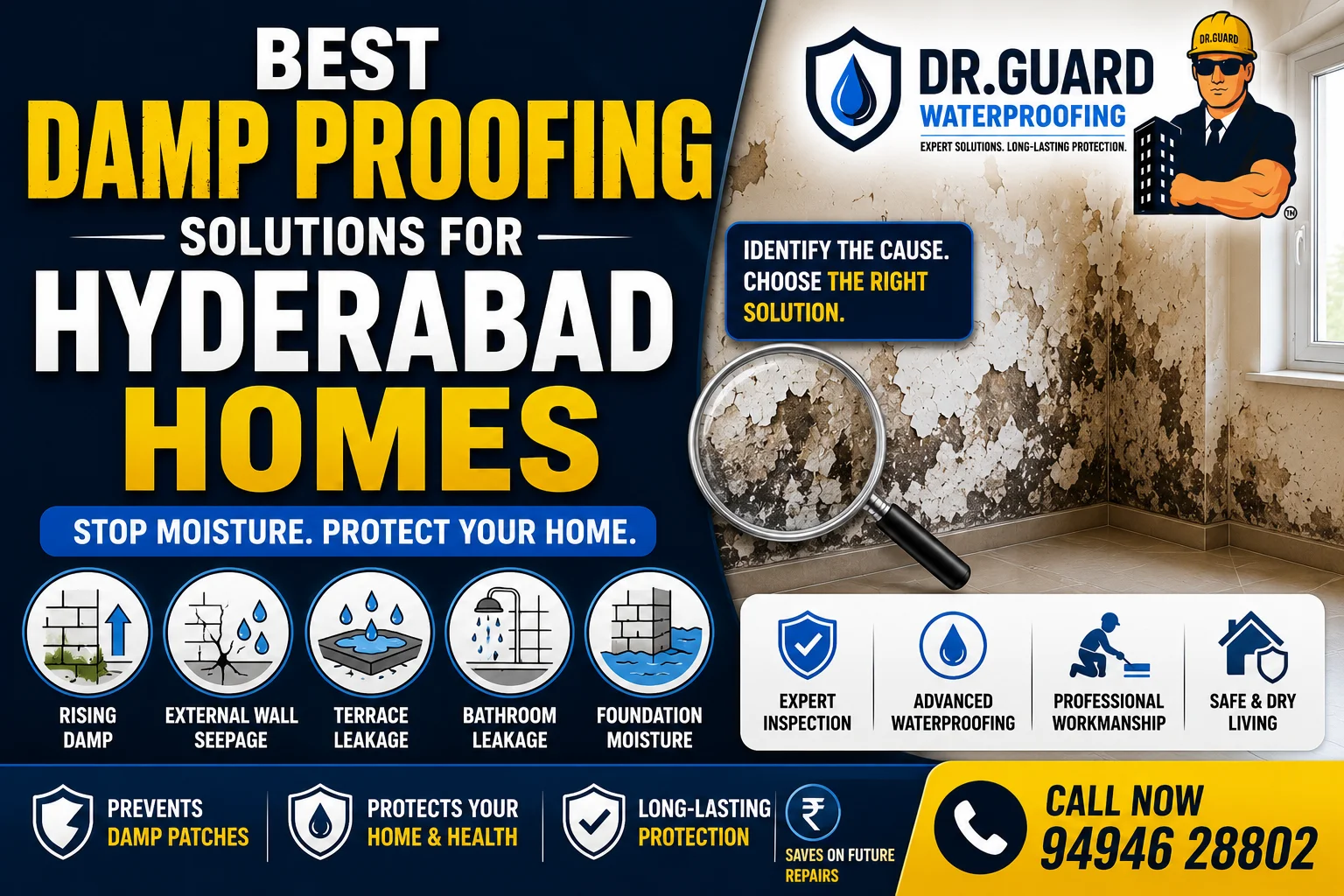
Damp walls are a common concern for homeowners in Hyderabad. From peeling paint and dark patches to mold growth and damaged plaster, moisture can gradually affect both the appearance and durability of a property. Hyderabad’s combination of intense summer heat, seasonal monsoon rainfall, and humidity can make moisture-related problems even more noticeable.
Choosing the best damp proofing solutions for Hyderabad homes starts with identifying the actual source of moisture. Different problems require different treatments, so simply applying waterproof paint over a damp wall is rarely a permanent solution.
What is Damp Proofing?
Damp proofing is the process of preventing moisture from entering or moving through building walls, floors, foundations, and other structural elements.
A proper damp-proofing system can help protect a home from:
- Rising damp
- External wall seepage
- Ground moisture
- Rainwater penetration
- Minor moisture-related deterioration
The appropriate method depends on the type and severity of dampness.
Why Damp Proofing is Important in Hyderabad
Hyderabad homes experience several environmental conditions that can contribute to moisture problems.
Extreme Summer Heat
High temperatures can cause building materials to expand and contract. Over time, this may contribute to cracks in walls, terraces, and joints.
Monsoon Rainfall
Heavy rainfall can expose weaknesses in external walls, terraces, balconies, and drainage systems.
Humidity
Higher humidity can slow down the drying of damp surfaces and encourage mold growth.
Older Buildings
Aging homes may have deteriorated waterproofing systems or inadequate damp-proofing barriers.
These factors make preventive moisture protection particularly important.
Best Damp Proofing Solutions for Hyderabad Homes
1. Rising Damp Treatment
Rising damp occurs when groundwater moves upward through porous masonry by capillary action.
It is particularly common in ground-floor homes and older buildings.
Common Signs
- Damp patches near the floor
- Peeling paint
- Damaged plaster
- White salt deposits
- Mold growth
Treatment
Chemical damp-proof injection can be used to create a moisture-resistant barrier inside the wall and help prevent further upward movement of groundwater.
2. External Wall Damp Proofing
External walls are directly exposed to Hyderabad’s monsoon rainfall.
Cracks and porous surfaces can allow rainwater to penetrate the masonry.
Professional external wall treatment may include:
- Crack repair
- Surface preparation
- Waterproof coating
- Joint sealing
This helps reduce rainwater penetration and protects interior walls.
3. Terrace Waterproofing
If dampness appears on ceilings or upper walls, the terrace may be the source.
Common terrace problems include:
- Cracks
- Damaged waterproofing
- Water ponding
- Blocked drainage outlets
Professional terrace waterproofing creates a protective barrier against rainwater and helps prevent moisture from entering the roof slab.
4. Bathroom Waterproofing
Bathroom leakage can cause dampness in adjacent walls and ceilings below.
Common causes include:
- Failed waterproofing
- Cracked grout
- Floor trap leakage
- Hidden plumbing leaks
Depending on the condition, solutions may include epoxy grouting, PU injection grouting, floor trap treatment, or complete bathroom waterproofing.
5. Basement and Foundation Damp Proofing
Ground moisture can enter basement walls and foundation areas when adequate protection is not provided.
Possible solutions include:
- External waterproofing
- Crack sealing
- Drainage improvement
- Injection grouting
- Protective waterproof coatings
Proper treatment helps protect the foundation from continuous moisture exposure.
6. Crack Treatment and Joint Sealing
Small cracks can become pathways for rainwater and moisture.
Cracks should be inspected and treated before waterproofing is applied.
Depending on the crack and location, suitable materials may include flexible sealants, PU systems, or specialized crack repair compounds.
How to Identify the Right Damp Proofing Solution
There is no single waterproofing method that works for every damp wall.
For example:
| Problem | Possible Solution |
|---|---|
| Rising damp | Chemical damp-proof treatment |
| External wall seepage | External wall waterproofing |
| Terrace leakage | Terrace waterproofing |
| Bathroom seepage | Bathroom waterproofing / grouting |
| Foundation moisture | Basement & foundation waterproofing |
| Crack-related seepage | Crack treatment & sealing |
The actual treatment should be selected after identifying the source of moisture.
Signs Your Home Needs Damp Proofing
Homeowners should consider an inspection if they notice:
Damp Patches
Dark or wet areas that repeatedly appear on walls.
Peeling Paint
Paint that bubbles, flakes, or peels soon after repainting.
Efflorescence
White powdery deposits caused by moisture moving through masonry.
Mold and Fungus
Recurring black or green growth can indicate persistent moisture.
Musty Odors
A damp smell may indicate hidden water inside walls.
Cracked Plaster
Moisture can weaken plaster and cause it to become loose or powdery.
Why Repainting is Not a Permanent Damp-Proofing Solution
Repainting a damp wall can temporarily improve its appearance, but it does not stop water from entering the structure.
If the source remains active:
- Damp patches return
- Paint peels again
- Mold continues growing
- Plaster deteriorates
The moisture source must be repaired before cosmetic restoration.
How Professionals Detect Dampness
Accurate diagnosis is one of the most important parts of damp-proofing.
Thermal Scanning
Thermal imaging can help identify temperature variations associated with hidden moisture without damaging the wall.
Moisture Meter Testing
Moisture meters help determine the moisture level inside walls, plaster, and other building materials.
Visual Inspection
Professionals inspect:
- External walls
- Terraces
- Bathrooms
- Foundations
- Drainage systems
- Wall cracks
This helps determine whether the problem is caused by rising damp, leakage, seepage, or another moisture source.
How to Prevent Dampness in Hyderabad Homes
Homeowners can take several preventive measures.
Inspect the Terrace Before Monsoon
Look for cracks, damaged coatings, and blocked drainage outlets.
Repair Wall Cracks Early
Small cracks can become significant entry points for rainwater.
Maintain Bathroom Grouting
Damaged grout should be repaired before water reaches the underlying structure.
Keep Drainage Systems Clear
Blocked drains can cause water accumulation and increase seepage risks.
Fix Plumbing Leaks Quickly
Even small hidden leaks can create persistent wall dampness.
Schedule Periodic Waterproofing Inspections
Professional inspections can identify potential problems before major damage occurs.
When Should You Contact a Waterproofing Professional?
Professional inspection is recommended when:
- Dampness repeatedly returns
- The source of moisture is unclear
- Paint keeps peeling
- Mold continues to grow
- Damp patches spread
- Leakage becomes worse during monsoon
- Ground-floor walls remain damp throughout the year
Trying different surface treatments without identifying the source can lead to repeated expenses.
Why Choose Dr. Guard Waterproofing?
Dr. Guard Waterproofing provides professional damp-proofing and waterproofing solutions for homes and buildings across Hyderabad.
Services include:
- Rising Damp Treatment
- External Wall Waterproofing
- Terrace Waterproofing
- Bathroom Waterproofing
- Basement Waterproofing
- Thermal Scanning
- Moisture Detection
- Crack Treatment
- PU Injection Grouting
The focus is on identifying the source of moisture and selecting a suitable long-term treatment rather than simply covering visible damp patches.
Benefits of Professional Damp Proofing
Professional damp-proofing can provide:
- Better protection against moisture
- Reduced recurring dampness
- Protection for plaster and paint
- Lower long-term maintenance costs
- Reduced risk of mold growth
- Improved durability of walls
- Better protection of the building structure
Also Read: How Damp Walls Affect Indoor Air Quality
Conclusion
Choosing the best damp proofing solutions for Hyderabad homes depends on understanding where the moisture is coming from. Rising damp, external wall seepage, terrace leakage, bathroom problems, foundation moisture, and structural cracks all require different approaches.
Instead of repeatedly repainting damp walls, homeowners should identify the root cause and select an appropriate waterproofing or damp-proofing system. Professional inspection, quality materials, proper surface preparation, and skilled application can provide much more reliable long-term protection.
For Hyderabad homes, preventive damp proofing is especially valuable before the monsoon season. Addressing moisture problems early can help protect your walls, interiors, and structure while reducing the likelihood of expensive repairs in the future.
Also, you can check out our social media handles on Instagram, YouTube.

