Waterproofing has changed significantly over the years. Traditional methods often focused on applying a basic coating or sealing visible cracks, but modern buildings require more advanced solutions that can handle structural movement, extreme weather, heavy rainfall, and recurring leakage.
Advanced waterproofing technology combines high-performance materials, modern application techniques, and advanced leakage detection methods to provide more reliable protection against water damage. For homes and commercial properties in Hyderabad, these technologies can be particularly useful because buildings experience intense summer heat followed by seasonal monsoon rainfall.
What is Advanced Waterproofing Technology?
Advanced waterproofing technology refers to modern systems and techniques designed to prevent water from entering buildings and to repair existing leakage more effectively.
Unlike basic waterproofing methods, advanced systems may involve:
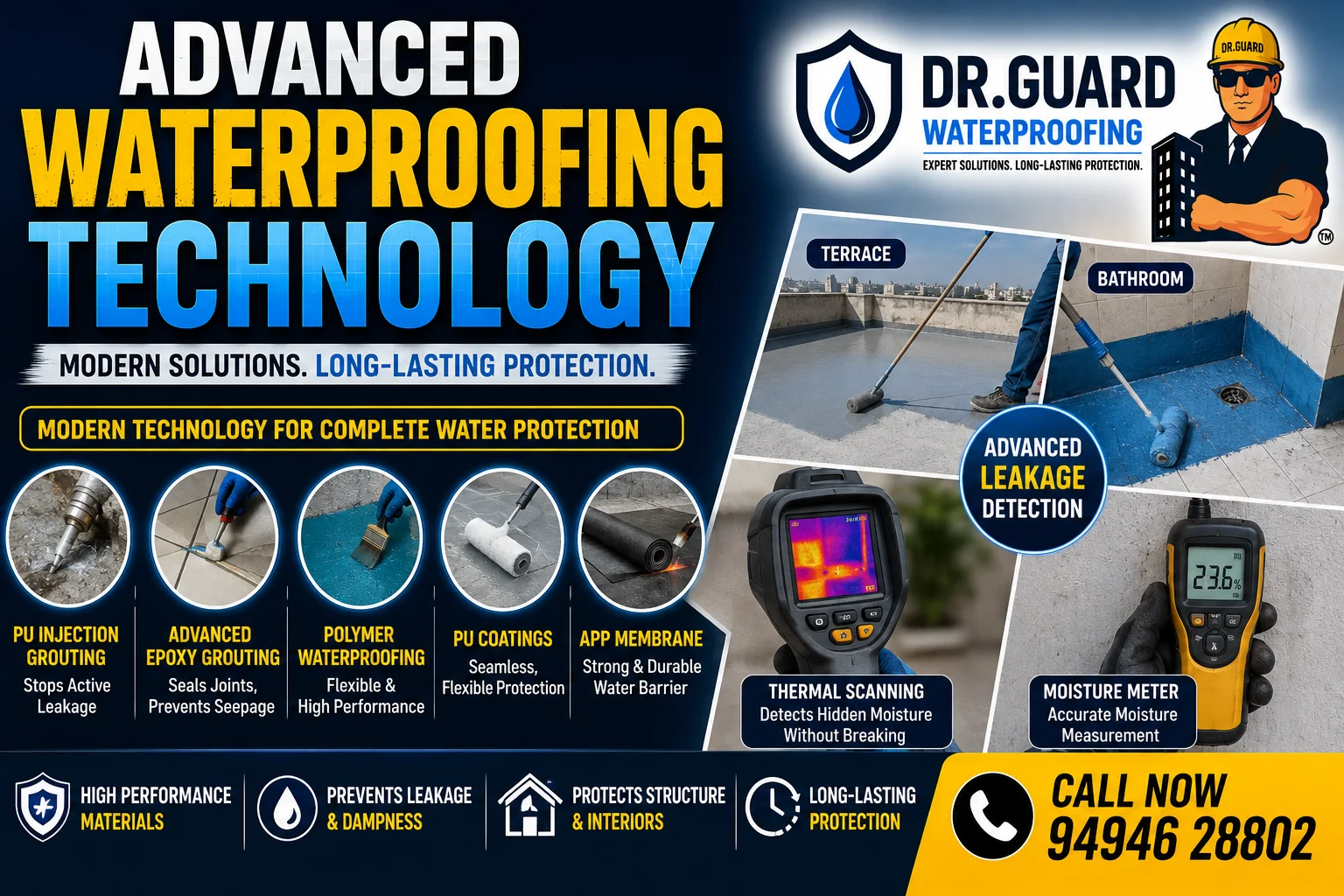
- High-performance waterproofing membranes
- PU injection grouting
- Advanced epoxy grouting
- Polymer-modified waterproofing
- Chemical waterproofing systems
- Thermal leakage detection
- Moisture monitoring
- Advanced crack treatment
The appropriate system depends on the structure, source of leakage, surface condition, and severity of the problem.
Why Modern Waterproofing is Important
Water can enter a building through very small cracks, joints, porous surfaces, and damaged waterproofing layers.
If moisture remains untreated, it can cause:
- Wall dampness
- Ceiling leakage
- Mold growth
- Peeling paint
- Concrete deterioration
- Steel reinforcement corrosion
- Damage to interiors
Advanced waterproofing systems are designed to address these problems more systematically.
Advanced Waterproofing Technology Used in Modern Buildings
1. PU Injection Grouting
Polyurethane injection grouting is one of the most useful technologies for repairing active water leakage.
PU resin is injected into cracks and leakage paths. Depending on the formulation, the material can expand and fill voids where water is entering.
Common Applications
- RCC slab leakage
- Basement leakage
- Bathroom leakage
- Construction joints
- Concrete cracks
- Active water seepage
Benefits
- Can stop active leakage
- Reaches hidden leakage paths
- Suitable for localized repairs
- Can often be performed without major demolition
2. Advanced Epoxy Grouting
Epoxy grouting is widely used for sealing tile joints and repairing specific leakage points.
It offers better resistance to water and chemicals than ordinary cement-based grout.
Common Applications
- Bathroom floors
- Shower areas
- Tile joints
- Kitchen wet areas
- Industrial floors
Proper application helps reduce water penetration through vulnerable joints.
3. Polymer-Modified Waterproofing
Modern polymer-modified waterproofing systems combine cementitious materials with polymers to improve flexibility, adhesion, and water resistance.
They can be used for:
- Bathrooms
- Balconies
- Wet areas
- Concrete surfaces
- Walls
These systems are particularly useful where the substrate may experience minor movement.
4. PU Waterproofing Coatings
Polyurethane coatings create a flexible waterproof membrane over suitable surfaces.
They can accommodate certain levels of movement and provide continuous protection when correctly applied.
Benefits
- Flexible membrane
- Good crack-bridging capability
- Seamless application
- Suitable for various waterproofing applications
The substrate must be properly prepared before application.
5. APP Membrane Waterproofing
APP modified bitumen membranes are widely used for large roof and terrace areas.
The membrane creates a robust barrier against water penetration and is commonly used for:
- RCC terraces
- Commercial roofs
- Industrial structures
- Large waterproofing projects
The installation method and surface preparation play a major role in its performance.
Advanced Leakage Detection Technology
Modern waterproofing is not only about chemicals and coatings. Accurate detection is equally important.
Thermal Scanning
Thermal imaging cameras can identify temperature variations that may indicate hidden moisture or water movement.
This technology can help inspect:
- Walls
- Ceilings
- Terraces
- Bathrooms
- Concrete slabs
One major advantage is that inspection can often be performed without breaking the surface.
Moisture Meter Testing
Moisture meters measure moisture levels within building materials.
This can help professionals determine:
- Whether an area is actually damp
- The approximate severity of moisture
- Whether a repaired surface has sufficiently dried
Advanced Visual Inspection
Professional inspection combines technology with physical assessment.
Experts examine:
- Cracks
- Construction joints
- Drainage systems
- Waterproofing layers
- Tile joints
- Plumbing areas
Combining multiple inspection methods can provide a better understanding of the leakage source.
Advanced Waterproofing for Different Areas
Terrace Waterproofing
Terraces are exposed to intense sunlight and heavy rainfall. Advanced terrace waterproofing may involve crack treatment, PU systems, polymer-modified coatings, membranes, and improved drainage.
Bathroom Waterproofing
Bathroom leakage can originate from tile joints, floor traps, plumbing, or failed waterproofing beneath the tiles.
Depending on the situation, advanced solutions may include:
- Epoxy grouting
- PU injection grouting
- Floor trap treatment
- Chemical waterproofing
- Waterproofing without removing tiles in suitable cases
External Wall Waterproofing
External walls require protection against rainwater penetration.
Modern systems may include:
- Crack treatment
- Flexible waterproof coatings
- Joint sealing
- Surface protection systems
Basement Waterproofing
Basements are exposed to groundwater and hydrostatic pressure.
Advanced basement waterproofing may involve:
- Injection grouting
- Waterproof membranes
- Joint treatment
- Drainage systems
The correct approach depends on whether the water is entering through cracks, joints, walls, or the floor.
How Advanced Waterproofing Differs from Traditional Waterproofing
| Traditional Approach | Advanced Approach |
|---|---|
| Often focuses on visible damage | Focuses on identifying the root cause |
| Basic surface coatings | High-performance waterproofing systems |
| Limited leakage detection | Thermal and moisture detection |
| Temporary patch repairs may be used | Systematic repair and waterproofing |
| Less focus on hidden moisture | Hidden moisture can be investigated |
| One method may be used broadly | Solution is selected based on site conditions |
Advanced technology does not mean that every project requires expensive materials. The right system should always be selected according to the actual problem.
Benefits of Advanced Waterproofing Technology
Better Leakage Detection
Advanced inspection tools can help locate hidden moisture before extensive demolition.
Longer-Lasting Protection
High-quality waterproofing systems can provide durable protection when properly designed and installed.
Reduced Unnecessary Demolition
Certain repair techniques can address localized leakage without removing large areas of tiles or concrete.
Better Crack Treatment
Modern flexible and injection-based systems can address specific cracks and leakage paths more effectively.
Lower Long-Term Maintenance
Fixing the root cause reduces the likelihood of repeated temporary repairs.
Why Surface Preparation Still Matters
Even the most advanced waterproofing chemical cannot compensate for poor surface preparation.
Before application, professionals may need to:
- Remove loose material
- Clean the surface
- Repair cracks
- Treat joints
- Remove contaminants
- Ensure suitable surface moisture conditions
Proper preparation is one of the most important factors affecting waterproofing performance.
How to Choose the Right Waterproofing Technology
There is no universal waterproofing system for every property.
The right solution depends on:
- Type of structure
- Source of water
- Severity of leakage
- Surface condition
- Existing waterproofing
- Structural movement
- Drainage conditions
- Project budget
A professional inspection should be completed before selecting the waterproofing system.
Common Mistakes to Avoid
Choosing a Chemical Without Diagnosing the Problem
A waterproofing product cannot solve a hidden plumbing leak or drainage problem by itself.
Applying Waterproofing Over a Damaged Surface
Loose plaster, cracks, and contaminated surfaces should be properly treated first.
Ignoring Drainage
Even a high-quality waterproofing system can be stressed by continuous water ponding.
Using Temporary Repairs for Recurring Leakage
If leakage repeatedly returns, the underlying cause should be investigated rather than repeatedly patched.
Why Choose Dr. Guard Waterproofing?
Dr. Guard Waterproofing provides advanced waterproofing and leakage detection solutions for residential and commercial properties across Hyderabad.
Services include:
- Thermal Scanning
- Moisture Detection
- Terrace Waterproofing
- Bathroom Waterproofing
- External Wall Waterproofing
- Basement Waterproofing
- PU Injection Grouting
- Epoxy Grouting
- Crack Treatment
- Waterproofing Without Removing Tiles
The approach focuses on identifying the source of leakage first and then selecting a suitable waterproofing system based on the property’s actual condition.
Also Read: Best Damp Proofing Solutions for Hyderabad Homes
Conclusion
Advanced waterproofing technology has made it possible to approach water leakage problems more accurately and systematically. Modern materials such as PU injection systems, epoxy grout, polymer-modified waterproofing, PU coatings, and APP membranes can provide effective protection when selected and applied correctly.
However, technology alone is not enough. Accurate leakage detection, proper surface preparation, correct material selection, skilled application, and effective drainage all play an important role in achieving long-lasting waterproofing.
For Hyderabad homes and buildings exposed to extreme heat and seasonal rainfall, investing in the right waterproofing system can help prevent recurring leakage, dampness, and costly structural damage.
Also, you can check out our social media handles on Instagram, YouTube.

