Bathroom leakage is one of the most common problems homeowners face, especially in apartments and older buildings. Water seepage from bathrooms can lead to damp walls, ceiling leakage, peeling paint, mold growth, and even structural damage if not repaired in time. While repairing bathroom leakage, choosing the best waterproofing chemicals for bathroom leakage repair is just as important as identifying the source of the problem.
Modern waterproofing chemicals provide stronger adhesion, better flexibility, and long-lasting protection compared to traditional repair methods. In this guide, we’ll explore the most effective waterproofing chemicals used for bathroom leakage repair and how they help create a leak-free bathroom.
Why Waterproofing Chemicals are Important for Bathroom Leakage Repair
Bathrooms are exposed to water every day, making them one of the most moisture-sensitive areas in a home. If waterproofing is not done properly or deteriorates over time, water can penetrate beneath the tiles and into the concrete slab.
Using high-quality waterproofing chemicals helps:
- Prevent water seepage
- Protect walls and ceilings
- Increase the lifespan of bathroom flooring
- Prevent mold and fungus growth
- Reduce future repair costs
However, the right chemical should always be selected based on the actual cause of the leakage.
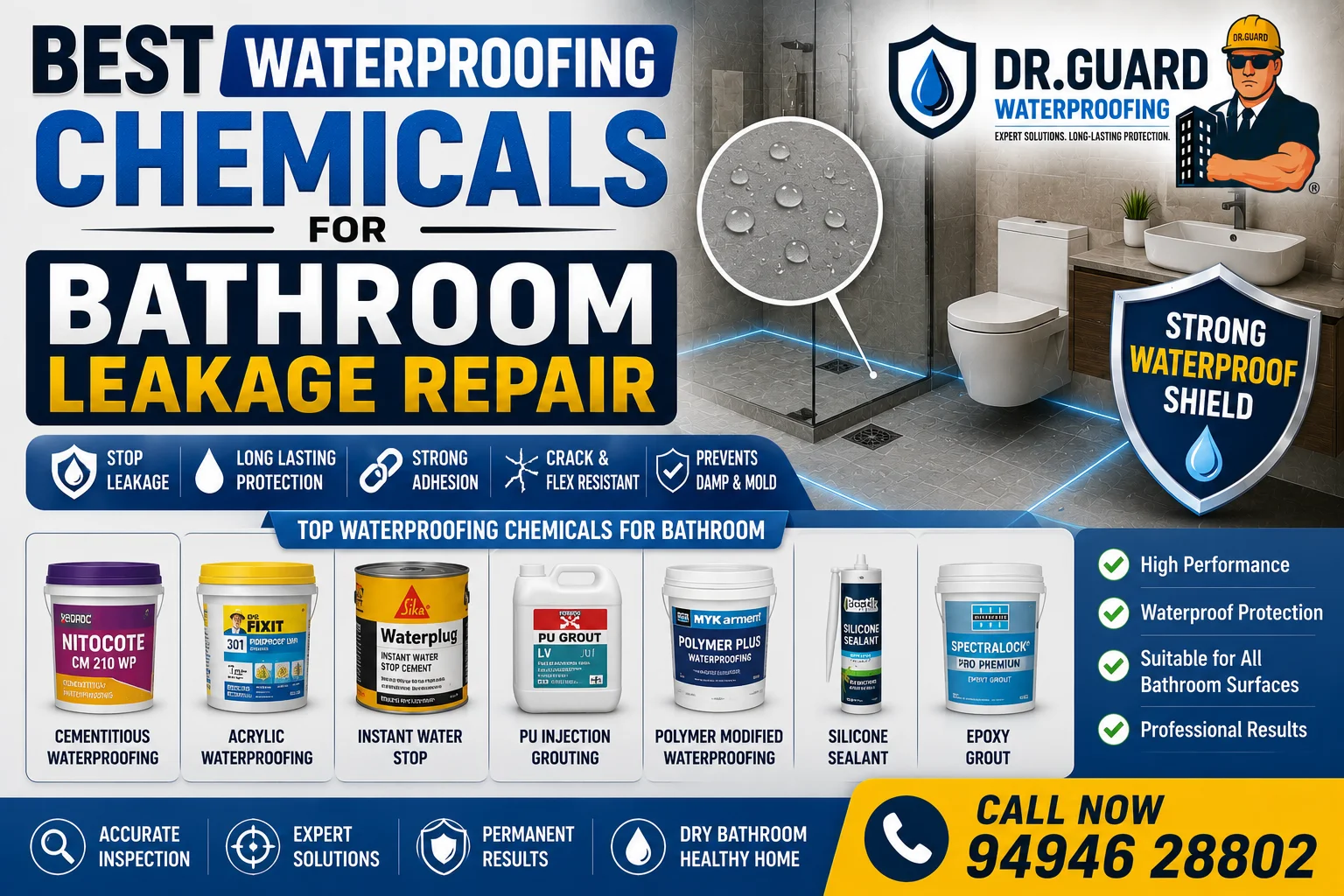
Best Waterproofing Chemicals for Bathroom Leakage Repair
1. Polyurethane (PU) Injection Grouting Resin
Polyurethane (PU) grouting resin is one of the most effective waterproofing chemicals for active bathroom leakage.
It is injected into cracks, joints, and leakage points, where it expands and forms a waterproof seal.
Best For
- Active water leakage
- Ceiling seepage
- Floor slab cracks
- Leakage without removing tiles
Benefits
- Stops active leakage quickly
- Expands to fill hidden gaps
- Flexible and long-lasting
- No major demolition required
PU grouting is widely used in apartment leakage repairs.
2. Cementitious Waterproofing Coating
Cement-based waterproofing chemicals are commonly applied before laying bathroom tiles during construction or renovation.
These coatings bond strongly with concrete surfaces.
Best For
- New bathrooms
- Bathroom renovation
- Floor and wall waterproofing
Benefits
- Strong adhesion
- Easy application
- Good water resistance
- Cost-effective
This remains one of the most popular waterproofing systems for bathrooms.
3. Acrylic Waterproofing Coating
Acrylic waterproofing chemicals create a flexible protective layer over bathroom surfaces.
They are commonly used in areas exposed to regular moisture.
Best For
- Bathroom walls
- Wet areas
- Minor seepage protection
Benefits
- Good flexibility
- UV resistance
- Easy application
- Durable finish
4. Epoxy Grout
Although epoxy grout is not a waterproof coating, it is one of the best materials for sealing tile joints.
Unlike ordinary cement grout, epoxy grout does not absorb water.
Best For
- Tile joints
- Shower areas
- Bathroom floors
Benefits
- Waterproof
- Stain resistant
- Crack resistant
- Long lifespan
It is an excellent solution for preventing water from passing through tile joints.
5. Polymer-Modified Waterproofing Chemicals
Polymer-based waterproofing compounds combine cement with special polymers to improve flexibility and waterproof performance.
Best For
- Bathroom floors
- Bathroom walls
- Wet areas
Benefits
- Improved crack resistance
- Better adhesion
- Enhanced flexibility
- Long-lasting protection
6. Silicone Sealants
High-quality silicone sealants are commonly used around sanitary fixtures and expansion joints.
Best For
- Wash basins
- Bathtubs
- Floor joints
- Wall corners
Benefits
- Waterproof sealing
- Flexible movement
- Prevents water entry around fixtures
Silicone sealants are an essential part of bathroom waterproofing maintenance.
How to Choose the Best Waterproofing Chemical
The right waterproofing chemical depends on the source of the leakage.
For Active Leakage
PU injection grouting is usually the most effective solution.
For Tile Joint Leakage
Epoxy grout provides excellent long-term protection.
For Complete Bathroom Waterproofing
Cementitious or polymer-modified waterproofing systems are generally recommended.
For Sanitary Fixture Joints
Silicone sealants help prevent localized leakage.
A professional inspection ensures the correct waterproofing system is selected.
Popular Waterproofing Brands Used by Professionals
Professional waterproofing contractors often use products from well-known manufacturers because of their consistent quality and performance.
Commonly used brands include:
- Fosroc
- Sika
- Dr. Fixit
- MYK Arment
- Bostik
- Zydex
The best product depends on the type of leakage, substrate condition, and repair method rather than the brand alone.
Common Mistakes When Choosing Waterproofing Chemicals
Many homeowners make mistakes that reduce the effectiveness of waterproofing.
Choosing Products Based Only on Price
Cheaper materials may not provide long-term protection.
Ignoring the Actual Cause of Leakage
Applying waterproof chemicals without identifying the source often results in recurring problems.
Using DIY Products for Major Leakage
Minor sealants cannot solve structural leakage or failed waterproofing systems.
Skipping Surface Preparation
Even premium waterproofing chemicals perform poorly if the surface is not properly prepared.
Can Bathroom Leakage Be Repaired Without Removing Tiles?
Yes. Modern waterproofing methods allow many leakage problems to be repaired without breaking the existing bathroom tiles.
Common techniques include:
- PU injection grouting
- Epoxy grouting
- Floor trap treatment
- Chemical waterproofing
These methods reduce repair time and avoid unnecessary demolition.
Why Professional Waterproofing is Recommended
Selecting the best waterproofing chemical is only one part of the repair process.
Professional waterproofing companies first identify the actual cause of leakage using:
- Thermal scanning
- Moisture meter testing
- Plumbing pressure testing
- Visual waterproofing inspections
Based on the findings, they recommend the most suitable waterproofing system.
Dr. Guard Waterproofing uses premium waterproofing chemicals and advanced repair techniques for bathroom leakage repair, including:
- PU injection grouting
- Epoxy grouting
- Waterproofing without removing tiles
- Bathroom waterproofing systems
- Thermal leakage detection
Their experienced team ensures long-lasting solutions rather than temporary repairs.
Benefits of Using High-Quality Waterproofing Chemicals
- Permanent leakage protection
- Reduced maintenance costs
- Better crack resistance
- Improved durability
- Protection against mold and fungus
- Longer waterproofing lifespan
Also Read: Signs of Failed Bathroom Waterproofing: How to Identify Problems Before Serious Damage Occurs
Conclusion
Choosing the best waterproofing chemicals for bathroom leakage repair is essential for achieving a long-lasting and reliable solution. Whether the problem requires PU injection grouting, epoxy grouting, cementitious waterproofing, or polymer-based coatings, selecting the right product based on the actual source of leakage is the key to success.
Instead of relying on temporary fixes, homeowners should invest in professional leakage detection and high-quality waterproofing systems. With expert guidance from Dr. Guard Waterproofing, you can stop bathroom leakage permanently and protect your home from future water damage.
Also, you can check out our social media handles on Instagram, YouTube.

