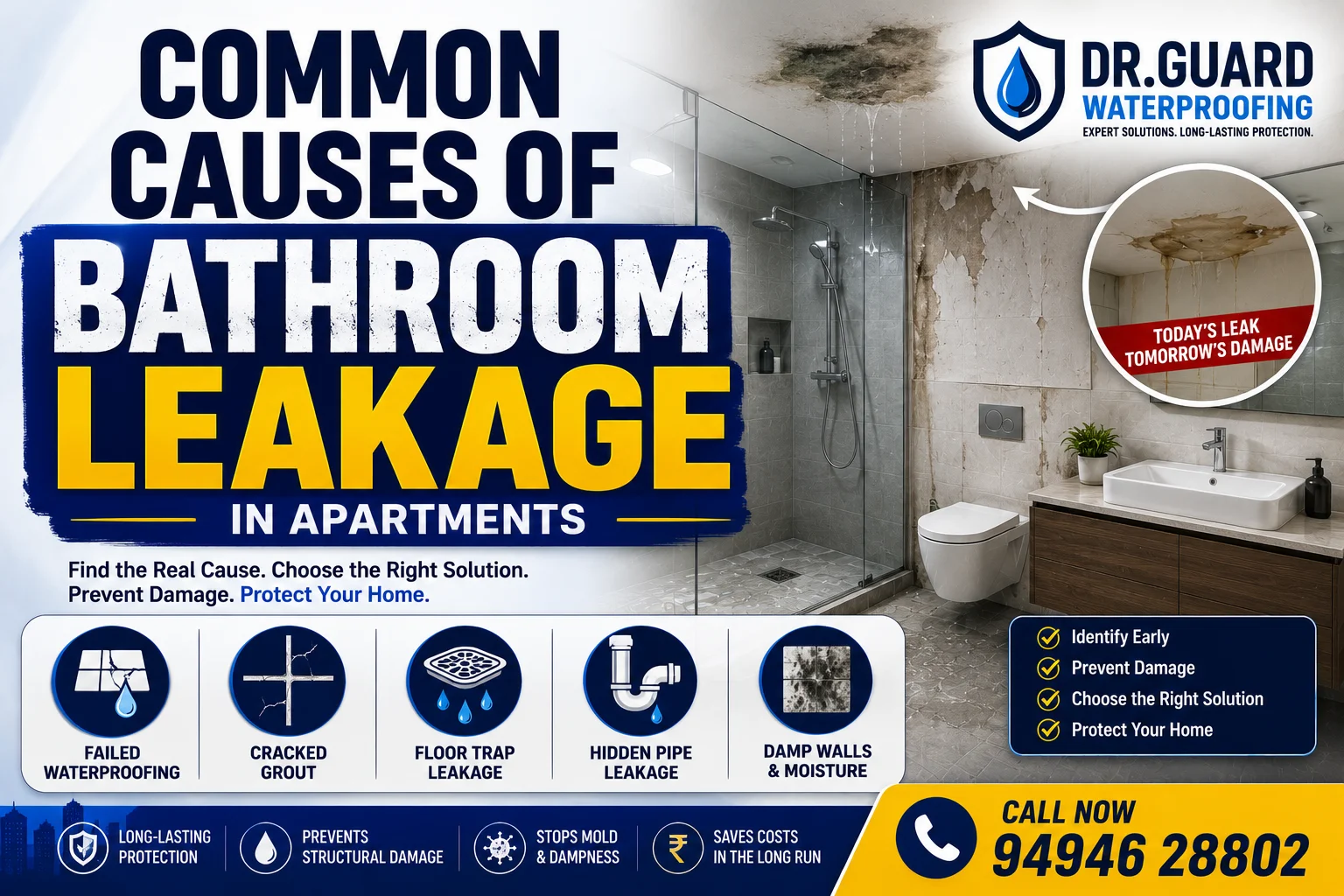
Bathroom leakage is one of the most common maintenance issues in apartment buildings. What may begin as a small damp patch can quickly turn into ceiling seepage, peeling paint, mold growth, and even structural damage if not repaired on time. In apartments, bathroom leakage can also affect neighboring flats, leading to inconvenience and costly repairs.
Understanding the common causes of bathroom leakage in apartments helps homeowners identify problems early and choose the right waterproofing solution before the damage becomes severe.
Why Bathroom Leakage is Common in Apartments
Unlike independent houses, apartment buildings have shared walls, floors, and plumbing systems. Bathrooms are usually located one above another, meaning a leak from one apartment can easily affect the flat below.
Bathrooms are also exposed to water every day through showers, taps, floor cleaning, and plumbing fixtures. Over time, this continuous exposure can weaken waterproofing systems if they are not properly maintained.
Common Causes of Bathroom Leakage in Apartments
1. Failed Bathroom Waterproofing
One of the leading causes of bathroom leakage is the failure of the waterproofing layer beneath the tiles.
Over time, waterproofing can deteriorate due to:
- Aging materials
- Poor installation
- Constant water exposure
- Structural movement
Once the waterproofing layer fails, water starts penetrating the concrete slab and eventually causes seepage in the lower apartment.
2. Cracked Tile Grout
Tile grout fills the joints between bathroom tiles and helps reduce water penetration.
However, grout can crack because of:
- Daily wear and tear
- Poor-quality materials
- Building movement
- Improper installation
Cracked grout allows water to seep beneath the tiles and reach the slab.
3. Leaking Floor Traps
Floor traps are among the most common leakage points in apartment bathrooms.
Leakage may occur because of:
- Improper sealing
- Damaged joints
- Loose trap connections
- Old drainage fittings
Water escaping around the floor trap can spread through the slab and appear as ceiling leakage below.
4. Hidden Plumbing Leaks
Concealed water supply and drainage pipes inside bathroom walls and floors can develop leaks over time.
Common reasons include:
- Pipe corrosion
- Loose joints
- Damaged fittings
- High water pressure
Because these leaks remain hidden, they often cause significant damage before being noticed.
5. Cracked Bathroom Floor Tiles
Cracked or broken tiles create direct pathways for water to enter beneath the floor surface.
Even small cracks can allow moisture to penetrate continuously during daily bathroom use.
Replacing damaged tiles early helps prevent further seepage.
6. Poor Bathroom Slope
Bathrooms should have a proper slope that directs water toward the floor drain.
If the slope is incorrect:
- Water remains stagnant
- Moisture stays on the floor longer
- Waterproofing experiences greater stress
Standing water increases the risk of leakage over time.
7. Poor Construction Quality
Bathrooms constructed without proper waterproofing or using low-quality materials are more likely to develop leakage problems.
Construction-related issues include:
- Thin waterproofing layers
- Improper curing
- Poor workmanship
- Inadequate joint sealing
These defects often become visible after a few years of use.
8. Aging Waterproofing Systems
Waterproofing materials have a limited service life.
Older apartment buildings often experience leakage because the original waterproofing has deteriorated over time.
Regular maintenance can significantly extend the life of the waterproofing system.
9. Water Leakage Around Bathroom Fixtures
Areas surrounding:
- Wash basins
- Toilets
- Shower mixers
- Bathtubs
can develop leakage if sealants become damaged or worn out.
Water slowly enters the surrounding structure if these joints are not maintained.
10. Structural Cracks
Buildings naturally expand and contract because of temperature changes.
This movement may create:
- Hairline cracks
- Expansion joint gaps
- Floor-wall separation
Water entering through these cracks often leads to recurring leakage.
Signs of Bathroom Leakage in Apartments
Early detection can prevent expensive repairs.
Look for:
Ceiling Leakage
Water stains or damp patches in the apartment below.
Peeling Paint
Moisture causes paint to bubble and peel.
Mold and Fungus
Black or green patches usually indicate continuous moisture.
Musty Odors
Persistent damp smells often point to hidden leakage.
Loose Tiles
Water beneath the flooring weakens the tile adhesive.
Damp Walls
Walls surrounding the bathroom may remain wet or discolored.
How to Identify the Exact Source of Bathroom Leakage
Because water can travel through concrete slabs before becoming visible, professional inspection is often necessary.
Modern leakage detection methods include:
Thermal Scanning
Infrared cameras detect hidden moisture inside walls and slabs without breaking tiles.
Moisture Meter Testing
Measures moisture levels inside building materials.
Pressure Testing
Used to identify concealed plumbing leaks.
Professional Waterproofing Inspection
Experts inspect:
- Tile joints
- Floor traps
- Waterproofing systems
- Plumbing
- Structural cracks
Accurate diagnosis helps avoid unnecessary repairs.
How to Prevent Bathroom Leakage
Homeowners can reduce leakage risks by following a few simple practices.
Inspect Tile Grout Regularly
Repair cracked grout before water reaches the slab.
Maintain Floor Traps
Ensure drainage connections remain properly sealed.
Repair Plumbing Leaks Immediately
Even small pipe leaks can cause major structural damage over time.
Avoid Water Stagnation
Proper drainage reduces moisture exposure.
Schedule Waterproofing Inspections
Routine inspections help detect problems before leakage develops.
Modern Solutions for Bathroom Leakage
Depending on the cause, professional waterproofing companies may recommend:
- PU Injection Grouting
- Epoxy Grouting
- Floor Trap Waterproofing
- Bathroom Waterproofing Without Removing Tiles
- Complete Bathroom Waterproofing
- Crack Repair and Joint Sealing
The right solution depends on the source and severity of the leakage.
Why Choose Dr. Guard Waterproofing?
Bathroom leakage requires proper diagnosis before repairs begin.
Dr. Guard Waterproofing provides advanced bathroom leakage solutions across Hyderabad, including:
- Thermal Scanning for Leakage Detection
- Bathroom Waterproofing
- Waterproofing Without Removing Tiles
- PU Injection Grouting
- Epoxy Grouting
- Floor Trap Leakage Repair
- Complete Bathroom Leakage Inspection
Their experienced team identifies the root cause of leakage and provides long-lasting waterproofing solutions instead of temporary repairs.
Benefits of Professional Bathroom Leakage Repair
- Permanent leakage solutions
- Protection against structural damage
- Prevention of mold growth
- Lower maintenance costs
- Improved indoor hygiene
- Increased property value
Also Read: How Bathroom Leakages Damage RCC Slabs
Conclusion
Understanding the common causes of bathroom leakage in apartments can help homeowners prevent recurring seepage and expensive repairs. Problems such as failed waterproofing, cracked grout, leaking floor traps, hidden plumbing leaks, and poor construction quality should never be ignored.
Early inspection and professional waterproofing are the most effective ways to protect your apartment from water damage. If you notice signs of bathroom leakage, addressing the problem immediately will help preserve the structural integrity of your home and ensure a safe, dry living environment.
Also, you can check out our social media handles on Instagram, YouTube.

