Water damage does not always appear as a major leak or a flooded room. In many cases, moisture problems develop slowly behind walls, under floors, or inside ceilings, remaining unnoticed for months. By the time visible signs appear, significant damage may have already occurred. Understanding the hidden water damage signs every homeowner should know can help prevent expensive repairs and protect the long-term health of your home.
Early detection is the key to avoiding structural problems, mold growth, and recurring leakage issues.
Why Hidden Water Damage is Dangerous
Unlike visible leaks, hidden water damage continues to spread silently. Moisture trapped inside walls and ceilings can weaken construction materials, damage interiors, and create unhealthy living conditions.
If left untreated, hidden water damage can lead to:
- Structural deterioration
- Mold and fungus growth
- Peeling paint
- Damaged flooring
- Higher repair costs
- Poor indoor air quality
Recognizing the early warning signs can save homeowners both time and money.
Hidden Water Damage Signs Every Homeowner Should Know
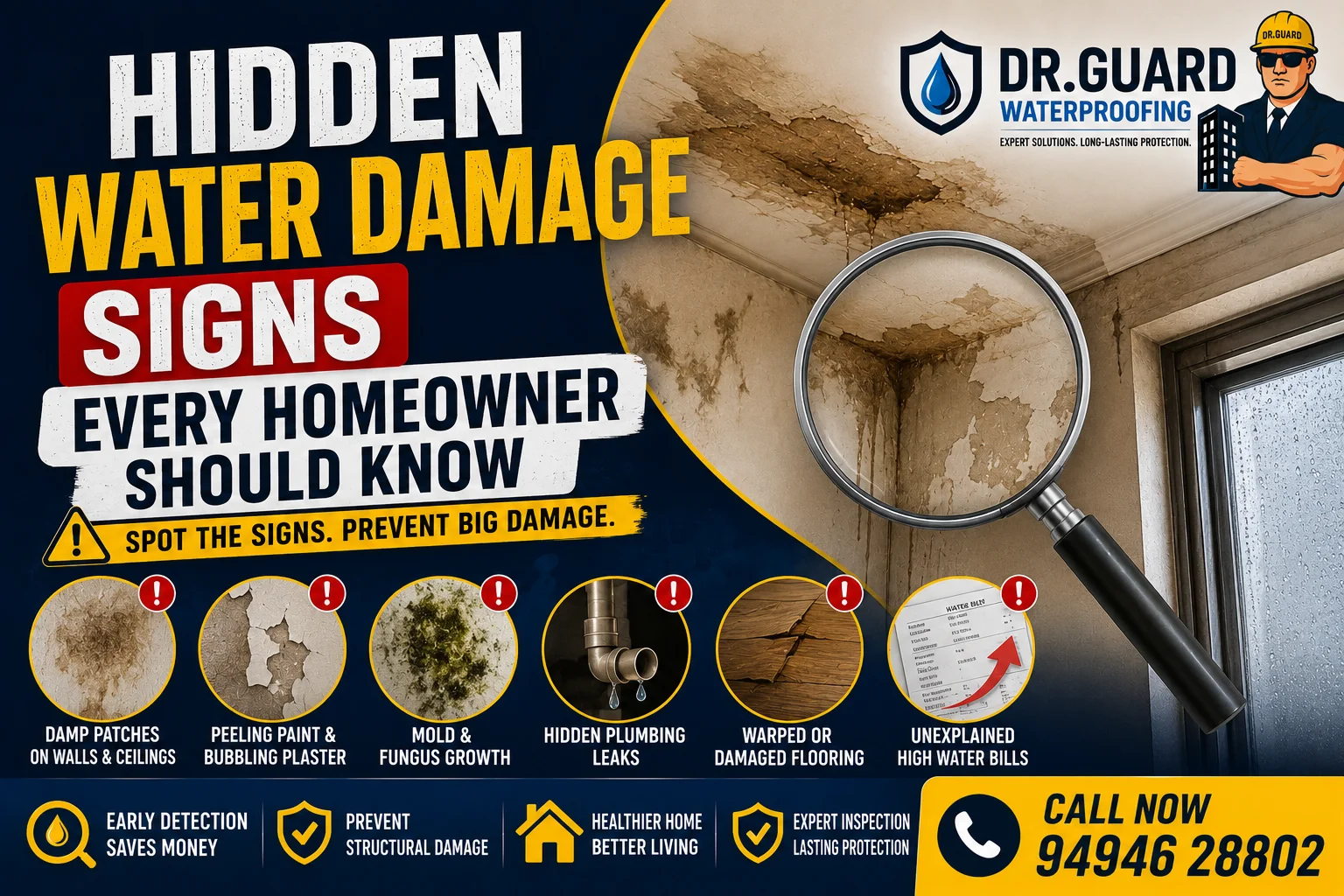
1. Damp Patches on Walls and Ceilings
One of the earliest indicators of hidden water damage is the appearance of damp spots.
These patches may:
- Change size over time
- Become darker after rainfall
- Feel cool or moist to the touch
Damp areas often indicate moisture trapped behind the surface.
2. Peeling Paint and Bubbling Plaster
Water weakens the bond between paint and walls.
Common signs include:
- Peeling paint
- Bubbling surfaces
- Cracked plaster
- Flaking wall finishes
Many homeowners mistake this for normal wear and tear when it is actually a sign of moisture intrusion.
3. Musty or Damp Odors
A persistent musty smell is often a clear indication of hidden water damage.
Even if there are no visible stains, trapped moisture behind walls or under flooring can create unpleasant odors.
This usually suggests:
- Mold growth
- Hidden leakage
- Poor ventilation combined with moisture
4. Mold and Fungus Growth
Mold thrives in damp environments.
Common places where mold appears include:
- Bathroom corners
- Ceiling edges
- Behind furniture
- External walls
Black, green, or gray patches often indicate ongoing water problems that need immediate attention.
5. Unexplained Increase in Water Bills
A sudden rise in water consumption without any change in usage habits may indicate hidden plumbing leakage.
Concealed pipe leaks can waste large amounts of water while causing structural damage inside walls and floors.
Regularly monitoring your water bills can help detect problems early.
6. Cracks with Moisture Around Them
Not all wall cracks are structural issues. However, cracks that remain damp or continue expanding may be allowing water to enter the building.
Pay special attention to:
- Terrace cracks
- External wall cracks
- Ceiling cracks
- Balcony joints
These areas often become entry points for moisture.
7. Warped or Damaged Flooring
Hidden water damage can affect flooring materials over time.
Signs include:
- Wooden floors lifting or bending
- Loose tiles
- Soft spots underfoot
- Discoloration
Moisture beneath the surface can gradually weaken flooring systems.
8. Ceiling Stains and Water Marks
Yellow or brown stains on ceilings are common indicators of hidden leakage.
Possible causes include:
- Terrace waterproofing failure
- Bathroom leakage from upper floors
- Hidden plumbing problems
Ignoring ceiling stains can lead to larger structural issues.
9. Efflorescence on Walls
Efflorescence appears as white, powdery deposits on walls and concrete surfaces.
It occurs when water carries salts through the masonry and evaporates on the surface.
This is a strong sign that moisture is moving through the structure.
10. Persistent Humidity Inside the House
If certain rooms always feel damp or humid despite good ventilation, hidden water damage may be the reason.
High indoor moisture levels often indicate:
- Internal leakage
- External wall seepage
- Poor waterproofing
Professional inspection may be necessary to identify the source.
Common Causes of Hidden Water Damage
Several factors can contribute to hidden moisture problems in homes.
Terrace Waterproofing Failure
Damaged waterproofing systems allow rainwater to enter the building structure.
Bathroom Leakage
Faulty waterproofing beneath tiles and leaking floor traps are major causes of hidden damage.
Hidden Plumbing Leaks
Concealed pipes inside walls and floors can develop leaks over time.
External Wall Seepage
Cracks in exterior walls often allow rainwater to penetrate during monsoon seasons.
Water Ponding on Roofs
Standing water places pressure on waterproofing layers and increases the risk of leakage.
How to Detect Hidden Water Damage
Modern technology makes it easier to identify moisture problems without breaking walls.
Thermal Scanning
Thermal imaging cameras detect temperature differences caused by hidden moisture.
Benefits:
- Non-destructive inspection
- Accurate results
- Quick diagnosis
Moisture Meter Testing
Moisture meters measure water content within building materials.
They help determine:
- Severity of damage
- Moisture spread
- Potential leakage areas
Professional Waterproofing Inspection
Experienced waterproofing experts can identify hidden issues through detailed structural assessments.
How to Prevent Hidden Water Damage
Homeowners can reduce risks by:
Regular Terrace Inspections
Check for cracks and waterproofing damage before monsoon.
Maintaining Bathrooms
Inspect grout joints, floor traps, and plumbing connections.
Repairing Small Cracks Immediately
Minor issues can quickly become major leakage problems.
Cleaning Drainage Systems
Proper drainage prevents water accumulation and seepage.
Scheduling Professional Waterproofing Maintenance
Preventive maintenance extends the life of waterproofing systems.
Why Professional Leakage Detection Matters
Many hidden water problems cannot be identified through visual inspection alone.
Professional companies like Dr. Guard Waterproofing use:
- Thermal scanning technology
- Moisture meters
- Advanced leakage detection methods
- Comprehensive waterproofing inspections
to locate hidden water damage and provide permanent solutions.
Benefits of Early Water Damage Detection
- Lower repair costs
- Protection against structural damage
- Prevention of mold growth
- Improved indoor air quality
- Increased property lifespan
- Better living conditions
Also Read: How to Fix Recurring Leakage Problems in Apartments
Conclusion
Knowing the hidden water damage signs every homeowner should know can help you take action before small problems become expensive repairs. Damp patches, musty odors, peeling paint, mold growth, and rising water bills are all warning signs that should never be ignored.
Regular inspections, proper waterproofing, and professional leakage detection can keep your home safe, dry, and protected from long-term water damage. Early intervention is always the most effective and economical solution.
Also, you can check out our social media handles on Instagram, YouTube.

