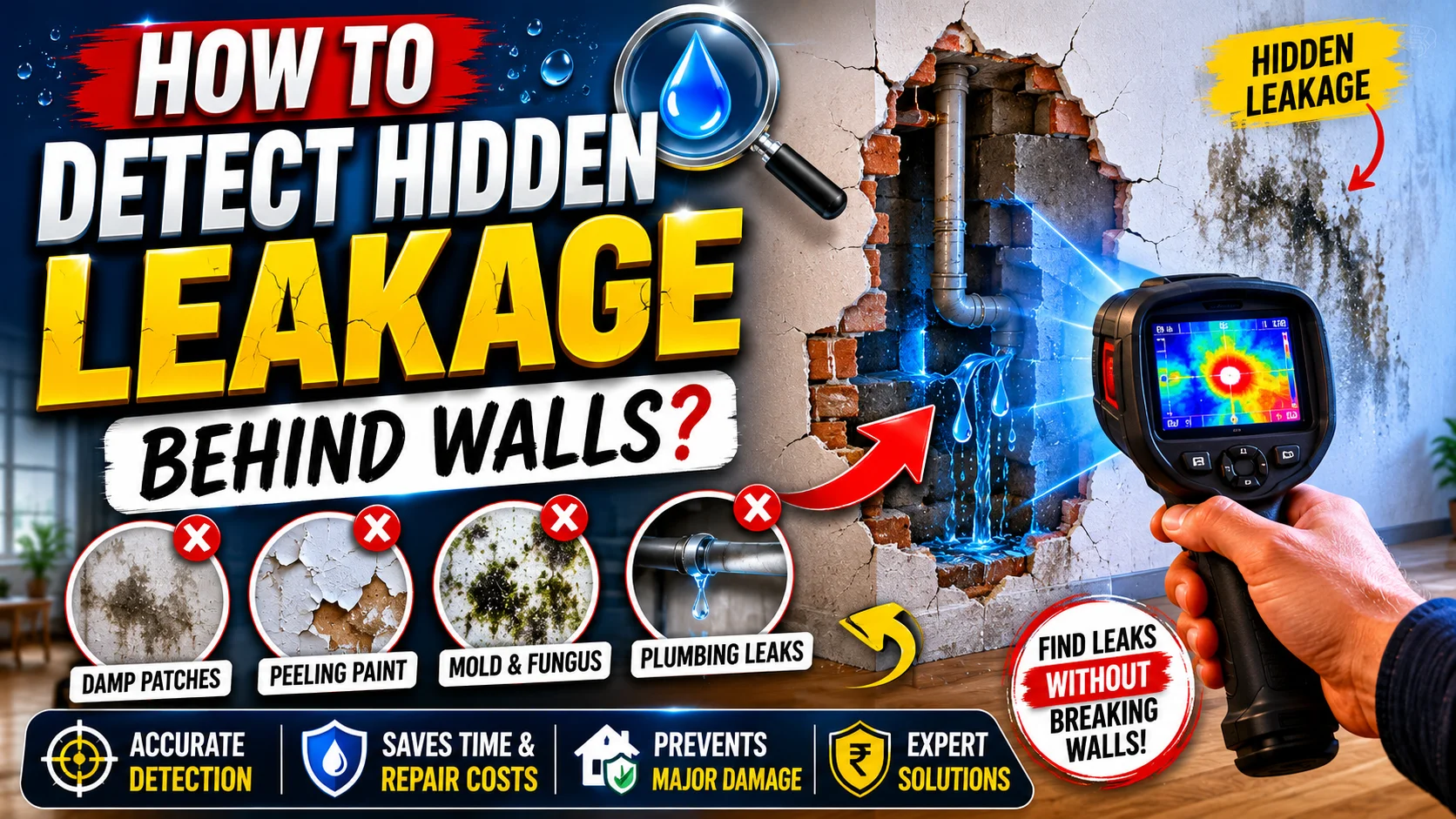
Hidden water leakage is one of the most frustrating problems homeowners face. Unlike visible leaks, hidden leakage behind walls can remain unnoticed for weeks or even months while silently damaging your home. By the time the signs become visible, the problem may have already caused dampness, mold growth, peeling paint, and structural damage.
Understanding how to detect hidden leakage behind walls can help you identify problems early, reduce repair costs, and protect your property from long-term water damage.
What Causes Hidden Leakage Behind Walls?
Water leakage behind walls can occur for several reasons. Since the source is concealed, many homeowners fail to notice the problem until visible damage appears.
Common causes include:
- Leaking plumbing pipes
- Bathroom seepage
- Terrace leakage spreading into walls
- Cracks in external walls
- Damaged waterproofing systems
- Water penetration during monsoon
Identifying the exact source is the first step toward a permanent solution.
Why Hidden Leakage is Dangerous
Unlike surface leaks, hidden water damage continues to spread without immediate detection.
This can lead to:
- Wall dampness
- Mold and fungus growth
- Weakening of plaster
- Damage to paint and interiors
- Increased repair costs
- Structural deterioration
The longer the problem remains untreated, the more expensive the repairs become.
Signs of Hidden Leakage Behind Walls
1. Damp Patches on Walls
One of the earliest signs of hidden leakage is the appearance of dark or wet patches on walls.
These damp spots often:
- Become larger over time
- Appear after rainfall
- Feel cool to the touch
Dampness usually indicates moisture trapped inside the wall.
2. Peeling Paint and Bubbling Plaster
Water trapped behind walls weakens paint and plaster.
Common symptoms include:
- Peeling paint
- Bubbling surfaces
- Flaking plaster
- Discoloration
These signs should never be ignored.
3. Mold and Fungus Growth
Hidden moisture creates ideal conditions for mold and fungus.
Look for:
- Black spots
- Green patches
- Musty odors
Mold growth often indicates an ongoing moisture problem inside the wall.
4. Unpleasant Damp Smell
A persistent musty smell inside rooms can be a strong indication of hidden water leakage.
Even when no visible damage is present, trapped moisture often creates noticeable odors.
5. Increased Water Bills
If your water bill suddenly increases without changes in usage, there may be a hidden plumbing leak behind walls.
Monitoring water consumption can help identify concealed leakage problems early.
6. Cracks with Moisture Around Them
Water often enters through wall cracks and spreads internally.
If cracks appear damp or continue expanding, hidden leakage may be present behind the surface.
Modern Methods to Detect Hidden Leakage Behind Walls
Thermal Scanning
Thermal scanning is one of the most advanced methods used today.
Infrared cameras detect temperature differences caused by hidden moisture.
Benefits:
- Non-destructive inspection
- Accurate leakage detection
- Fast results
Thermal scanning helps identify moisture without breaking walls.
Moisture Meter Testing
Professional inspectors use moisture meters to measure water content inside walls.
This helps:
- Confirm dampness levels
- Identify affected areas
- Assess the severity of leakage
Pressure Testing for Pipes
If plumbing leakage is suspected, pressure testing can identify leaks inside concealed pipelines.
This method is highly effective for bathroom and kitchen leakage problems.
Visual Waterproofing Inspection
Experienced waterproofing professionals inspect:
- Cracks
- Drainage systems
- Waterproofing layers
- Building joints
This helps determine the actual source of water entry.
How to Prevent Hidden Wall Leakage
Maintain Waterproofing Systems
Regular waterproofing maintenance helps prevent moisture from entering walls.
Key areas include:
- Terraces
- Bathrooms
- External walls
- Balconies
Repair Cracks Quickly
Even small cracks can become entry points for water.
Early crack repair prevents future seepage problems.
Inspect Plumbing Regularly
Concealed plumbing systems should be checked periodically to prevent hidden leaks.
Schedule Professional Inspections
Regular inspections help identify moisture problems before major damage occurs.
Why Professional Leakage Detection Matters
Hidden leakage can be difficult to locate without specialized equipment.
Professional waterproofing companies use:
- Thermal scanning
- Moisture testing
- Structural inspections
- Advanced leakage detection techniques
Companies like Dr. Guard Waterproofing provide accurate leakage detection services and customized waterproofing solutions to address the root cause of the problem.
Benefits of Early Leakage Detection
- Prevents major structural damage
- Reduces repair costs
- Protects interiors and paint
- Improves indoor air quality
- Stops mold and fungus growth
- Extends building lifespan
Also Read: Commercial Waterproofing Services in Hyderabad
Conclusion
Learning how to detect hidden leakage behind walls is essential for protecting your home from costly water damage. Early signs such as damp patches, peeling paint, mold growth, and unusual odors should never be ignored.
Modern detection methods like thermal scanning and moisture testing make it easier than ever to identify hidden leaks before they become serious problems. By acting quickly and investing in professional waterproofing solutions, homeowners can keep their properties safe, dry, and structurally sound for years to come.
Also, you can check out our social media handles on Instagram, YouTube.

