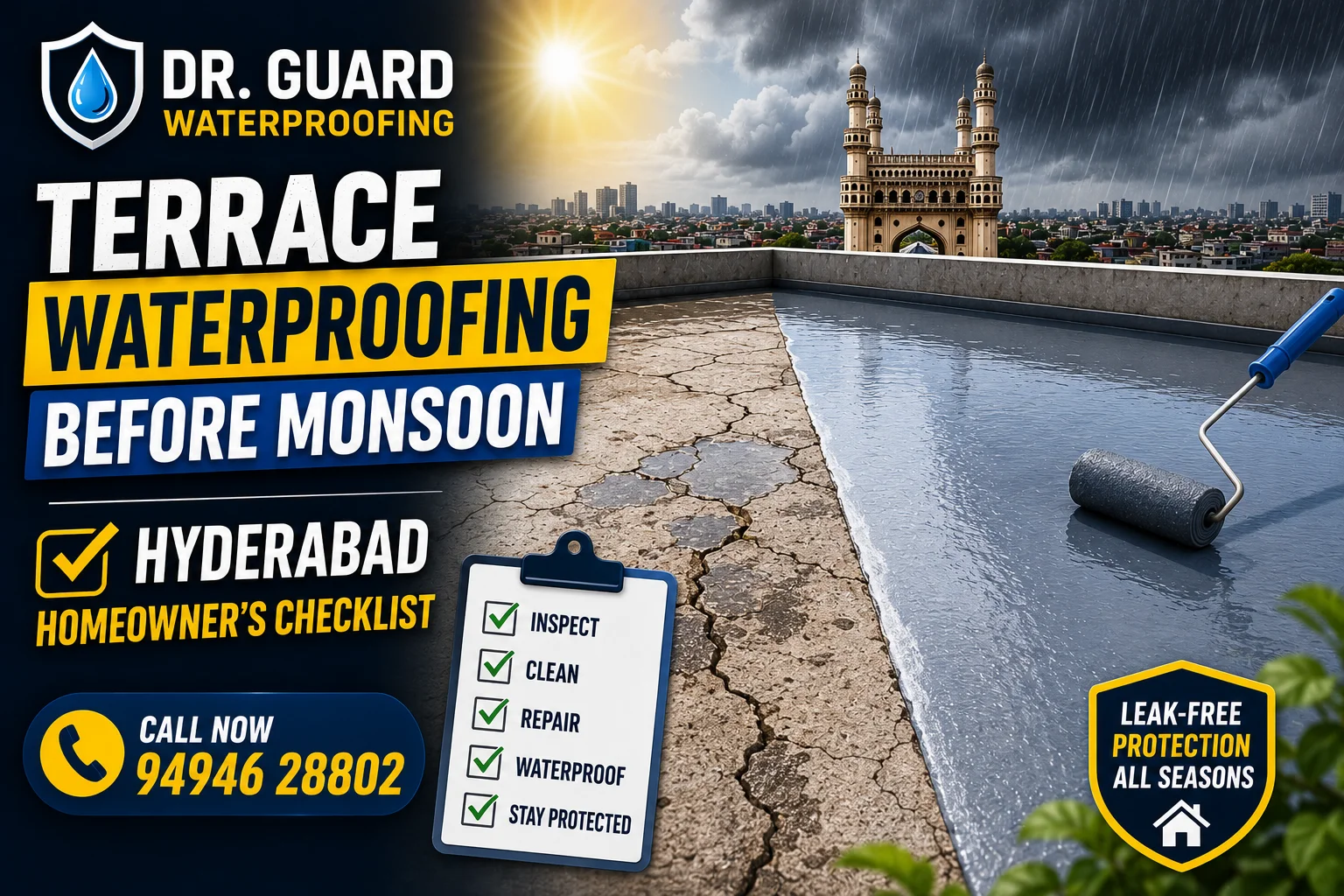
The monsoon season can be a challenging time for homeowners in Hyderabad. While the rains bring relief from the intense summer heat, they also expose hidden weaknesses in terraces and roofs. Small cracks, damaged waterproofing layers, and blocked drainage systems can quickly turn into major leakage problems once the rains begin. This is why every homeowner should follow a proper Terrace Waterproofing Before Monsoon – Hyderabad Homeowner’s Checklist to protect their property from water damage.
Preparing your terrace before the rainy season not only prevents leakage but also helps avoid expensive repairs and structural issues later.
Why Terrace Waterproofing Before Monsoon is Important
Hyderabad experiences heavy rainfall during the monsoon season. If your terrace has cracks or damaged waterproofing, rainwater can seep into the concrete slab and cause:
- Ceiling leakage
- Damp walls
- Peeling paint
- Mold and fungus growth
- Structural damage
A simple pre-monsoon inspection can help identify and fix these issues before they become serious.
Terrace Waterproofing Before Monsoon – Hyderabad Homeowner’s Checklist
1. Inspect the Terrace for Visible Cracks
Start by carefully examining the terrace surface.
Look for:
- Hairline cracks
- Surface damage
- Broken tiles
- Joint separation
Even small cracks can allow rainwater to enter the structure during heavy rainfall.
If any cracks are found, they should be repaired immediately before waterproofing is applied.
2. Check Existing Waterproofing Layers
If your terrace was waterproofed in the past, inspect the condition of the waterproofing system.
Watch for:
- Peeling coatings
- Blistering surfaces
- Visible wear and tear
- Water seepage signs
Older waterproofing systems may require maintenance or reapplication.
3. Clean Terrace Drains and Water Outlets
Blocked drains are one of the most common causes of water stagnation on terraces.
Remove:
- Leaves
- Dust
- Debris
- Construction waste
Proper drainage ensures rainwater flows away quickly and does not collect on the terrace.
4. Look for Water Stagnation Areas
After cleaning the terrace, check for low spots where water tends to accumulate.
Water stagnation can:
- Damage waterproofing layers
- Increase seepage risks
- Accelerate crack formation
Slope correction may be required if significant water pooling occurs.
5. Inspect Parapet Walls and Joints
Parapet walls are often overlooked during terrace inspections.
Check for:
- Cracks near corners
- Open joints
- Damaged plaster
Water frequently enters buildings through weak parapet wall connections.
6. Examine Terrace Tiles and Grout Joints
If your terrace has tiles, inspect the tile joints carefully.
Signs of concern include:
- Missing grout
- Loose tiles
- Cracked joints
Damaged tile joints allow water to penetrate beneath the surface.
7. Check Ceiling Areas Inside the Home
Inspect rooms directly below the terrace.
Look for:
- Damp patches
- Water stains
- Peeling paint
- Musty odors
These signs may indicate that leakage has already started.
8. Repair Existing Cracks Before Waterproofing
Applying waterproofing over untreated cracks is a common mistake.
Professional crack repair may involve:
- PU injection grouting
- Crack fillers
- Joint sealing
Proper crack treatment improves waterproofing performance.
9. Schedule Professional Waterproofing Inspection
A professional inspection can identify hidden problems that may not be visible during a basic check.
Experts can evaluate:
- Terrace condition
- Waterproofing effectiveness
- Drainage systems
- Structural vulnerabilities
Early inspection helps avoid emergency repairs during the rainy season.
10. Choose the Right Waterproofing System
Not all waterproofing methods are suitable for every terrace.
Popular terrace waterproofing solutions include:
PU Waterproofing
Provides excellent flexibility and long-term protection.
APP Membrane Waterproofing
Ideal for terraces exposed to heavy rainfall.
Acrylic Waterproof Coatings
A cost-effective solution for residential properties.
Cementitious Waterproofing
Suitable for basic waterproofing requirements.
The best option depends on your terrace condition and budget.
Benefits of Pre-Monsoon Terrace Waterproofing
Completing waterproofing before the rainy season offers several advantages:
- Prevents roof leakage
- Protects walls and ceilings
- Reduces maintenance costs
- Prevents mold and fungus growth
- Increases terrace lifespan
- Provides peace of mind during heavy rains
Preventive waterproofing is always more affordable than repairing water damage later.
Common Mistakes Homeowners Make Before Monsoon
Avoid these common errors:
- Ignoring small cracks
- Delaying waterproofing until leakage appears
- Skipping terrace inspections
- Using temporary patchwork repairs
- Neglecting drainage maintenance
These mistakes often lead to expensive repairs during the monsoon season.
Why Professional Waterproofing Matters
Professional waterproofing companies understand how Hyderabad’s climate affects terraces.
Experts can:
- Detect hidden leakage points
- Recommend suitable waterproofing systems
- Ensure proper application
- Provide long-term protection
Companies like Dr. Guard Waterproofing offer terrace inspections, crack treatment, and advanced waterproofing solutions designed specifically for Hyderabad homes.
Also Read: Top Waterproofing Solutions for RCC Terraces in Hyderabad
Conclusion
Following a proper Terrace Waterproofing Before Monsoon – Hyderabad Homeowner’s Checklist is one of the best ways to protect your home from rain-related damage. By inspecting your terrace, repairing cracks, cleaning drainage systems, and investing in professional waterproofing, you can prevent leakage and avoid costly repairs.
A little preparation before the monsoon season can save significant time, money, and stress while keeping your home safe, dry, and comfortable throughout the rainy months.
Also, you can check out our social media handles on Instagram, YouTube.

