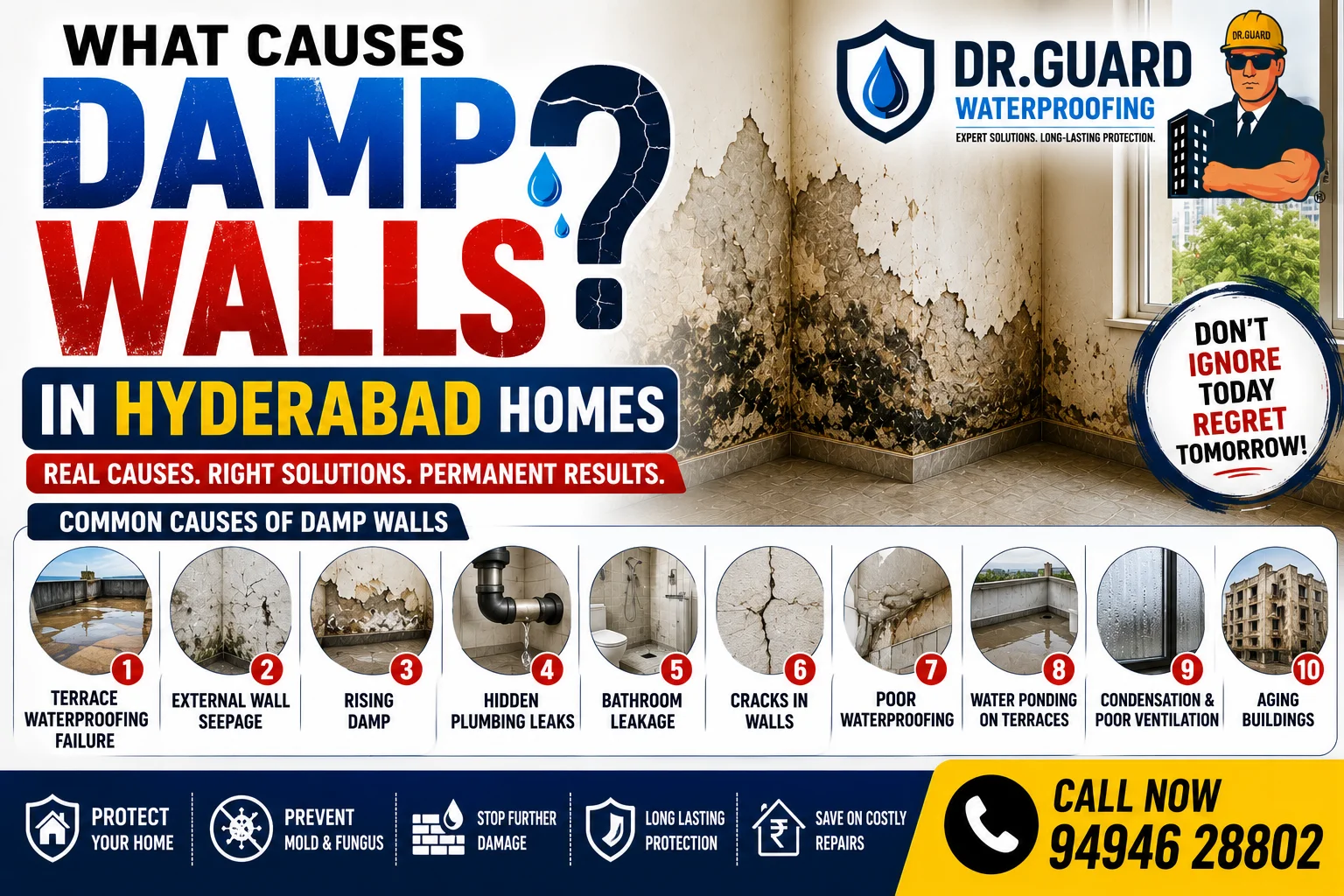
Damp walls are one of the most common problems faced by homeowners in Hyderabad. Whether you live in an independent house or an apartment, damp patches, peeling paint, mold growth, and musty odors can quickly affect the appearance and health of your home. While many people simply repaint the affected wall, the dampness usually returns because the root cause has not been addressed.
Understanding what causes damp walls in Hyderabad homes is the first step toward finding a permanent solution and protecting your property from long-term water damage.
Why Damp Walls Are Common in Hyderabad
Hyderabad experiences a unique combination of extreme summer heat and heavy monsoon rainfall. During summer, buildings expand and develop small cracks due to high temperatures. When the rainy season arrives, water enters through these cracks and gradually spreads inside the walls.
In addition, many older buildings suffer from aging waterproofing systems, plumbing issues, and rising damp, making damp walls a common problem across the city.
What Causes Damp Walls in Hyderabad Homes?
1. Terrace Waterproofing Failure
One of the most common reasons for damp walls is damaged terrace waterproofing.
When waterproofing layers deteriorate:
- Rainwater enters the roof slab
- Moisture spreads through the structure
- Damp patches appear on walls and ceilings
This problem is particularly common during the monsoon season.
2. External Wall Seepage
Exterior walls are constantly exposed to sunlight and rain.
Over time:
- Small cracks develop
- Plaster weakens
- Rainwater penetrates the wall
Water slowly moves inside the masonry and creates damp patches on interior walls.
Homes facing heavy rainfall and direct sunlight are more vulnerable to external wall seepage.
3. Rising Damp
Rising damp occurs when groundwater moves upward through bricks and concrete by capillary action.
This type of dampness usually affects:
- Ground-floor walls
- Lower portions of walls
- Older buildings without proper damp-proofing
Unlike roof leakage, rising damp appears near the floor level and gradually spreads upward.
4. Hidden Plumbing Leaks
Concealed water supply and drainage pipes can leak without obvious warning signs.
Common sources include:
- Bathroom pipelines
- Kitchen plumbing
- Internal water supply lines
Hidden leaks often cause dampness even during dry weather.
5. Bathroom Leakage
Bathrooms are one of the biggest sources of wall dampness.
Common reasons include:
- Failed waterproofing
- Cracked tile grout
- Floor trap leakage
- Hidden plumbing problems
Moisture gradually spreads to adjacent rooms and lower floors.
6. Cracks in Walls
Small wall cracks may appear harmless, but they often become entry points for rainwater.
Hyderabad’s extreme summer temperatures cause concrete and plaster to expand and contract, leading to:
- Hairline cracks
- Surface cracks
- Joint separation
During monsoon, these cracks allow water to enter the building.
7. Poor Waterproofing During Construction
Some buildings develop dampness because waterproofing was either skipped or improperly installed during construction.
Poor-quality materials and workmanship reduce the building’s ability to resist moisture over time.
8. Water Ponding on Terraces
If rainwater remains on the terrace due to poor drainage:
- Waterproofing layers remain under constant pressure
- Cracks expand
- Water slowly penetrates into walls
Proper drainage is essential to prevent dampness.
9. Condensation
Although less common than seepage, condensation can also create damp walls.
This usually occurs in:
- Bathrooms
- Kitchens
- Poorly ventilated rooms
Warm, humid air condenses on cooler wall surfaces, creating moisture.
10. Aging Buildings
Older homes naturally experience wear and tear.
Over time:
- Waterproofing systems deteriorate
- Plaster weakens
- Cracks increase
- Damp-proof layers become less effective
Regular maintenance becomes essential as buildings age.
Signs of Damp Walls
Homeowners should look for early warning signs such as:
Damp Patches
Dark stains or wet areas on walls.
Peeling Paint
Paint bubbling, cracking, or peeling from the wall surface.
Flaking Plaster
Loose or crumbling plaster caused by continuous moisture.
Mold and Fungus
Black or green patches usually indicate excessive moisture.
Musty Odors
Persistent damp smells often suggest hidden seepage.
White Salt Deposits (Efflorescence)
White powdery stains appear when moisture carries salts through the wall.
Why Damp Walls Should Never Be Ignored
Ignoring dampness can lead to:
- Structural deterioration
- Mold and fungus growth
- Poor indoor air quality
- Damage to furniture
- Electrical hazards
- Increased maintenance costs
Early waterproofing is always more economical than major repairs.
How to Identify the Actual Cause of Damp Walls
Because dampness can have multiple causes, proper inspection is essential.
Professional leakage detection methods include:
Thermal Scanning
Infrared cameras identify hidden moisture inside walls without breaking the structure.
Moisture Meter Testing
Measures moisture levels within walls and plaster.
Visual Structural Inspection
Experts inspect:
- Terrace waterproofing
- External walls
- Plumbing systems
- Structural cracks
- Drainage conditions
This helps determine the exact source of dampness.
How to Fix Damp Walls Permanently
The right solution depends on the source of the moisture.
Common treatments include:
Terrace Waterproofing
Prevents rainwater from entering through the roof.
External Wall Waterproofing
Protects walls from rainwater penetration.
Rising Damp Treatment
Chemical damp-proofing prevents groundwater from rising through walls.
Crack Repair
Seals wall cracks before waterproofing.
Bathroom Waterproofing
Stops seepage from wet areas.
Plumbing Repairs
Fixes hidden pipe leaks that cause continuous dampness.
How to Prevent Damp Walls
Homeowners can reduce dampness by:
- Inspecting terraces before every monsoon
- Repairing cracks immediately
- Waterproofing external walls
- Maintaining drainage systems
- Fixing plumbing leaks quickly
- Scheduling periodic waterproofing inspections
Preventive maintenance significantly extends the life of the building.
Why Choose Dr. Guard Waterproofing?
Damp walls often require specialized diagnosis because the visible damage is rarely the actual source of the problem.
Dr. Guard Waterproofing provides advanced waterproofing and damp-proofing solutions across Hyderabad, including:
- Thermal Scanning for Leakage Detection
- Terrace Waterproofing
- External Wall Waterproofing
- Rising Damp Treatment
- Bathroom Waterproofing
- Crack Repair
- Moisture Inspection
Their experienced team identifies the exact cause of dampness and provides customized waterproofing solutions that deliver long-term protection.
Benefits of Professional Damp-Proofing
- Permanent dampness solutions
- Protection against structural damage
- Prevention of mold growth
- Better indoor air quality
- Lower maintenance costs
- Increased property value
Also Read: Wall Dampness & Rising Damp
Conclusion
Understanding what causes damp walls in Hyderabad homes is essential for finding a permanent solution instead of repeatedly treating the symptoms. Whether the problem is caused by terrace leakage, external wall seepage, rising damp, plumbing leaks, or failed waterproofing, identifying the root cause is the key to successful repairs.
With regular inspections and professional waterproofing services from Dr. Guard Waterproofing, homeowners can eliminate damp walls, protect their property from water damage, and enjoy a healthier, safer living environment.
Also, you can check out our social media handles on Instagram, YouTube.

