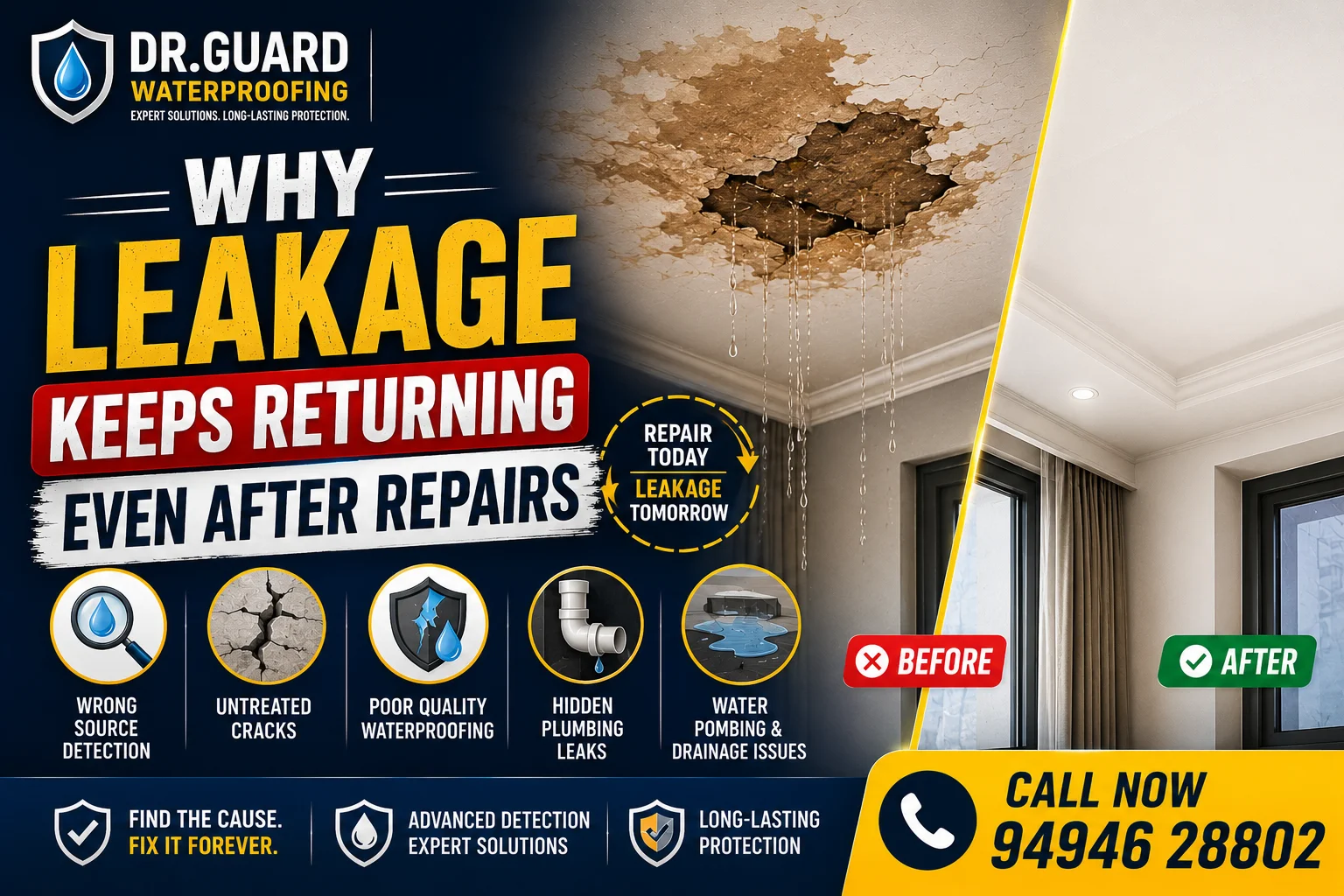
Few things are more frustrating for homeowners than repairing a leakage problem only to see it return again after a few weeks or months. Many people spend significant amounts of money on patchwork repairs, repainting walls, or sealing visible cracks, yet the leakage continues to come back. The reason is simple: in most cases, the actual source of the problem was never identified or treated properly.
Understanding why leakage keeps returning even after repairs can help homeowners avoid repeated expenses and choose a long-lasting solution instead of temporary fixes.
Why Recurring Leakage is a Common Problem
Water leakage is often more complex than it appears. The damp patch or water stain you see on a wall or ceiling is usually just the symptom, not the actual source of the problem.
Water can travel through:
- Concrete slabs
- Wall cavities
- Construction joints
- Plumbing lines
- Roof structures
As a result, repairing only the visible damage rarely solves the root cause.
Why Leakage Keeps Returning Even After Repairs
1. The Real Source of Leakage Was Never Identified
One of the biggest reasons leakage returns is incorrect diagnosis.
Many contractors repair the visible damp area without determining where the water is actually entering.
For example:
- A ceiling stain may originate from a terrace crack several feet away.
- A damp wall may be caused by bathroom seepage from the neighboring room.
Without identifying the exact source, leakage is likely to reappear.
2. Temporary Patchwork Instead of Permanent Repair
Many homeowners choose quick fixes because they appear affordable.
Common temporary solutions include:
- Applying cement over cracks
- Surface-level sealants
- Repainting damp walls
These methods may hide the problem temporarily but do not stop water from entering the structure.
3. Poor Quality Waterproofing Materials
Using low-quality waterproofing products often leads to premature failure.
Inferior materials may:
- Crack under heat
- Lose flexibility
- Deteriorate during monsoon
As a result, water finds new entry points and leakage returns.
4. Existing Cracks Were Not Properly Treated
Cracks are one of the most common causes of leakage.
If waterproofing is applied without first repairing the cracks:
- Water continues to penetrate
- Cracks expand over time
- The waterproofing layer eventually fails
Proper crack treatment is essential before any waterproofing work begins.
5. Hidden Plumbing Leakage Remains Unrepaired
In many homes and apartments, leakage originates from concealed plumbing systems.
Common sources include:
- Bathroom pipelines
- Kitchen plumbing
- Water supply lines
If the pipe leak is not repaired, moisture continues to spread regardless of surface treatments.
6. Terrace Waterproofing Failure
Terraces are constantly exposed to:
- Rainfall
- UV rays
- Extreme temperatures
Over time, waterproofing systems can deteriorate.
Many homeowners repair ceiling leakage without addressing the damaged terrace waterproofing above.
As a result, leakage returns during the next rainy season.
7. Water Ponding on the Terrace
Standing water on a terrace places continuous pressure on waterproofing systems.
If terrace slopes and drainage are not corrected:
- Water accumulates
- Waterproofing layers weaken
- Leakage reappears
Proper drainage is an important part of any long-term solution.
8. External Wall Seepage Was Ignored
Many leakage problems originate from external walls rather than roofs.
Rainwater can enter through:
- Wall cracks
- Damaged plaster
- Open construction joints
If wall seepage is not addressed, interior leakage may continue despite repeated repairs.
9. Poor Workmanship
Even high-quality materials can fail when applied incorrectly.
Common workmanship issues include:
- Improper surface preparation
- Incorrect application thickness
- Skipping primer coats
- Inadequate curing time
Professional installation is critical for long-lasting waterproofing performance.
10. Structural Movement and New Crack Formation
Buildings naturally expand and contract because of temperature changes.
In Hyderabad, extreme summer heat accelerates this process.
Over time:
- New cracks may develop
- Existing cracks may widen
- Previously repaired areas may reopen
Flexible waterproofing systems are needed to accommodate structural movement.
Signs That Your Leakage Problem Has Not Been Fully Solved
You may still have an active leakage source if you notice:
- Damp patches reappearing
- Water stains after rainfall
- Peeling paint returning
- Persistent musty odors
- Mold growth
- Moisture spreading to new areas
These signs indicate that the root cause remains untreated.
How to Stop Leakage Permanently
Identify the Exact Source
The first step is professional leakage detection.
This may involve:
- Thermal scanning
- Moisture meter testing
- Visual inspections
- Plumbing pressure testing
Use the Right Waterproofing System
Different problems require different solutions.
Examples include:
- PU waterproofing for terraces
- Injection grouting for cracks
- Bathroom waterproofing systems
- External wall waterproofing
A customized approach produces better results.
Repair Cracks Before Waterproofing
All structural cracks should be treated before applying waterproofing materials.
Improve Drainage Systems
Proper drainage prevents water accumulation and reduces future leakage risks.
Why Professional Leakage Detection Matters
Modern leakage problems often require advanced inspection methods.
Professional companies like Dr. Guard Waterproofing use:
- Thermal scanning technology
- Moisture detection equipment
- Structural inspections
- Advanced waterproofing systems
to locate the actual source of leakage and provide long-term solutions instead of temporary repairs.
Benefits of Solving the Root Cause
- Permanent leakage protection
- Lower maintenance costs
- Reduced repair expenses
- Improved indoor air quality
- Protection against mold growth
- Increased building lifespan
Also Read: How to Find the Exact Source of Water Leakage
Conclusion
Understanding why leakage keeps returning even after repairs is essential for finding a permanent solution. In most cases, recurring leakage occurs because the actual source was never identified, poor-quality repairs were performed, or the wrong waterproofing method was used.
Instead of repeatedly repairing visible damage, homeowners should focus on accurate leakage detection and professional waterproofing solutions. Addressing the root cause not only stops leakage permanently but also protects the property from costly future damage.
Also, you can check out our social media handles on Instagram, YouTube.

