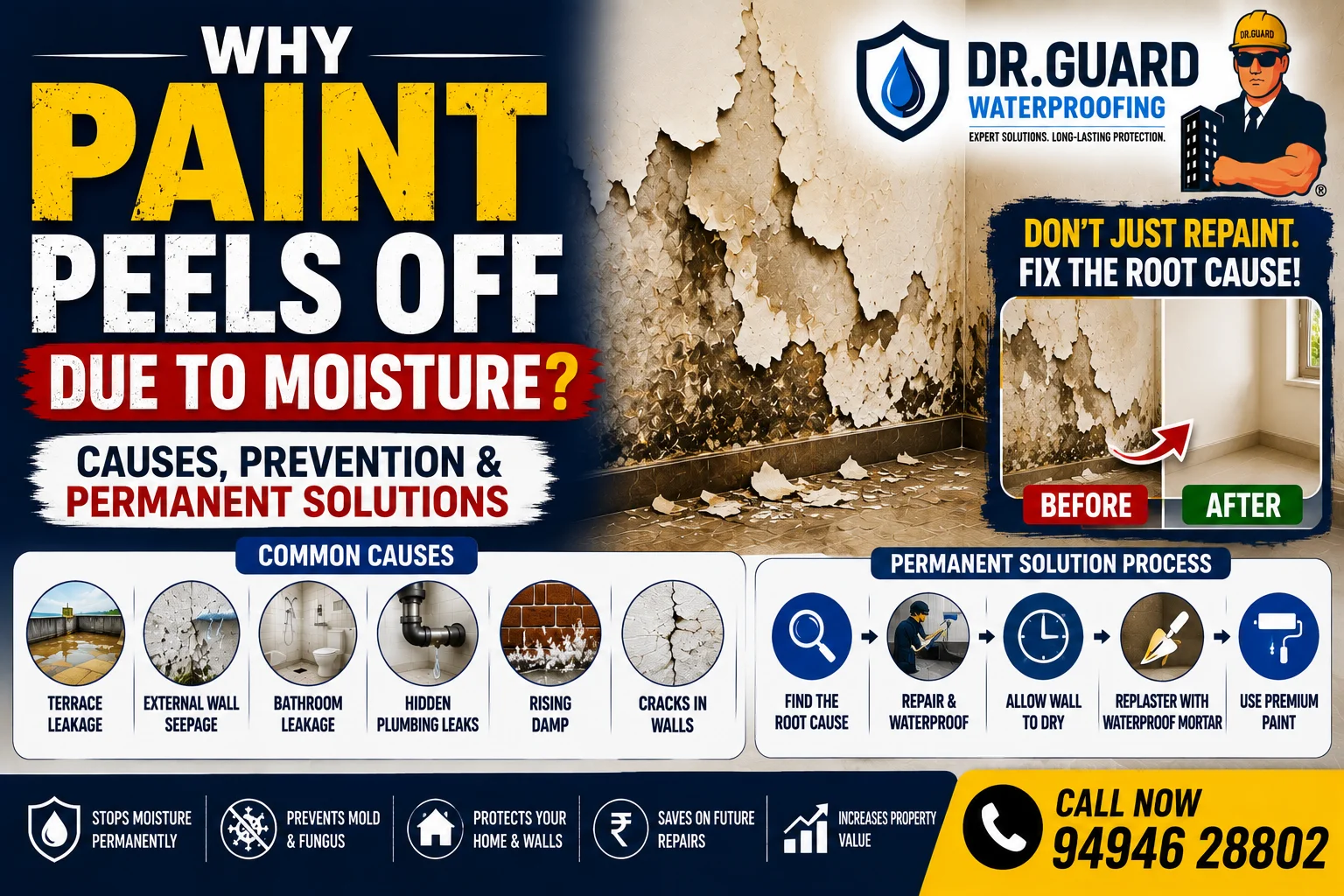
Freshly painted walls can completely transform the look of a home. However, when paint starts peeling, bubbling, or flaking within a short period, it is usually a sign of an underlying moisture problem rather than poor-quality paint. Many homeowners repaint the affected area, only to see the paint peel off again after a few months because the real cause was never addressed.
Understanding why paint peels off due to moisture can help homeowners identify hidden water problems early and choose the right waterproofing solution instead of repeatedly spending money on repainting.
Why Moisture Causes Paint to Peel
Paint is designed to adhere to a clean, dry, and stable surface. When moisture enters the wall, it weakens the bond between the paint and the plaster.
As water continues to accumulate behind the painted surface:
- Paint loses its adhesion.
- Air and moisture become trapped beneath the paint film.
- Blisters and bubbles begin to appear.
- Eventually, the paint starts peeling away from the wall.
Unless the source of moisture is eliminated, repainting alone will never solve the problem.
Why Paint Peels Off Due to Moisture
1. Terrace Leakage
One of the most common causes of peeling paint is water entering through the terrace.
When terrace waterproofing fails:
- Rainwater penetrates the roof slab.
- Moisture spreads through the ceiling.
- Paint begins bubbling and peeling.
This problem becomes especially noticeable during Hyderabad’s monsoon season.
2. External Wall Seepage
Exterior walls are constantly exposed to sunlight, heat, and rain.
Over time:
- Hairline cracks develop.
- Rainwater enters through the cracks.
- Moisture travels inside the wall.
- Interior paint begins to peel.
Homes with walls facing heavy rainfall are particularly vulnerable.
3. Bathroom Leakage
Bathrooms generate moisture every day.
If waterproofing beneath the tiles fails or plumbing leaks develop:
- Water spreads into adjacent walls.
- Paint starts peeling in nearby rooms.
- Damp patches become visible.
This is a common issue in apartments where bathrooms share walls with bedrooms or living spaces.
4. Hidden Plumbing Leaks
Concealed pipes inside walls can leak slowly for months.
Signs include:
- Localized peeling paint
- Damp patches
- Continuous moisture
- Mold growth
Because the leak is hidden, homeowners often mistake the problem for poor-quality paint.
5. Rising Damp
Groundwater rising through walls is another major cause of peeling paint.
Rising damp usually affects:
- Ground-floor houses
- Lower wall sections
- Older buildings
Moisture continuously rises from the foundation, causing paint failure near the floor.
6. High Indoor Humidity
Poor ventilation in bathrooms, kitchens, and laundry areas can increase indoor humidity.
Excess moisture condenses on walls and eventually weakens the paint.
This is especially common in rooms with limited airflow.
7. Water Ponding on the Terrace
Standing water on terraces increases pressure on waterproofing systems.
Over time:
- Waterproofing deteriorates.
- Water enters the slab.
- Ceiling paint begins to peel.
Proper terrace drainage helps prevent this problem.
Signs That Moisture is Causing Paint Damage
Watch for these warning signs:
Bubbling Paint
Small bubbles indicate moisture trapped beneath the paint layer.
Peeling Paint
Paint separates from the wall in flakes or sheets.
Discolored Walls
Yellow, brown, or dark stains often appear before peeling begins.
Soft Plaster
Walls may feel soft or powdery because of continuous moisture.
White Salt Deposits (Efflorescence)
White powdery marks indicate water movement through the wall.
Mold and Fungus
Black or green patches are common in damp areas.
Musty Odor
Persistent damp smells usually indicate hidden moisture.
Why Repainting Alone Doesn’t Solve the Problem
Many homeowners simply scrape off the damaged paint and repaint the wall.
Unfortunately, this is only a temporary fix.
If the moisture source remains active:
- Paint will peel again.
- Damp patches will return.
- Mold may continue growing.
- Structural damage can worsen.
The leakage or seepage must always be repaired before repainting.
How to Stop Paint from Peeling Permanently
Step 1: Identify the Source of Moisture
Professional leakage detection helps determine whether the problem is caused by:
- Terrace leakage
- External wall seepage
- Bathroom leakage
- Plumbing leaks
- Rising damp
Correct diagnosis is the first step toward a permanent solution.
Step 2: Repair the Water Leakage
Depending on the source, professional solutions may include:
- Terrace waterproofing
- External wall waterproofing
- Bathroom waterproofing
- Crack repair
- Rising damp treatment
- Plumbing repairs
The correct repair method depends on the actual cause of moisture.
Step 3: Allow the Wall to Dry
After the leakage has been repaired, the wall should be allowed to dry completely.
Painting damp walls too early often leads to recurring paint failure.
Step 4: Replace Damaged Plaster
If moisture has weakened the plaster, it should be removed and replaced with waterproof plaster before repainting.
Step 5: Use Moisture-Resistant Primer and Paint
A high-quality moisture-resistant primer improves adhesion and provides additional protection.
However, paint should only be applied after the moisture problem has been fully resolved.
How Professionals Detect Hidden Moisture
Modern waterproofing companies use advanced equipment to locate hidden leakage.
Thermal Scanning
Infrared cameras identify moisture inside walls without breaking the surface.
Benefits:
- Non-destructive inspection
- Fast results
- Accurate moisture detection
Moisture Meter Testing
Measures the amount of moisture present inside walls and ceilings.
This helps determine the severity of the problem.
Visual Waterproofing Inspection
Professionals inspect:
- Terrace waterproofing
- External walls
- Bathrooms
- Plumbing systems
- Structural cracks
This ensures that repairs target the root cause.
How to Prevent Paint Peeling Due to Moisture
Homeowners can reduce future problems by:
- Inspecting terraces before monsoon
- Waterproofing external walls
- Repairing wall cracks immediately
- Fixing plumbing leaks promptly
- Maintaining proper ventilation
- Scheduling regular waterproofing inspections
Preventive maintenance protects both the building and the paint finish.
Why Choose Dr. Guard Waterproofing?
Paint peeling is usually a symptom of a deeper moisture problem, not a paint defect.
Dr. Guard Waterproofing provides comprehensive waterproofing and leakage detection services across Hyderabad, including:
- Thermal Scanning for Leakage Detection
- Moisture Meter Testing
- Terrace Waterproofing
- External Wall Waterproofing
- Bathroom Waterproofing
- Rising Damp Treatment
- Crack Repair
- Waterproof Replastering
Their experienced team identifies the actual source of moisture and provides long-lasting waterproofing solutions instead of temporary cosmetic repairs.
Benefits of Fixing Moisture Problems
- Prevents recurring paint damage
- Eliminates damp walls
- Stops mold and fungus growth
- Protects plaster and concrete
- Improves indoor air quality
- Reduces maintenance costs
- Increases property value
Also Read: How to Remove Damp Patches Permanently
Conclusion
Understanding why paint peels off due to moisture is essential for protecting your home from recurring damage. Moisture caused by terrace leakage, external wall seepage, bathroom leakage, hidden plumbing leaks, or rising damp weakens the bond between paint and the wall, resulting in bubbling, flaking, and peeling.
Instead of repeatedly repainting affected areas, homeowners should focus on identifying and repairing the source of moisture. With professional waterproofing and leakage detection services from Dr. Guard Waterproofing, you can permanently eliminate moisture problems, protect your walls, and enjoy a clean, durable paint finish for years to come.
Also, you can check out our social media handles on Instagram, YouTube.

