Building a new home is one of the biggest investments most people make in their lifetime. While homeowners often focus on design, interiors, and construction quality, waterproofing is sometimes overlooked or treated as a secondary task. However, proper waterproofing is one of the most important steps in protecting a home from future leakage, seepage, dampness, and structural damage.
This complete guide to waterproofing for new homes will help you understand why waterproofing is essential, where it should be applied, and how it can save you from expensive repairs in the future.
Why Waterproofing is Important for New Homes
Many homeowners assume waterproofing can be done later if leakage appears. Unfortunately, by the time leakage becomes visible, water may have already damaged the structure.
Proper waterproofing during construction helps:
- Prevent water leakage and seepage
- Protect structural strength
- Increase building lifespan
- Reduce future maintenance costs
- Prevent mold and fungus growth
- Protect interiors and paint
Investing in waterproofing during construction is far more affordable than repairing water damage later.
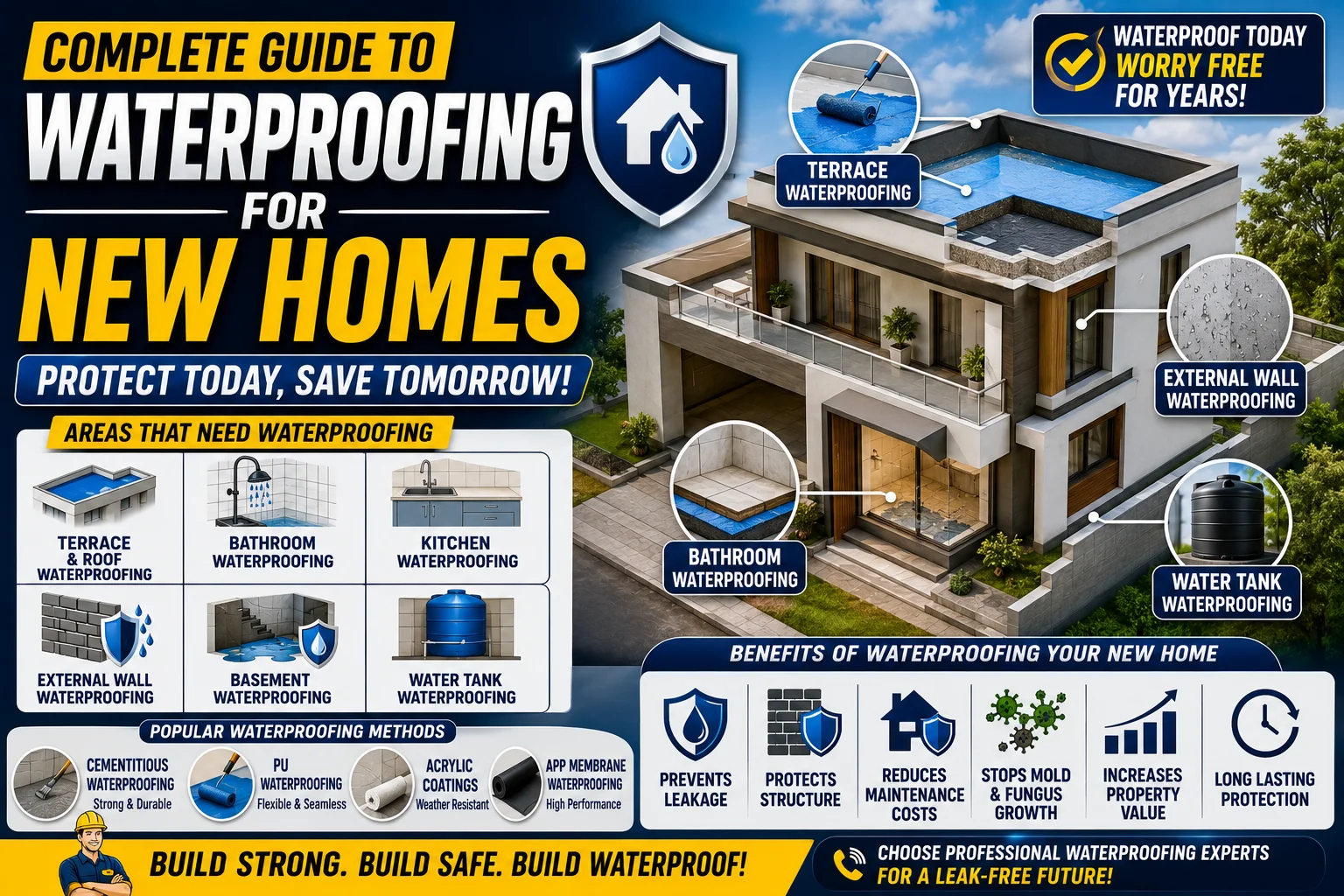
Areas That Need Waterproofing in a New Home
1. Terrace and Roof Waterproofing
The terrace is the most exposed part of a building. It faces direct sunlight, rain, and changing weather conditions throughout the year.
Without proper waterproofing:
- Rainwater can enter through cracks
- Ceiling leakage may occur
- Damp patches can develop
Professional terrace waterproofing creates a protective barrier that prevents water penetration.
2. Bathroom Waterproofing
Bathrooms are constantly exposed to water and moisture.
Waterproofing should be applied:
- Below floor tiles
- On bathroom walls
- Around drainage points
- Near plumbing fixtures
Proper bathroom waterproofing prevents seepage to adjacent rooms and lower floors.
3. Kitchen Waterproofing
Kitchens are often overlooked during waterproofing.
Waterproof protection is important around:
- Sink areas
- Plumbing lines
- Floor surfaces
This helps prevent hidden leakage and moisture damage.
4. External Wall Waterproofing
External walls are directly exposed to rain and weather conditions.
Wall waterproofing helps:
- Prevent rainwater seepage
- Protect paint and plaster
- Reduce dampness
Exterior waterproof coatings provide long-term protection.
5. Basement Waterproofing
If your new home includes a basement, waterproofing is essential.
Basement waterproofing protects against:
- Groundwater seepage
- Damp walls
- Foundation damage
Proper treatment ensures a dry and durable underground structure.
6. Water Tank Waterproofing
Both overhead and underground water tanks should be waterproofed during construction.
Benefits include:
- Preventing leakage
- Protecting concrete structures
- Reducing water loss
Popular Waterproofing Methods for New Homes
Cementitious Waterproofing
This method uses cement-based compounds to create a waterproof layer.
Best For:
- Bathrooms
- Kitchens
- Water tanks
PU Waterproofing
Polyurethane waterproofing creates a seamless and highly flexible waterproof membrane.
Best For:
- Terraces
- Roofs
- Balconies
Acrylic Waterproof Coatings
Acrylic coatings provide weather-resistant protection for external surfaces.
Best For:
- External walls
- Roof surfaces
APP Membrane Waterproofing
APP membrane systems use waterproof sheets applied over surfaces.
Best For:
- Terraces
- Commercial roofs
- Large roof areas
Common Waterproofing Mistakes in New Homes
Many homeowners make the mistake of:
Choosing the Lowest-Cost Solution
Cheap waterproofing materials often fail quickly.
Ignoring Waterproofing During Construction
Retrofitting waterproofing later is more expensive and difficult.
Skipping Bathroom Waterproofing
Bathrooms are one of the most common sources of leakage.
Hiring Inexperienced Contractors
Improper application can cause waterproofing failure even when quality materials are used.
When Should Waterproofing Be Done?
The ideal time to waterproof a home is during the construction phase.
Waterproofing should be completed:
- Before tile installation
- Before exterior painting
- Before final finishing work
Early application ensures complete protection from the start.
How Professional Waterproofing Helps
Professional waterproofing experts understand:
- Surface preparation requirements
- Material compatibility
- Application techniques
- Long-term protection systems
Companies like Dr. Guard Waterproofing provide customized waterproofing solutions for new homes using modern techniques and high-quality materials.
Benefits of Waterproofing a New Home
- Prevents future leakage issues
- Protects structural integrity
- Reduces maintenance expenses
- Improves indoor comfort
- Increases property value
- Extends the life of the building
Also Read: What Happens if Waterproofing is Not Done Properly?
Conclusion
This complete guide to waterproofing for new homes highlights why waterproofing should never be treated as an optional part of construction. A properly waterproofed home remains stronger, safer, and more durable for years to come.
From terraces and bathrooms to basements and external walls, investing in quality waterproofing during construction helps prevent future problems and protects your home from costly water damage. For long-lasting results, always choose professional waterproofing solutions and experienced experts who understand the unique needs of modern homes.
Also, you can check out our social media handles on Instagram, YouTube.

