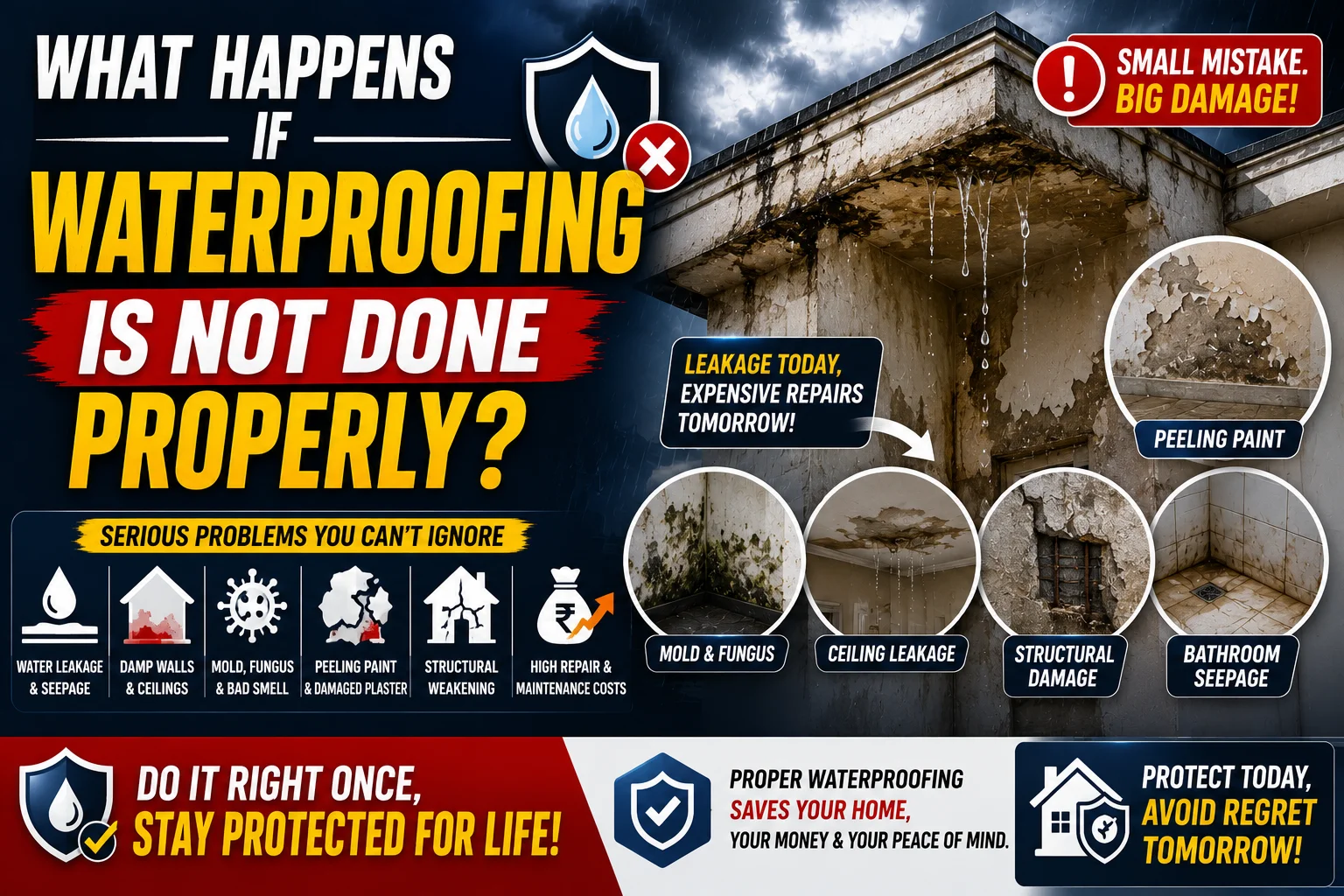
Waterproofing is one of the most important aspects of protecting a building from water damage. Whether it is a home, apartment, office, or commercial property, proper waterproofing helps prevent leakage, seepage, and structural deterioration. However, if waterproofing is done incorrectly or with poor-quality materials, the consequences can be costly and long-lasting.
Understanding what happens if waterproofing is not done properly can help property owners make informed decisions and avoid expensive repairs in the future.
Why Proper Waterproofing Matters
A building is constantly exposed to rain, humidity, groundwater, and daily water usage. Waterproofing creates a protective barrier that prevents moisture from entering the structure.
When waterproofing fails or is applied incorrectly, water finds its way into walls, roofs, ceilings, and foundations, leading to various problems.
What Happens if Waterproofing is Not Done Properly?
1. Water Leakage and Seepage
The most common consequence of poor waterproofing is water leakage.
Water can enter through:
- Roof cracks
- Terrace surfaces
- Bathroom floors
- External walls
- Construction joints
Over time, leakage becomes more severe and difficult to repair.
2. Damp Walls and Ceilings
Improper waterproofing allows moisture to penetrate walls and ceilings.
Common signs include:
- Damp patches
- Dark stains
- Wet surfaces
- Discoloration
Dampness often spreads gradually and affects larger areas over time.
3. Peeling Paint and Damaged Plaster
Water trapped behind walls weakens paint and plaster.
This leads to:
- Peeling paint
- Bubbling surfaces
- Flaking plaster
- Uneven wall finishes
Frequent repainting becomes necessary if the root cause is not fixed.
4. Mold and Fungus Growth
Moisture creates the perfect environment for mold and fungus.
Common effects include:
- Black mold patches
- Green fungus growth
- Unpleasant odors
- Poor indoor air quality
In addition to damaging walls, mold can also affect the health of occupants.
5. Structural Damage
One of the most serious consequences of poor waterproofing is structural deterioration.
Continuous water penetration can:
- Weaken concrete
- Corrode steel reinforcement
- Increase crack formation
- Reduce building lifespan
Structural repairs are often expensive and time-consuming.
6. Terrace Leakage Problems
Terraces are among the most exposed areas of a building.
If terrace waterproofing is not done properly:
- Rainwater enters through cracks
- Ceiling leakage develops
- Interior rooms become damp
- Waterproofing failure spreads over time
This is especially common during monsoon seasons.
7. Bathroom and Kitchen Seepage
Bathrooms and kitchens experience constant water exposure.
Poor waterproofing can result in:
- Leakage to lower floors
- Damp walls
- Tile damage
- Plumbing-related moisture issues
These problems often affect neighboring apartments in multi-story buildings.
8. Increased Repair and Maintenance Costs
Improper waterproofing may seem cheaper initially, but it usually leads to higher expenses later.
Homeowners often end up paying for:
- Repeated repairs
- Repainting
- Crack treatment
- Ceiling restoration
- Structural repairs
Investing in proper waterproofing from the beginning is far more cost-effective.
Common Reasons Waterproofing Fails
Poor Surface Preparation
Waterproofing materials need a clean and properly prepared surface to bond effectively.
Skipping preparation often causes waterproofing failure.
Using Low-Quality Materials
Cheap waterproofing chemicals may crack, shrink, or lose effectiveness over time.
Quality materials provide better durability and protection.
Improper Application
Even the best waterproofing products can fail if they are not applied correctly.
Professional expertise is essential for long-term results.
Ignoring Existing Cracks
Applying waterproofing over untreated cracks allows water to continue entering the structure.
Crack treatment should always be completed before waterproofing.
How to Avoid Waterproofing Problems
To ensure long-lasting protection:
Choose Experienced Professionals
Work with qualified waterproofing contractors who understand building conditions and leakage causes.
Use High-Quality Waterproofing Materials
Invest in reliable waterproofing systems rather than low-cost alternatives.
Inspect Vulnerable Areas Regularly
Pay special attention to:
- Terraces
- Bathrooms
- External walls
- Basements
Address Small Problems Early
Minor cracks and damp patches should never be ignored.
Why Professional Waterproofing is Important
Professional waterproofing companies perform:
- Detailed inspections
- Leakage detection
- Surface preparation
- Proper material selection
- Correct application methods
Companies like Dr. Guard Waterproofing provide comprehensive waterproofing solutions designed to deliver long-term protection against leakage and seepage.
Benefits of Proper Waterproofing
- Prevents water leakage
- Protects structural integrity
- Stops dampness and mold growth
- Reduces maintenance costs
- Improves indoor comfort
- Increases property value
Also Read: How to Detect Hidden Leakage Behind Walls
Conclusion
Understanding what happens if waterproofing is not done properly highlights the importance of using the right materials and professional application techniques. Poor waterproofing can lead to leakage, dampness, mold growth, structural damage, and significant repair expenses.
Investing in quality waterproofing today can save homeowners and property owners from costly problems in the future while ensuring their buildings remain safe, dry, and durable for years to come.
Also, you can check out our social media handles on Instagram, YouTube.

