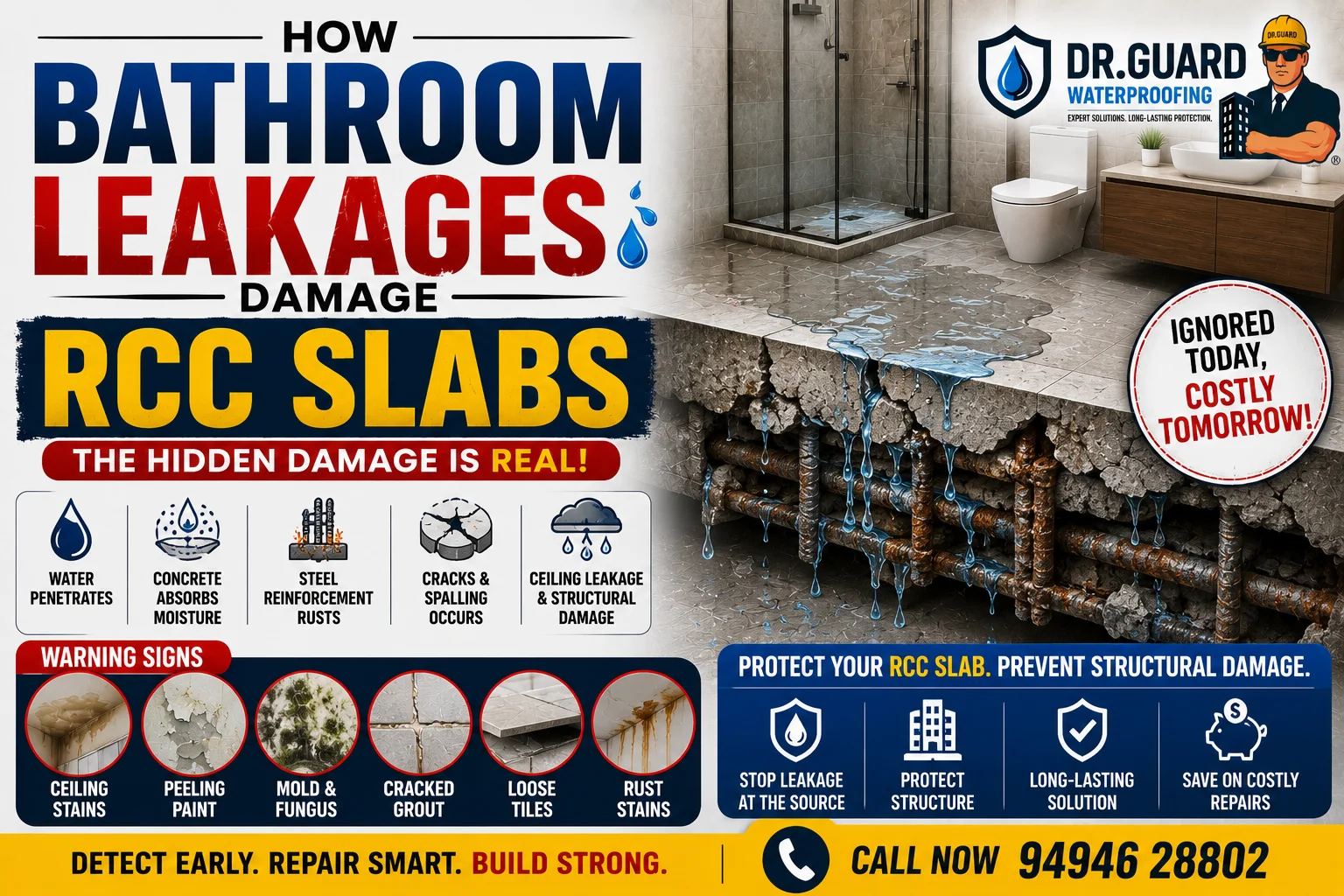
Bathroom leakages are often ignored until visible signs such as ceiling stains or damp walls appear. However, the real damage usually happens beneath the surface. Continuous water seepage from a leaking bathroom can gradually weaken the RCC (Reinforced Cement Concrete) slab, affecting the strength and durability of the building. What starts as a small leak can eventually lead to costly structural repairs if not addressed promptly.
Understanding how bathroom leakages damage RCC slabs can help homeowners take preventive action and protect their property from long-term structural deterioration.
What is an RCC Slab?
An RCC (Reinforced Cement Concrete) slab is one of the most important structural components of a building. It consists of concrete reinforced with steel bars, providing the strength needed to support floors, walls, furniture, and occupants.
Although concrete is strong, it is not completely waterproof. If water continuously enters through cracks or damaged waterproofing, it can gradually affect both the concrete and the steel reinforcement inside the slab.
Why Bathroom Leakages Are Dangerous
Bathrooms are exposed to water every day. If the waterproofing system fails or plumbing starts leaking, water slowly penetrates beneath the tiles and reaches the RCC slab.
Unlike sudden leaks, bathroom seepage develops gradually and often remains unnoticed for months.
This continuous exposure to moisture can cause serious structural problems over time.
How Bathroom Leakages Damage RCC Slabs
1. Water Penetrates Through Tile Joints
One of the most common reasons for bathroom leakage is damaged grout or failed waterproofing beneath the tiles.
Water slowly enters through:
- Cracked grout joints
- Broken tiles
- Floor trap gaps
- Wall-floor joints
Once water reaches the concrete slab, the damage begins internally.
2. Concrete Absorbs Moisture
Concrete contains microscopic pores that absorb water.
Continuous moisture exposure causes:
- Increased water absorption
- Internal dampness
- Reduced concrete durability
Over time, repeated wetting and drying cycles weaken the concrete structure.
3. Steel Reinforcement Begins to Rust
The biggest risk to RCC slabs is corrosion of the steel reinforcement bars (rebars).
When water reaches the steel:
- Rust begins to develop
- Steel expands as corrosion increases
- Internal pressure builds inside the concrete
This is one of the most serious consequences of prolonged bathroom leakage.
4. Concrete Cracks Due to Corrosion
As steel reinforcement corrodes, it expands significantly.
This expansion creates pressure inside the slab, resulting in:
- Surface cracks
- Concrete splitting
- Spalling (concrete breaking away)
- Reduced structural strength
These cracks allow even more water to enter, creating a cycle of deterioration.
5. Ceiling Leakage Appears Below
Once water penetrates the RCC slab, it eventually reaches the ceiling of the lower floor.
Common signs include:
- Water stains
- Damp ceilings
- Peeling paint
- Dripping water
- Mold growth
These visible symptoms often indicate that the slab has already been exposed to moisture for a considerable period.
6. Reduced Structural Strength
Long-term water exposure weakens both the concrete and the steel reinforcement.
If ignored for years, this may reduce the slab’s load-bearing capacity and require extensive structural repairs.
Early Signs That Bathroom Leakage Is Affecting the RCC Slab
Recognizing the warning signs early can prevent major damage.
Watch for:
Ceiling Damp Patches
Dark stains below bathrooms often indicate moisture inside the slab.
Peeling Paint
Paint that bubbles or peels repeatedly is a common sign of ongoing seepage.
Rust-Colored Stains
Brown or reddish stains may indicate corrosion of reinforcement steel.
Cracks in the Ceiling
Cracks accompanied by moisture should always be investigated.
Loose Bathroom Tiles
Water beneath the tiles weakens the adhesive and may indicate waterproofing failure.
Musty Odors
Persistent damp smells often suggest hidden moisture within the slab.
Common Causes of Bathroom Leakage
Bathroom leakage usually occurs because of:
- Failed waterproofing
- Damaged tile grout
- Leaking floor traps
- Hidden plumbing leaks
- Cracked bathroom flooring
- Poor construction practices
Identifying the exact source is essential before repairs begin.
How to Prevent RCC Slab Damage
Maintain Bathroom Waterproofing
A properly installed waterproofing system prevents water from reaching the concrete slab.
Regular inspections help identify problems before leakage develops.
Repair Grout Immediately
Small cracks in grout joints should never be ignored.
Replacing damaged grout prevents water from entering beneath the tiles.
Fix Plumbing Leaks Early
Hidden plumbing leaks continuously expose the RCC slab to moisture.
Prompt repairs reduce long-term structural damage.
Inspect Floor Traps
Floor traps are one of the most common leakage points in bathrooms.
Proper sealing helps prevent seepage around drainage areas.
Schedule Regular Waterproofing Inspections
Professional inspections identify hidden leakage before it causes serious structural damage.
Modern Methods to Repair Bathroom Leakage
Today’s waterproofing technologies allow many bathroom leakage problems to be repaired without major demolition.
Common solutions include:
PU Injection Grouting
Polyurethane resin is injected into leakage paths to stop active seepage.
Epoxy Grouting
Epoxy grout seals tile joints and prevents water penetration.
Bathroom Waterproofing Without Removing Tiles
Modern chemical waterproofing systems often eliminate leakage without breaking the existing floor.
Complete Bathroom Waterproofing
If the waterproofing layer has completely failed, full waterproofing may be recommended during renovation.
How Professionals Detect RCC Slab Damage
Professional waterproofing companies use advanced inspection methods such as:
Thermal Scanning
Detects hidden moisture inside concrete slabs without damaging the structure.
Moisture Meter Testing
Measures moisture levels within walls and slabs.
Visual Structural Inspection
Experts inspect:
- Ceiling cracks
- Dampness
- Waterproofing systems
- Tile joints
- Floor traps
These methods help determine the extent of damage before repairs begin.
Why Choose Professional Waterproofing Services?
Bathroom leakage should never be treated with temporary surface repairs alone.
Professional companies like Dr. Guard Waterproofing provide:
- Bathroom leakage detection
- Thermal scanning
- PU injection grouting
- Epoxy grouting
- Waterproofing without removing tiles
- Complete bathroom waterproofing
- RCC slab leakage inspections
Their experienced team identifies the root cause of leakage and provides long-lasting waterproofing solutions.
Benefits of Fixing Bathroom Leakage Early
- Protects RCC slabs from corrosion
- Prevents ceiling leakage
- Stops mold and fungus growth
- Reduces repair costs
- Increases building lifespan
- Maintains structural strength
Also Read: Best Waterproofing Chemicals for Bathroom Leakage Repair
Conclusion
Understanding how bathroom leakages damage RCC slabs is essential for every homeowner. Water that seeps beneath bathroom tiles can gradually weaken concrete, corrode steel reinforcement, and reduce the structural strength of the building. By the time visible ceiling leakage appears, the damage may already be significant.
Regular inspections, timely repairs, and professional waterproofing are the best ways to protect RCC slabs from long-term water damage. If you notice signs of bathroom leakage, acting quickly can save you from expensive structural repairs and ensure your home remains safe and durable for years to come.
Also, you can check out our social media handles on Instagram, YouTube.

