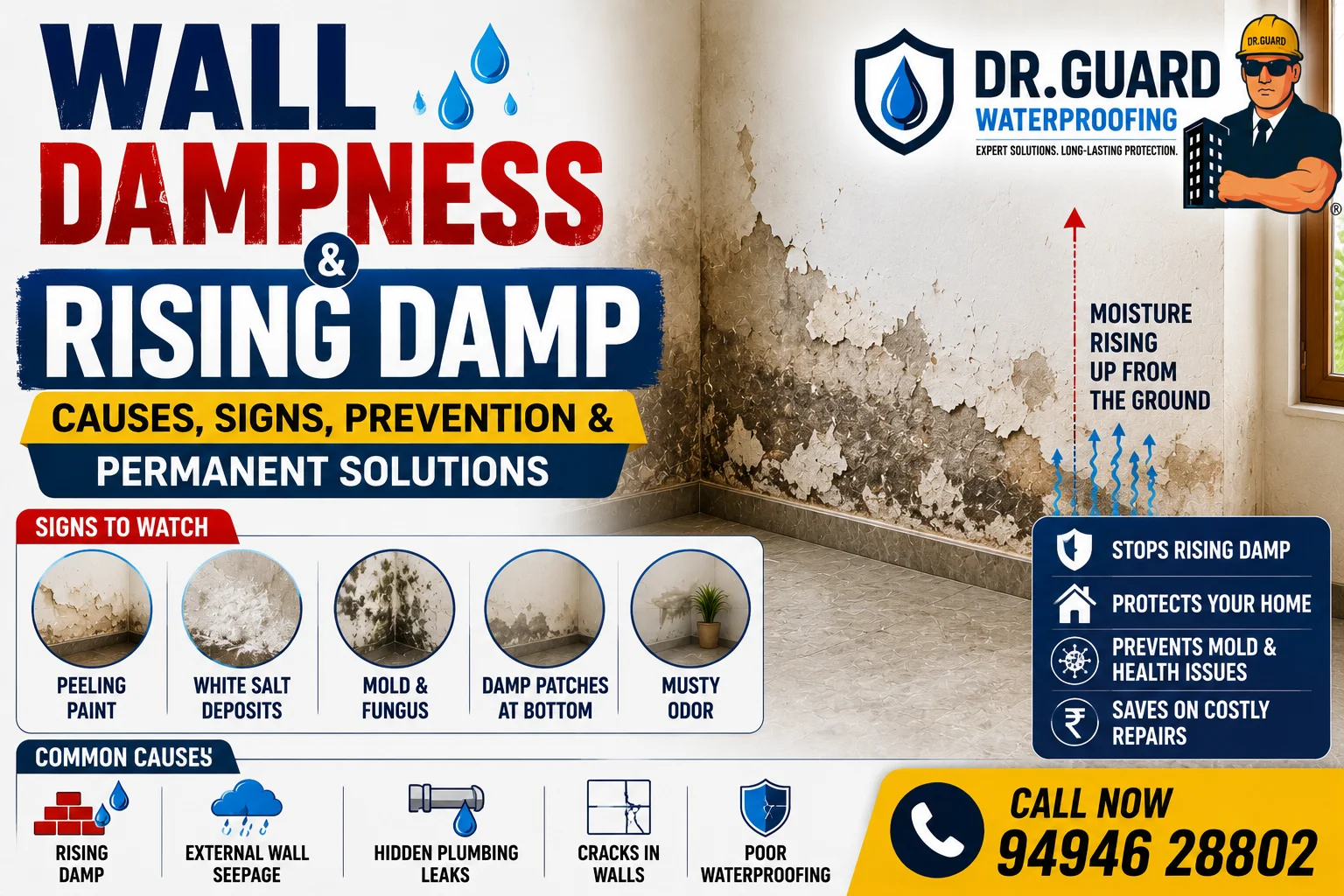
Wall dampness is one of the most common problems faced by homeowners, especially in older buildings and areas with high groundwater levels. While many people assume all damp walls are caused by roof leakage or rainwater, one of the most overlooked causes is rising damp. If left untreated, rising damp can damage paint, weaken plaster, cause mold growth, and even affect the structural integrity of your home.
Understanding wall dampness and rising damp can help homeowners identify the problem early and choose the right waterproofing solution before extensive damage occurs.
What is Wall Dampness?
Wall dampness refers to excessive moisture present inside walls due to water penetration from various sources.
Moisture may enter walls because of:
- Rising damp
- Roof leakage
- External wall seepage
- Plumbing leaks
- Poor waterproofing
- Condensation
Regardless of the source, damp walls should never be ignored because they gradually damage the building.
What is Rising Damp?
Rising damp is a type of moisture problem where groundwater travels upward through the pores of bricks, concrete, and masonry by capillary action.
Instead of entering from the roof or walls, moisture rises from the ground into the lower portions of the walls.
This problem is especially common in:
- Ground-floor homes
- Older buildings
- Buildings without proper damp-proofing
- Areas with high groundwater levels
Unlike roof leakage, rising damp usually affects the lower 2 to 5 feet of walls.
Difference Between Wall Dampness and Rising Damp
| Wall Dampness | Rising Damp |
|---|---|
| Can occur anywhere on walls | Usually starts from the bottom of walls |
| May be caused by leakage, rain, or plumbing | Caused by groundwater moving upward |
| Can affect ceilings and upper walls | Mainly affects ground-floor walls |
| Source varies | Source is moisture from the ground |
Correctly identifying the type of dampness is essential for choosing the right repair method.
Common Causes of Wall Dampness
1. Rising Damp
Groundwater enters walls through porous bricks and concrete.
This is one of the leading causes of persistent dampness in older homes.
2. External Wall Seepage
Cracks in exterior walls allow rainwater to penetrate during the monsoon season.
3. Roof Leakage
Damaged terrace waterproofing allows rainwater to enter the building from above.
4. Hidden Plumbing Leaks
Leaking pipes inside walls create continuous moisture.
5. Poor Waterproofing
Improper or deteriorated waterproofing systems allow water to penetrate building surfaces.
6. Condensation
Poor ventilation in bathrooms and kitchens can create excess moisture on walls.
Signs of Wall Dampness & Rising Damp
Early identification helps prevent costly repairs.
1. Damp Patches on Lower Walls
One of the first signs of rising damp is moisture appearing near the bottom of walls.
2. Peeling Paint
Moisture weakens the bond between paint and plaster.
Paint begins to:
- Bubble
- Peel
- Crack
3. Flaking Plaster
Continuous moisture causes plaster to become soft and eventually fall away.
4. White Powder Deposits (Efflorescence)
White, chalky deposits appear when groundwater carries salts through the wall.
Efflorescence is one of the clearest indicators of rising damp.
5. Mold and Fungus Growth
Persistent moisture creates ideal conditions for mold.
Common locations include:
- Wall corners
- Lower wall sections
- Behind furniture
6. Musty Odor
A persistent damp smell often indicates hidden moisture inside the walls.
7. Damaged Wooden Fixtures
Doors, skirting boards, and wooden furniture placed against damp walls may begin to swell or rot.
Why Rising Damp Should Never Be Ignored
Many homeowners simply repaint damp walls without fixing the source.
Unfortunately, the dampness returns because the moisture is still moving upward from the ground.
Ignoring rising damp can result in:
- Weak plaster
- Damaged paint
- Mold growth
- Salt deposits
- Structural deterioration
- Increased maintenance costs
How to Identify Rising Damp
Rising damp usually has a unique pattern.
Typical characteristics include:
- Dampness starts near floor level
- Moisture rises gradually upward
- White salt deposits appear
- Paint peels repeatedly
- Problem continues throughout the year
Unlike roof leakage, rising damp is not limited to the rainy season.
How to Fix Wall Dampness & Rising Damp
1. Professional Inspection
The first step is identifying the actual source of moisture.
Professionals may use:
- Thermal scanning
- Moisture meter testing
- Visual inspection
This helps distinguish rising damp from plumbing or roof leakage.
2. Chemical Damp-Proof Treatment
Special damp-proof chemicals are injected into the wall to create a waterproof barrier.
This prevents groundwater from rising further.
3. External Waterproofing
If dampness is caused by rainwater entering through exterior walls, waterproof coatings may be applied.
This prevents future water penetration.
4. Crack Repair
Wall cracks should be sealed before waterproofing begins.
This prevents additional moisture entry.
5. Replastering with Waterproof Mortar
After the wall has dried, damaged plaster can be replaced using waterproof plaster systems.
This improves durability and prevents recurring dampness.
How to Prevent Wall Dampness
Homeowners can reduce the risk of dampness by:
Inspecting walls regularly
Repairing cracks immediately
Maintaining proper drainage around the house
Waterproofing external walls
Fixing plumbing leaks quickly
Improving ventilation in bathrooms and kitchens
Preventive maintenance is always more affordable than major repairs.
Modern Methods Used to Detect Dampness
Professional waterproofing companies use advanced equipment to locate hidden moisture.
Thermal Scanning
Infrared cameras identify moisture inside walls without damaging the structure.
Moisture Meter Testing
Measures moisture levels inside plaster, concrete, and masonry.
Visual Structural Assessment
Experts inspect:
- Cracks
- Waterproofing systems
- External walls
- Foundation conditions
These methods ensure accurate diagnosis before repairs begin.
Why Professional Waterproofing is Recommended
Wall dampness and rising damp often require specialized treatment rather than simple painting.
Professional companies like Dr. Guard Waterproofing provide:
- Rising damp treatment
- Wall waterproofing
- External wall waterproofing
- Thermal scanning
- Moisture testing
- Crack repair
- Damp-proofing solutions
Their experienced team identifies the root cause of dampness and provides long-lasting waterproofing solutions tailored to Hyderabad’s climate.
Benefits of Fixing Wall Dampness Early
- Prevents structural damage
- Stops paint peeling
- Eliminates mold growth
- Improves indoor air quality
- Reduces maintenance costs
- Increases property value
Also Read: Common Causes of Bathroom Leakage in Apartments
Conclusion
Understanding wall dampness and rising damp is essential for protecting your home from long-term moisture damage. While damp walls may seem like a cosmetic issue at first, continuous water penetration can weaken the building, damage interiors, and create unhealthy living conditions.
Instead of repeatedly repainting affected walls, homeowners should identify the actual source of moisture and invest in professional waterproofing solutions. With expert inspection and advanced damp-proofing services from Dr. Guard Waterproofing, you can permanently eliminate wall dampness, protect your property, and enjoy a healthier, leak-free home.
Also, you can check out our social media handles on Instagram, YouTube.

