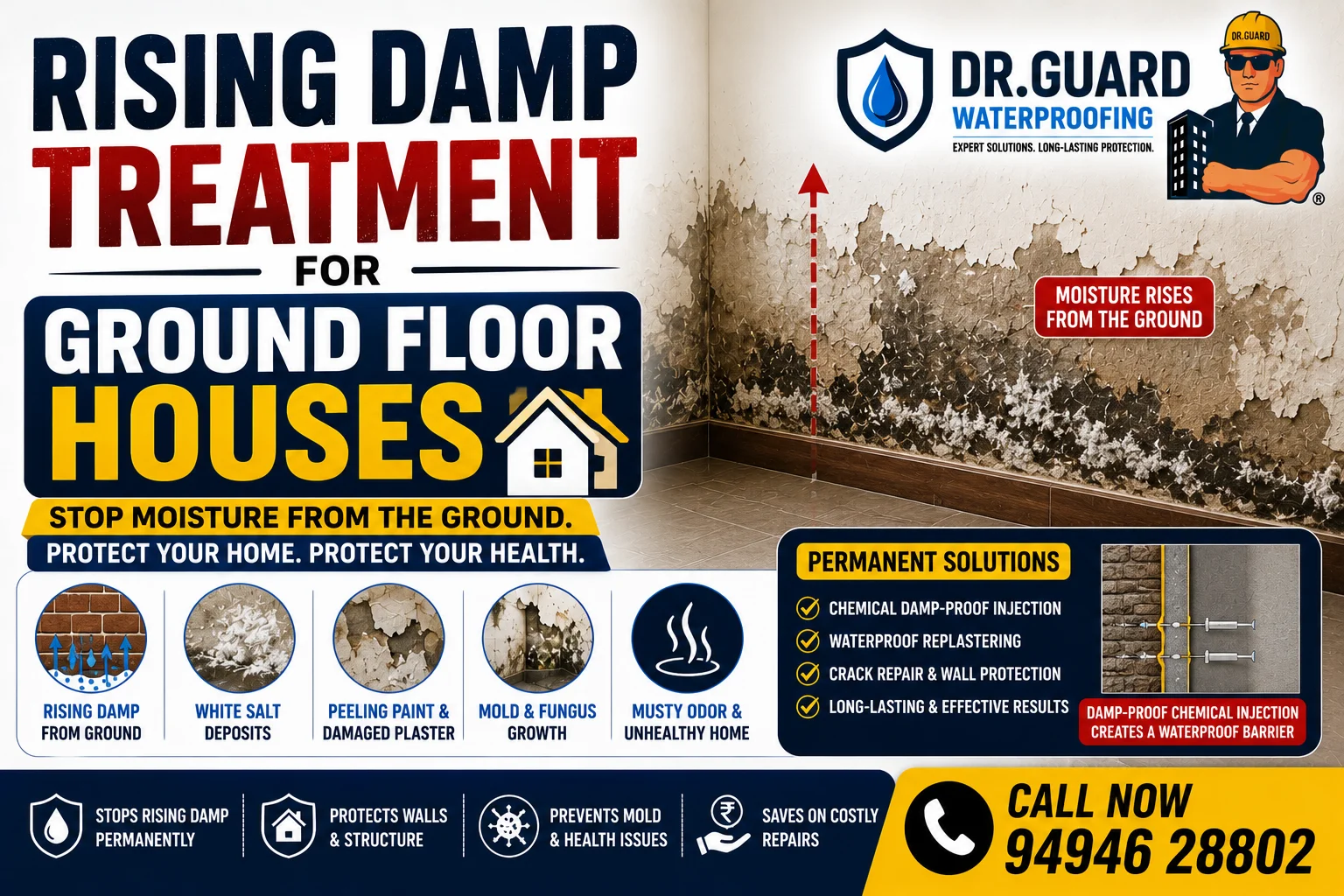
Rising damp is one of the most common moisture problems in ground floor houses. Unlike roof leakage or external wall seepage, rising damp occurs when groundwater travels upward through bricks and concrete by capillary action. Over time, this moisture causes peeling paint, damaged plaster, mold growth, and structural deterioration if left untreated.
Many homeowners repeatedly repaint damp walls, only to see the problem return within a few months. The reason is simple—the source of the moisture has not been eliminated. Understanding the right rising damp treatment for ground floor houses is essential for achieving a permanent solution and protecting your home from long-term water damage.
What is Rising Damp?
Rising damp is a condition where moisture from the ground moves upward through porous building materials such as bricks, mortar, and concrete.
As groundwater rises, it carries dissolved salts into the walls. These salts accumulate over time, causing paint failure, plaster damage, and white powdery deposits known as efflorescence.
Ground floor houses are particularly vulnerable because their walls remain in direct contact with the soil.
Why Rising Damp Occurs in Ground Floor Houses
Ground floor homes are constantly exposed to moisture from the surrounding soil. If the building lacks an effective damp-proof barrier or if the existing protection has deteriorated, groundwater gradually rises into the walls.
Common reasons include:
- Absence of a damp-proof course (DPC)
- Aging waterproofing systems
- High groundwater levels
- Poor drainage around the building
- Cracks in the foundation or masonry
- Deteriorated plaster and mortar
Without proper treatment, the moisture continues to rise and spreads throughout the lower portions of the walls.
Signs of Rising Damp
Recognizing the warning signs early can help prevent expensive repairs.
1. Damp Patches Near the Floor
Moisture usually appears within the first 2 to 5 feet of the wall.
Unlike roof leakage, the dampness starts at the bottom and gradually moves upward.
2. Peeling or Bubbling Paint
Continuous moisture weakens the paint layer, causing it to blister, crack, or peel away.
3. Damaged Plaster
Plaster exposed to constant moisture becomes soft, loose, and eventually starts falling off.
4. White Salt Deposits (Efflorescence)
White powdery deposits form when groundwater carries mineral salts through the wall surface.
Efflorescence is one of the clearest indicators of rising damp.
5. Mold and Fungus Growth
Persistent moisture creates ideal conditions for mold, especially behind furniture and along lower wall sections.
6. Musty Odor
A damp, earthy smell often indicates moisture trapped inside the walls.
7. Damage to Wooden Fixtures
Doors, skirting boards, and furniture placed against damp walls may swell, warp, or begin to rot due to prolonged exposure to moisture.
Why Rising Damp Should Never Be Ignored
Ignoring rising damp can lead to serious long-term problems, including:
- Weakening of plaster
- Repeated paint damage
- Mold and fungal growth
- Salt contamination
- Higher maintenance costs
- Reduced property value
- Deterioration of masonry over time
Treating the problem early helps prevent extensive repairs later.
How Professionals Diagnose Rising Damp
Before starting any treatment, it is important to confirm that the dampness is actually caused by rising moisture and not by plumbing leaks or external seepage.
Professional waterproofing companies use advanced inspection methods such as:
Thermal Scanning
Infrared cameras detect hidden moisture inside walls without causing any damage.
Moisture Meter Testing
Measures the amount of moisture present within the wall and helps determine the severity of the problem.
Visual Inspection
Experts inspect:
- Damp patterns
- Efflorescence
- Wall cracks
- External drainage
- Foundation conditions
- Nearby plumbing systems
This ensures the correct treatment method is selected.
Best Rising Damp Treatment for Ground Floor Houses
1. Chemical Damp-Proof Injection
One of the most effective methods for treating rising damp is chemical injection.
Special damp-proof chemicals are injected into the wall at regular intervals, creating a waterproof barrier that blocks groundwater from rising further.
Benefits
- Stops rising damp permanently
- Minimal damage to existing walls
- Suitable for both old and new buildings
- Long-lasting protection
2. Removal of Damaged Plaster
Walls affected by rising damp often contain moisture and salt deposits trapped within the plaster.
Removing the damaged plaster helps eliminate contaminated material before repairs begin.
3. Waterproof Replastering
After the wall has dried sufficiently, it is replastered using waterproof mortar or polymer-modified plaster.
This provides additional resistance against future moisture penetration.
4. External Waterproofing
If rainwater penetration is also contributing to the problem, external wall waterproofing may be recommended to provide complete protection.
5. Crack Repair
Any cracks in the walls or foundation should be sealed before the waterproofing process is completed.
This prevents additional water from entering the structure.
Can Rising Damp Be Fixed Permanently?
Yes. Rising damp can be permanently controlled when the actual source of moisture is treated correctly.
Simply repainting damp walls or applying ordinary waterproof paint will not solve the problem because the moisture continues to rise from the ground.
A proper damp-proofing system combined with waterproof replastering provides long-term protection.
How to Prevent Rising Damp
Although not every case can be prevented, homeowners can reduce the risk by:
- Maintaining proper drainage around the house
- Repairing wall cracks promptly
- Waterproofing external walls
- Preventing water from accumulating near the foundation
- Scheduling periodic moisture inspections
- Addressing damp patches as soon as they appear
Regular maintenance helps extend the life of the building.
Why Choose Dr. Guard Waterproofing?
Rising damp requires specialized diagnosis and treatment rather than temporary cosmetic repairs.
Dr. Guard Waterproofing provides professional rising damp solutions across Hyderabad, including:
- Rising Damp Treatment
- Chemical Damp-Proof Injection
- Thermal Scanning for Moisture Detection
- Moisture Meter Testing
- External Wall Waterproofing
- Crack Repair
- Waterproof Replastering
- Complete Damp-Proofing Solutions
Their experienced team identifies the root cause of moisture and recommends the most effective treatment to provide long-lasting protection for ground floor homes.
Benefits of Professional Rising Damp Treatment
- Permanent moisture control
- Protection against paint and plaster damage
- Prevention of mold and fungus growth
- Improved indoor air quality
- Lower maintenance costs
- Increased property value
- Enhanced durability of walls
Also Read: What Causes Damp Walls in Hyderabad Homes?
Conclusion
Choosing the right rising damp treatment for ground floor houses is essential for protecting your home from long-term moisture damage. Rising damp not only affects the appearance of your walls but can also weaken plaster, encourage mold growth, and reduce the lifespan of your building if left untreated.
Instead of repeatedly repainting damp walls, homeowners should invest in professional inspection and damp-proofing solutions. With expert diagnosis and advanced waterproofing services from Dr. Guard Waterproofing, you can permanently stop rising damp, safeguard your property’s structure, and maintain a healthy, dry living environment for years to come.
Also, you can check out our social media handles on Instagram, YouTube.

