Water-related problems are among the most common issues faced by homeowners, especially in apartments and independent houses. Terms such as seepage, leakage, and dampness are often used interchangeably, but they actually describe different moisture-related problems.
Understanding the difference between seepage, leakage, and dampness is important because each problem can have a different source and may require a different repair method. Treating only the visible symptoms can result in recurring problems and unnecessary expenses.
What is Water Leakage?
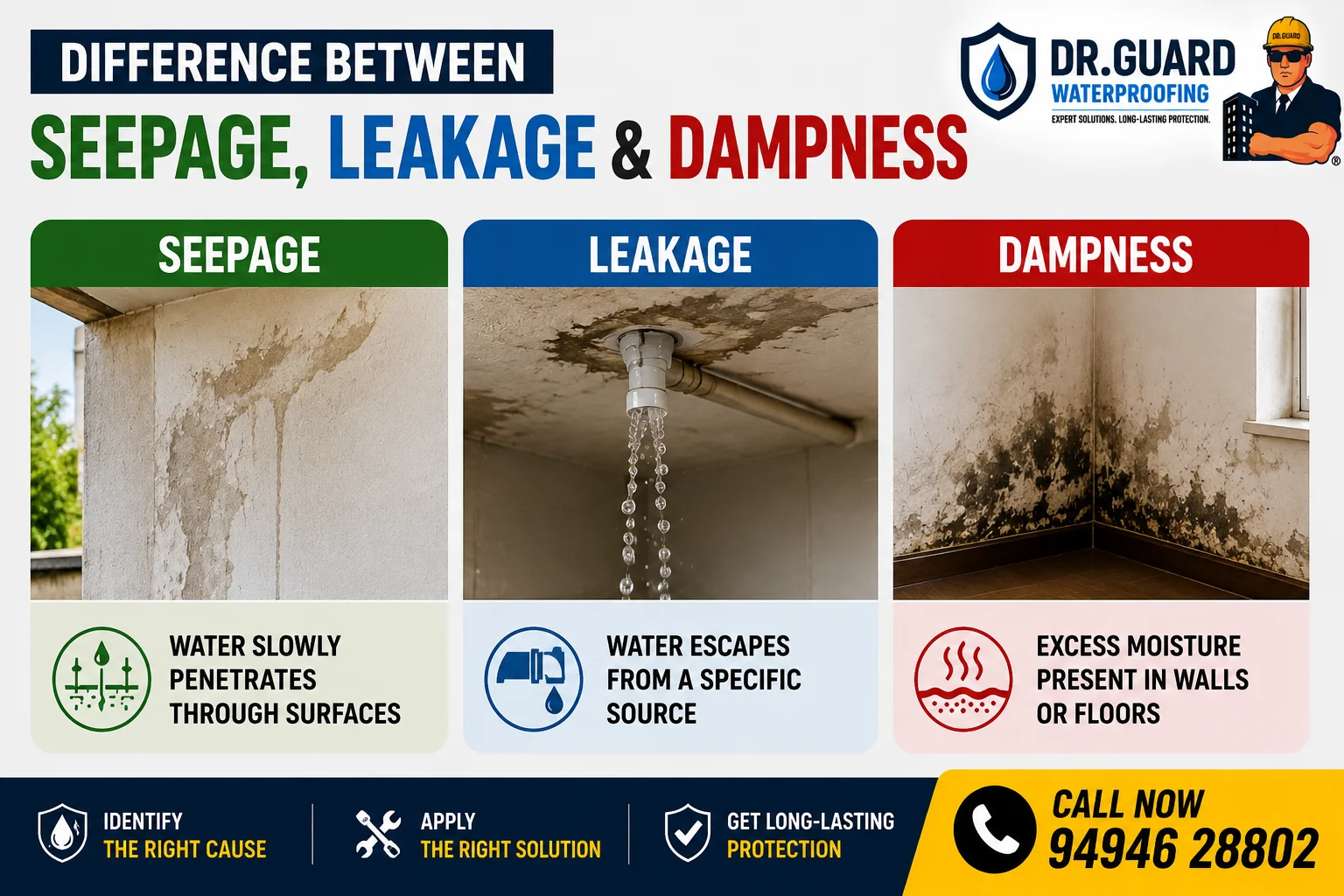
Water leakage generally refers to water escaping from a specific source such as a pipe, plumbing connection, tank, or damaged waterproofing system.
Leakage can sometimes be active and visible, with water dripping or flowing from a particular point.
Common Causes of Water Leakage
- Broken or leaking plumbing pipes
- Damaged bathroom pipelines
- Water tank leakage
- Leaking floor traps
- Terrace waterproofing failure
- Damaged drainage pipes
- Cracks in concrete structures
For example, if water is dripping from a ceiling whenever the bathroom above is used, there may be a plumbing or waterproofing-related leakage.
What is Water Seepage?
Water seepage is the gradual movement of moisture through porous materials such as concrete, brick, plaster, or masonry.
Unlike an active leak, seepage may not produce visible dripping water. Instead, moisture slowly travels through the structure and eventually appears as damp patches, stains, or peeling paint.
Common Causes of Water Seepage
- External wall cracks
- Failed terrace waterproofing
- Bathroom seepage
- Damaged tile joints
- Rising damp
- Poor construction joints
- Water ponding
Seepage can travel considerable distances before becoming visible, which makes identifying its exact source more difficult.
What is Dampness?
Dampness refers to the presence of excessive moisture within a wall, ceiling, floor, or other building surface.
It is usually the visible result of an underlying moisture problem rather than a specific source of water.
Dampness may be caused by:
- Water seepage
- Plumbing leakage
- Rising damp
- Condensation
- Poor ventilation
- External rainwater penetration
A damp wall may show dark patches, peeling paint, mold, or white salt deposits.
Seepage vs Leakage vs Dampness
| Problem | What It Means | Typical Signs | Common Sources |
|---|---|---|---|
| Leakage | Water escaping from a specific source | Dripping or active water flow | Pipes, tanks, bathrooms |
| Seepage | Moisture slowly moving through building materials | Damp patches, stains | Cracks, waterproofing failure |
| Dampness | Excess moisture present in a surface | Peeling paint, mold, discoloration | Leakage, seepage, condensation |
Understanding this distinction makes it easier to determine the appropriate repair strategy.
How to Identify Water Leakage
Water leakage is often easier to identify than seepage because there may be a visible water source.
Look for:
- Active dripping
- Wet areas around plumbing fixtures
- Water accumulation
- Leakage that increases when a pipe or bathroom is used
- Sudden water stains
However, concealed plumbing leaks may require professional testing to confirm.
How to Identify Water Seepage
Seepage generally develops more gradually.
Common signs include:
Damp Patches
Dark patches may appear on walls or ceilings, particularly after rainfall or bathroom use.
Peeling Paint
Continuous moisture weakens the bond between paint and plaster.
Efflorescence
White powdery deposits can appear when moisture carries salts through masonry.
Recurring Wall Dampness
If the same area repeatedly becomes damp after repairs, there may be an unresolved seepage source.
How to Identify Dampness
Dampness can usually be identified through changes in the appearance and condition of a wall or ceiling.
Common signs include:
- Discoloration
- Musty odors
- Mold growth
- Soft or damaged plaster
- Peeling paint
- Persistent moisture
The presence of dampness does not automatically tell you where the water is coming from. Further inspection may be necessary.
What Causes Seepage, Leakage and Dampness in Homes?
1. Bathroom Waterproofing Failure
Failed bathroom waterproofing can allow water to penetrate beneath tiles and into the concrete slab.
This can eventually cause ceiling seepage in the apartment below.
2. Terrace Waterproofing Problems
Cracks and damaged waterproofing on terraces can allow rainwater to enter the roof structure.
3. External Wall Seepage
Rainwater can enter through cracks, joints, and damaged exterior surfaces.
4. Hidden Plumbing Leakage
Concealed pipes can leak inside walls or beneath floors without producing immediate visible signs.
5. Rising Damp
Groundwater can travel upward through walls by capillary action, particularly in ground-floor houses.
6. Poor Drainage
Water ponding on terraces or around foundations increases the risk of moisture penetration.
Why Correct Diagnosis Matters
One of the biggest mistakes homeowners make is treating the visible damage instead of identifying the source.
For example, repainting a damp wall may make it look better temporarily, but if water is still entering through the terrace, bathroom, plumbing system, or external wall, the problem will return.
Similarly, applying waterproofing to an area affected by a hidden plumbing leak will not solve the actual problem.
Accurate diagnosis should always come before repair.
Modern Methods for Detecting Hidden Moisture
Professional leakage detection can help identify moisture sources without unnecessary demolition.
Thermal Scanning
Thermal imaging can identify temperature differences associated with moisture inside walls, ceilings, and other building surfaces.
Moisture Meter Testing
Moisture meters help determine the level and spread of moisture within construction materials.
Plumbing Pressure Testing
Pressure testing can help identify concealed plumbing leaks.
Visual Waterproofing Inspection
Professionals inspect terraces, bathrooms, external walls, drainage systems, joints, and visible cracks to determine potential sources.
How to Fix Seepage, Leakage and Dampness
The repair method depends on the actual source.
For Plumbing Leakage
Repair or replace damaged pipes, joints, and fittings.
For Bathroom Seepage
Depending on the severity, solutions may include epoxy grouting, PU injection grouting, floor trap treatment, or bathroom waterproofing.
For Terrace Leakage
Professional terrace waterproofing and crack treatment may be required.
For External Wall Seepage
External wall waterproofing and crack sealing can prevent rainwater from entering the structure.
For Rising Damp
Damp-proof treatment and appropriate wall restoration may be required to stop moisture rising from the ground.
For Surface Dampness
The underlying source should be eliminated before damaged plaster and paint are restored.
Can These Problems Be Prevented?
Yes. Regular maintenance can significantly reduce the risk of moisture-related damage.
Homeowners should:
- Inspect terraces before monsoon
- Repair cracks early
- Maintain bathroom grout
- Check plumbing systems
- Keep drainage outlets clear
- Address damp patches quickly
- Schedule professional waterproofing inspections
Preventive maintenance is generally more affordable than repeated leakage repairs.
Also Read: Why Paint Peels Off Due to Moisture: Causes, Prevention & Permanent Solutions
Why Professional Inspection is Recommended
Seepage, leakage, and dampness can sometimes look very similar even though their sources are completely different.
Professional waterproofing experts can use moisture detection equipment and detailed inspections to determine the actual cause before recommending a repair.
Dr. Guard Waterproofing provides leakage detection, thermal scanning, bathroom waterproofing, terrace waterproofing, external wall waterproofing, rising damp treatment, PU injection grouting, and other waterproofing solutions across Hyderabad.
Conclusion
Understanding the difference between seepage, leakage and dampness is the first step toward solving moisture problems correctly. Leakage usually involves water escaping from a specific source, seepage refers to the gradual movement of moisture through building materials, while dampness describes the excessive moisture visible within a wall, ceiling, or other surface.
Although the symptoms may look similar, the treatment can be completely different. Instead of repeatedly painting damp walls or applying temporary sealants, homeowners should identify the root cause and choose the appropriate waterproofing or repair method.
Early detection and professional waterproofing can help protect your home from recurring moisture problems, structural deterioration, mold growth, and unnecessary repair expenses.
Also, you can check out our social media handles on Instagram, YouTube.

