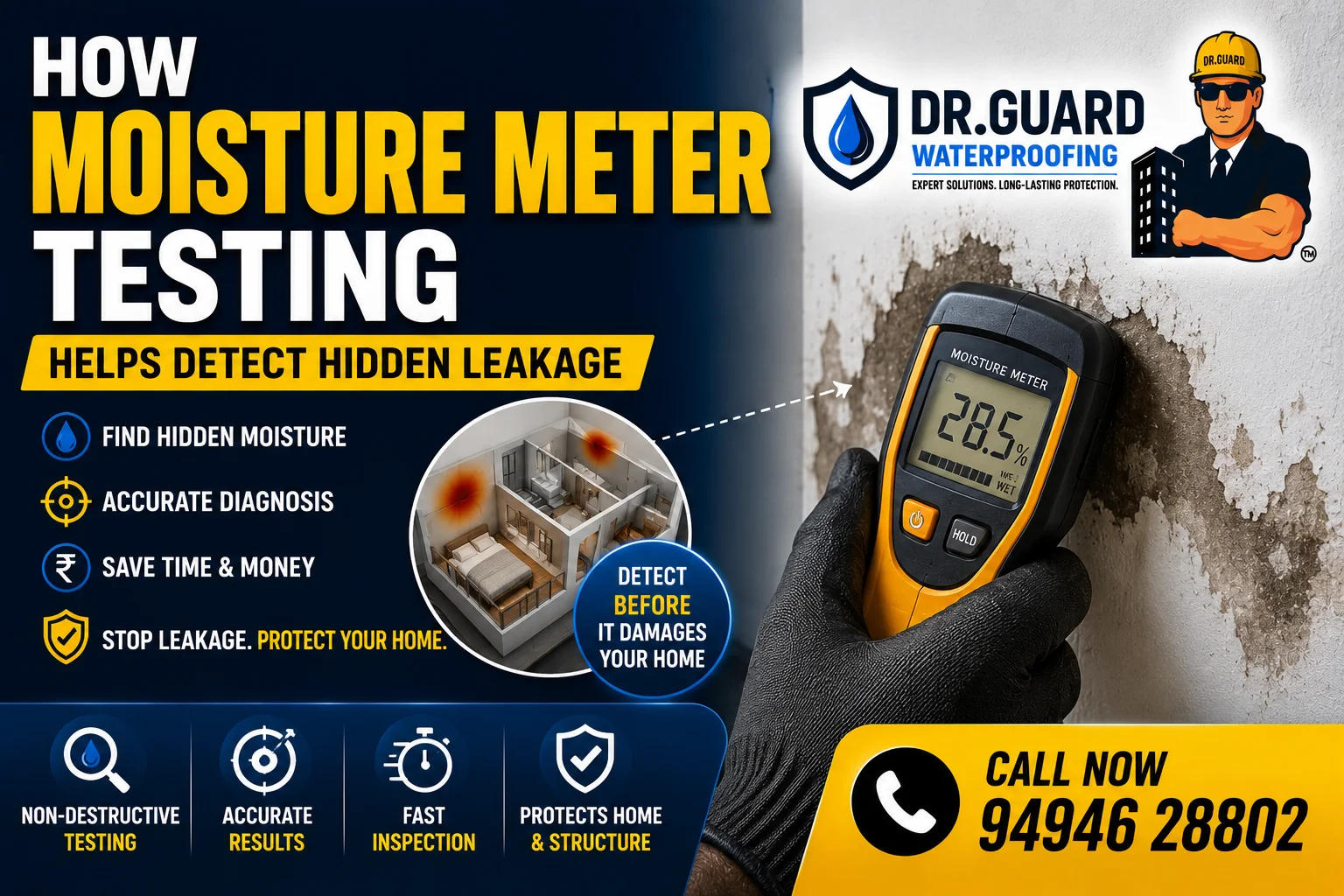
Water leakage is not always visible. In many homes and apartments, moisture can remain trapped inside walls, ceilings, floors, or concrete slabs long before a visible water stain appears. By the time peeling paint, damp patches, or mold become noticeable, the leakage may already have caused significant damage.
This is where moisture meter testing can be extremely useful. It is a practical, non-destructive method that helps professionals measure moisture levels inside building materials and identify areas that require further investigation.
For homeowners dealing with recurring dampness or unexplained seepage, understanding how moisture meter testing works can help in finding the actual problem instead of relying on repeated surface repairs.
What is Moisture Meter Testing?
Moisture meter testing is a diagnostic method used to measure the amount of moisture present in materials such as:
- Plaster
- Concrete
- Masonry
- Drywall
- Wood
- Other building materials
A moisture meter provides readings that help professionals determine whether an area contains unusually high moisture compared with surrounding surfaces.
It is especially useful when there is no obvious visible source of water.
How Does Moisture Meter Testing Work?
A moisture meter uses sensors to detect moisture within or near the surface of a material.
Depending on the type of meter, testing may involve placing the device directly against the surface or using probes.
A typical inspection involves:
1. Selecting the Suspected Area
The professional first identifies areas showing signs of dampness, staining, peeling paint, or other moisture-related damage.
2. Taking Moisture Readings
Readings are taken from the affected area and compared with relatively dry areas nearby.
3. Mapping Moisture Levels
Multiple readings can help determine whether moisture is localized or spread across a larger area.
4. Identifying Areas for Further Investigation
High moisture readings indicate areas that may require additional testing to determine the actual source.
How Moisture Meter Testing Helps Detect Hidden Leakage
1. Detects Moisture Behind Visible Surfaces
Water may remain inside a wall even when the exterior surface looks relatively normal.
Moisture meter testing can help identify elevated moisture levels that are not immediately visible.
2. Helps Locate Damp Areas
By taking readings at different points, professionals can create a better understanding of where moisture is concentrated.
This can help narrow down potential leakage pathways.
3. Helps Investigate Recurring Leakage
If a wall or ceiling repeatedly becomes damp after repairs, moisture readings can help determine whether moisture is still present.
This is particularly useful for recurring bathroom, terrace, and plumbing leakage.
4. Reduces Unnecessary Breaking
Instead of randomly opening walls or removing tiles, moisture readings can help guide further investigation.
This can reduce unnecessary demolition during the initial diagnosis.
5. Helps Monitor Drying After Repairs
Moisture meters are also useful after leakage repairs.
Professionals can take readings over time to determine whether the affected material is drying properly before restoration work such as plastering or painting begins.
Where is Moisture Meter Testing Useful?
Bathroom Leakage Detection
Bathrooms are constantly exposed to water, making them one of the most common areas for hidden moisture.
Testing can help investigate:
- Damp bathroom walls
- Leakage beneath tiles
- Floor trap areas
- Adjacent bedroom walls
- Ceiling leakage in the apartment below
Terrace Leakage Detection
Rainwater can penetrate damaged terrace waterproofing and remain inside the RCC slab.
Moisture testing can help identify areas that may have retained moisture after rainfall.
Wall Seepage Detection
External wall seepage can cause moisture to enter the interior surface.
Moisture readings can help determine the extent of dampness.
Ceiling Leakage
If a ceiling develops unexplained stains or damp patches, moisture testing can help establish whether active or residual moisture is present.
Basement Moisture Detection
Basements are particularly vulnerable to groundwater and seepage.
Moisture testing can help identify damp areas in basement walls and floors.
Moisture Meter Testing vs Thermal Scanning
Both technologies can be useful, but they provide different information.
| Moisture Meter Testing | Thermal Scanning |
|---|---|
| Measures moisture levels | Detects temperature variations |
| Provides readings from tested areas | Can scan larger surfaces |
| Useful for verifying suspected moisture | Useful for identifying suspicious thermal patterns |
| Helps monitor drying | Helps map areas for further investigation |
| Directly assesses moisture-related conditions | Requires interpretation of thermal patterns |
In many professional inspections, the two methods can complement each other.
Thermal scanning may help identify an area that needs investigation, while moisture meter testing can help verify elevated moisture levels.
Can a Moisture Meter Find the Exact Source of Leakage?
Not always.
This is an important point for homeowners to understand.
A moisture meter can indicate where elevated moisture is present, but it does not automatically tell you where the water originally entered the building.
Water can travel through concrete, masonry, plaster, and other materials before becoming visible.
For example, a damp patch on a bedroom wall may actually be caused by:
- A leaking bathroom
- External wall seepage
- A concealed plumbing pipe
- Terrace leakage
Additional inspection may therefore be required to identify the actual source.
Signs You May Need Moisture Meter Testing
Professional moisture testing can be useful if you notice:
Recurring Damp Patches
The same area becomes damp repeatedly even after repairs.
Peeling Paint
Paint continues to bubble or peel despite repainting.
Musty Odors
A persistent damp smell may indicate hidden moisture.
Mold Growth
Mold repeatedly appears on walls or ceilings.
Unexplained Ceiling Stains
Watermarks appear without an obvious source.
Bathroom Leakage
The ceiling below a bathroom shows signs of seepage.
Why Repainting Doesn’t Solve Hidden Moisture
A common mistake is to scrape the damaged paint, apply putty, and repaint the wall.
This may improve the appearance temporarily, but if moisture remains inside the structure, the damage is likely to return.
You may eventually notice:
- New damp patches
- Paint bubbling
- Plaster deterioration
- Mold growth
- Discoloration
The source of the moisture needs to be addressed before cosmetic restoration.
How Professionals Use Moisture Testing for Leakage Detection
A professional inspection generally combines moisture readings with other observations.
The process may include:
Visual Inspection
Checking visible stains, cracks, grout joints, plumbing areas, and damaged surfaces.
Moisture Meter Testing
Measuring moisture levels at multiple points.
Thermal Scanning
Looking for unusual temperature patterns that may be associated with hidden moisture.
Plumbing Inspection
Checking concealed or accessible plumbing systems.
Waterproofing Assessment
Inspecting bathrooms, terraces, external walls, and other potential sources.
This combined approach provides a more reliable diagnosis than relying on a single test.
How Moisture Meter Testing Helps After Waterproofing
Moisture testing isn’t only useful before repairs.
It can also help after waterproofing work has been completed.
Professionals can use readings to:
- Monitor moisture reduction
- Check whether affected areas are drying
- Identify remaining damp zones
- Decide when surfaces are ready for restoration
This is particularly useful for walls and ceilings that have experienced prolonged water exposure.
Benefits of Professional Moisture Meter Testing
Non-Destructive
Testing can usually be performed without breaking large sections of walls or flooring.
Quick Assessment
Multiple areas can be checked within a relatively short period.
Helps Identify Hidden Moisture
It can reveal moisture that is not obvious from visual inspection alone.
Supports Accurate Diagnosis
Readings provide useful information when combined with other inspection methods.
Helps Avoid Unnecessary Repairs
Targeted investigation can reduce random breaking and trial-and-error repairs.
Common Causes of Hidden Moisture
Hidden moisture can come from many sources, including:
- Bathroom waterproofing failure
- Terrace leakage
- External wall seepage
- Plumbing leaks
- Floor trap leakage
- Rising damp
- Cracks in concrete
- Poor drainage
Finding the cause is more important than simply treating the visible damp patch.
How to Prevent Recurring Moisture Problems
Homeowners can reduce the risk of hidden leakage by:
- Inspecting terraces before monsoon
- Maintaining bathroom grout
- Repairing cracks early
- Checking plumbing regularly
- Keeping drainage outlets clear
- Addressing damp patches immediately
- Scheduling periodic waterproofing inspections
Preventive maintenance can help catch moisture problems before they become major repairs.
Why Choose Dr. Guard Waterproofing?
Dr. Guard Waterproofing provides professional leakage detection and waterproofing services for residential and commercial properties across Hyderabad.
Their inspection and repair services include:
- Moisture Meter Testing
- Thermal Scanning
- Water Leakage Detection
- Bathroom Waterproofing
- Terrace Waterproofing
- External Wall Waterproofing
- Rising Damp Treatment
- PU Injection Grouting
- Epoxy Grouting
- Waterproofing Without Removing Tiles
The focus is on identifying the root cause of leakage before recommending the appropriate repair method.
Also Read: What is Thermal Imaging Leakage Detection?
Conclusion
Understanding how moisture meter testing helps detect hidden leakage can help homeowners take a more informed approach to dampness and seepage problems. A moisture meter can identify elevated moisture levels inside walls, ceilings, and other building materials, making it a valuable tool for investigating problems that are not immediately visible.
However, moisture testing should not be considered a standalone solution. The readings need to be interpreted along with thermal scanning, visual inspection, plumbing checks, and waterproofing assessment to determine the actual source of leakage.
If dampness keeps returning despite repeated repairs, professional moisture detection can be an important first step toward finding the real problem and selecting a long-lasting waterproofing solution.
Also, you can check out our social media handles on Instagram, YouTube.

