Water leakage is not always visible. In many homes and buildings, water can travel behind walls, beneath floors, or through RCC slabs before a damp patch or ceiling stain appears. By the time visible signs develop, the moisture may have already caused significant damage.
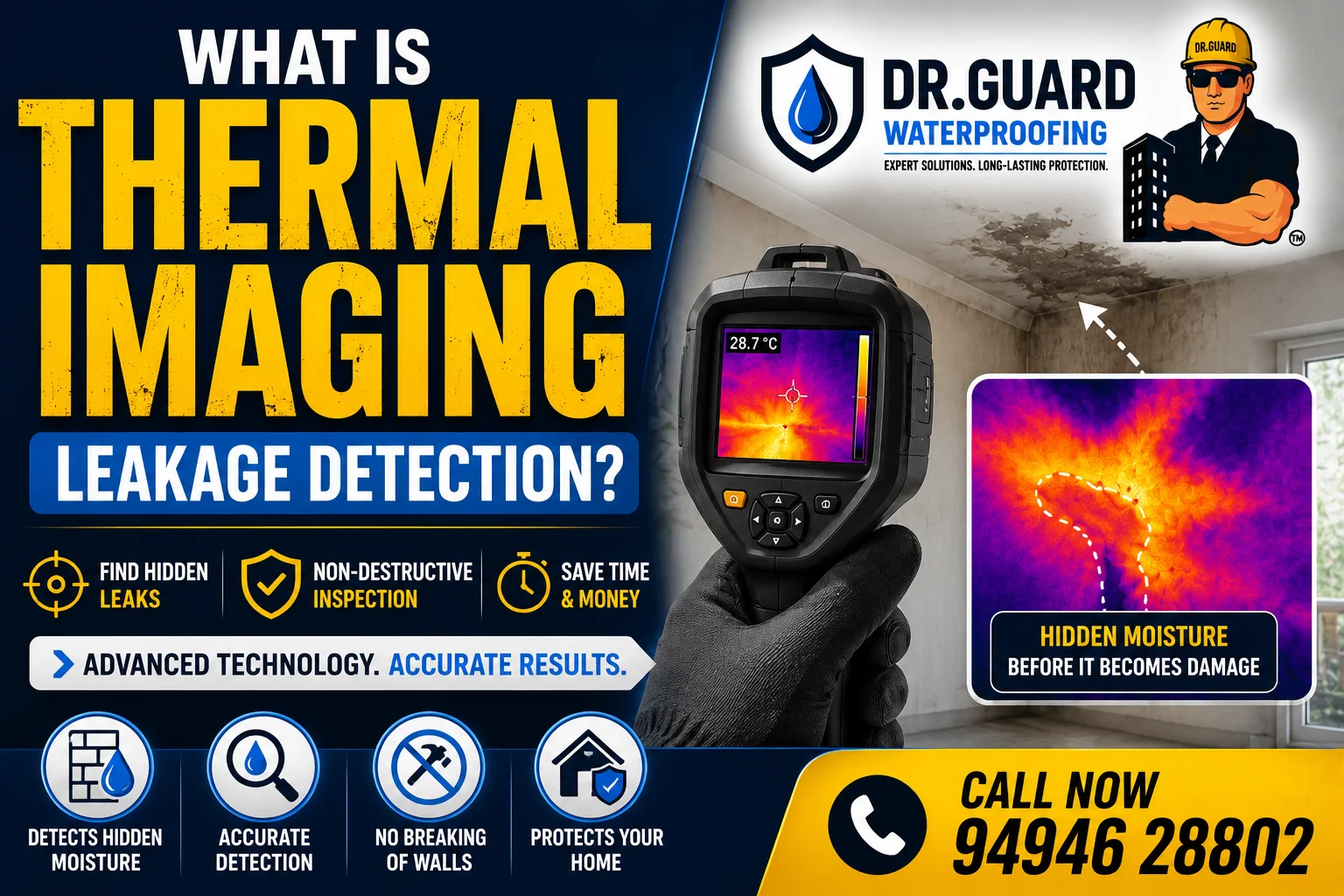
This is where thermal imaging leakage detection becomes useful. Thermal imaging is a modern, non-destructive inspection technique that helps professionals identify temperature variations associated with moisture and possible water leakage without unnecessarily breaking walls, ceilings, or tiles.
For homeowners dealing with recurring seepage or unexplained dampness, understanding how thermal imaging works can make it easier to choose the right leakage detection approach.
What is Thermal Imaging?
Thermal imaging uses an infrared camera to detect temperature differences on a surface.
Every object emits infrared radiation based on its temperature. A thermal camera captures this radiation and converts it into a visual thermal image.
When moisture is present inside a wall, ceiling, or other building material, it can create temperature patterns that differ from the surrounding dry areas. These variations can help trained professionals identify areas that require further investigation.
It is important to understand that a thermal camera does not directly “see” water inside a wall. Instead, it detects temperature patterns that may be associated with moisture, which are then interpreted along with other inspection findings.
How Does Thermal Imaging Leakage Detection Work?
A typical inspection involves several steps.
1. Initial Visual Inspection
The professional first examines the property for visible signs such as:
- Damp patches
- Peeling paint
- Ceiling stains
- Cracks
- Mold growth
- Watermarks
This provides an initial understanding of the possible leakage area.
2. Thermal Camera Scanning
The thermal camera is moved across the suspected area to identify unusual temperature patterns.
Areas showing temperature differences are recorded for further investigation.
3. Moisture Verification
Thermal findings may be verified using a moisture meter or other appropriate testing methods.
This is important because temperature variations can have several causes and should not automatically be interpreted as leakage.
4. Source Assessment
Professionals then compare the findings with the property’s:
- Plumbing layout
- Bathroom locations
- Terrace condition
- Drainage system
- External walls
- Structural cracks
This helps narrow down the likely source of the problem.
Where Can Thermal Imaging Be Used?
Thermal imaging can be useful in several areas of a property.
Bathroom Leakage Detection
Water may seep beneath bathroom tiles or through walls without producing immediate visible signs.
Thermal inspection can help identify areas that require closer examination.
Terrace Leakage Detection
A damaged terrace waterproofing system can allow moisture to enter an RCC slab.
Thermal scanning can help identify suspicious moisture patterns on ceilings and roof areas.
Wall Seepage Detection
External wall seepage and hidden plumbing leaks can sometimes produce temperature differences that can be investigated using thermal imaging.
Ceiling Leakage Detection
If a ceiling develops unexplained dampness, thermal scanning can help map areas that require moisture verification.
Basement Leakage Detection
Thermal inspection can be useful when investigating moisture around basement walls, floors, and other accessible surfaces.
Benefits of Thermal Imaging Leakage Detection
1. Non-Destructive Inspection
One of the biggest advantages is that thermal scanning does not require breaking the wall simply to investigate a suspected leakage area.
This can reduce unnecessary damage during diagnosis.
2. Helps Locate Hidden Moisture
Moisture behind a surface may not always be visible. Thermal patterns can help identify areas that deserve further testing.
3. Faster Initial Investigation
Large wall and ceiling areas can be scanned relatively quickly compared with opening multiple sections of a structure.
4. Useful for Recurring Leakage
If leakage keeps returning despite previous repairs, thermal inspection can help professionals investigate areas that may have been overlooked.
5. Helps Reduce Unnecessary Demolition
Instead of randomly breaking tiles or walls, professionals can use inspection findings to guide further investigation.
Thermal Imaging vs Traditional Leakage Detection
| Traditional Approach | Thermal Imaging Approach |
|---|---|
| Relies heavily on visible signs | Identifies temperature variations |
| May require exploratory breaking | Non-destructive initial inspection |
| Hidden moisture can be difficult to locate | Helps identify suspicious moisture patterns |
| Can involve multiple trial repairs | Helps guide targeted investigation |
| Limited visual information | Provides a thermal map of the inspected area |
Thermal imaging does not necessarily replace conventional testing. In many cases, the best results come from combining thermal scanning with moisture measurements and physical inspection.
What Can Thermal Imaging Detect?
Thermal imaging may help identify patterns associated with:
- Hidden moisture
- Water seepage
- Wet areas behind surfaces
- Temperature differences around plumbing
- Possible leakage pathways
- Areas requiring further investigation
However, thermal scanning should be interpreted by an experienced professional because temperature differences can also result from sunlight, air movement, insulation changes, plumbing conditions, and other factors.
What Thermal Imaging Cannot Do
It is equally important to understand its limitations.
A thermal camera cannot automatically determine:
- The exact source of every leak
- Whether a temperature difference is definitely caused by water
- The condition of hidden plumbing
- The structural strength of concrete
- The complete extent of waterproofing failure
For this reason, thermal scanning should be considered part of a professional diagnostic process rather than a standalone guarantee of leakage detection.
Why Thermal Scanning is Useful in Hyderabad
Hyderabad homes experience intense summer heat followed by seasonal monsoon rainfall. This combination can contribute to cracks, waterproofing deterioration, terrace leakage, and wall seepage.
Thermal imaging can be particularly useful when:
- Dampness appears after rainfall
- Bathroom leakage keeps returning
- A ceiling remains damp without an obvious source
- External wall seepage is suspected
- Conventional inspection cannot identify the source
Early detection can help homeowners address moisture problems before they become more extensive.
Signs You May Need Thermal Leakage Detection
Consider professional thermal inspection if you notice:
Recurring Damp Patches
The same wall or ceiling repeatedly becomes damp even after repairs.
Unexplained Ceiling Stains
Watermarks appear without an obvious plumbing or roof problem.
Peeling Paint
Paint repeatedly bubbles or peels from a particular area.
Hidden Bathroom Leakage
The apartment below shows signs of seepage even though the bathroom appears normal.
Musty Odors
A persistent damp smell may indicate hidden moisture.
Leakage After Monsoon
Dampness appears or becomes worse following rainfall.
What Happens After Thermal Scanning?
Thermal scanning is only the beginning of the diagnostic process.
Depending on the findings, professionals may recommend:
- Moisture meter testing
- Plumbing pressure testing
- Grout inspection
- Floor trap inspection
- Crack repair
- PU injection grouting
- Bathroom waterproofing
- Terrace waterproofing
- External wall waterproofing
The final repair should always address the actual source of moisture.
Can Thermal Imaging Help Detect Leakage Without Removing Tiles?
In many situations, thermal scanning can help investigate suspected moisture without immediately removing tiles.
This is particularly useful for bathrooms where homeowners want to avoid unnecessary demolition.
If the inspection identifies suspicious areas, professionals can then determine whether solutions such as PU injection grouting, epoxy grouting, floor trap treatment, or other waterproofing methods are appropriate.
The suitability of a no-tile-removal solution depends on the cause and severity of the leakage.
Why Professional Thermal Inspection Matters
Thermal imaging equipment provides data, but interpreting that data correctly requires experience.
A professional inspection should consider:
- Thermal patterns
- Moisture readings
- Building layout
- Plumbing locations
- Weather conditions
- Surface temperature
- Visible damage
This combined approach provides a more reliable assessment than relying on a thermal image alone.
Thermal Imaging Leakage Detection by Dr. Guard Waterproofing
Dr. Guard Waterproofing provides thermal scanning and professional leakage detection services for residential and commercial properties in Hyderabad.
The inspection can help investigate:
- Bathroom leakage
- Terrace seepage
- Ceiling leakage
- External wall dampness
- Hidden moisture
- Recurring leakage problems
After identifying suspicious areas, the team can recommend an appropriate waterproofing or leakage repair solution based on the condition of the property.
Benefits of Early Leakage Detection
Identifying moisture problems early can help:
- Reduce unnecessary demolition
- Prevent recurring leakage
- Protect walls and ceilings
- Reduce the risk of long-term water damage
- Avoid unnecessary repair expenses
- Improve waterproofing decisions
The earlier a moisture problem is diagnosed, the easier it is generally to control.
Also Read: Advanced Waterproofing Technology
Conclusion
So, what is thermal imaging leakage detection? It is a non-destructive inspection technique that uses infrared cameras to identify temperature variations that may indicate hidden moisture or possible water leakage.
It is especially useful when the source of seepage is not visible or when previous repairs have failed to solve the problem. However, thermal imaging should not be treated as a standalone diagnosis. Combining thermal scanning with moisture testing, visual inspection, and other appropriate methods provides a more accurate understanding of the problem.
For homeowners in Hyderabad dealing with recurring dampness, bathroom leakage, terrace seepage, or unexplained ceiling stains, professional thermal inspection can be an important first step toward finding the actual source and choosing the right waterproofing solution.
Also, you can check out our social media handles on Instagram, YouTube.

