Water leakage is one of the most common problems faced by homeowners and apartment residents. However, not all leakage problems are the same. Some leaks originate from inside the building, while others are caused by external factors such as rainwater penetration. Identifying the type of leakage is crucial because the repair method depends entirely on the source.
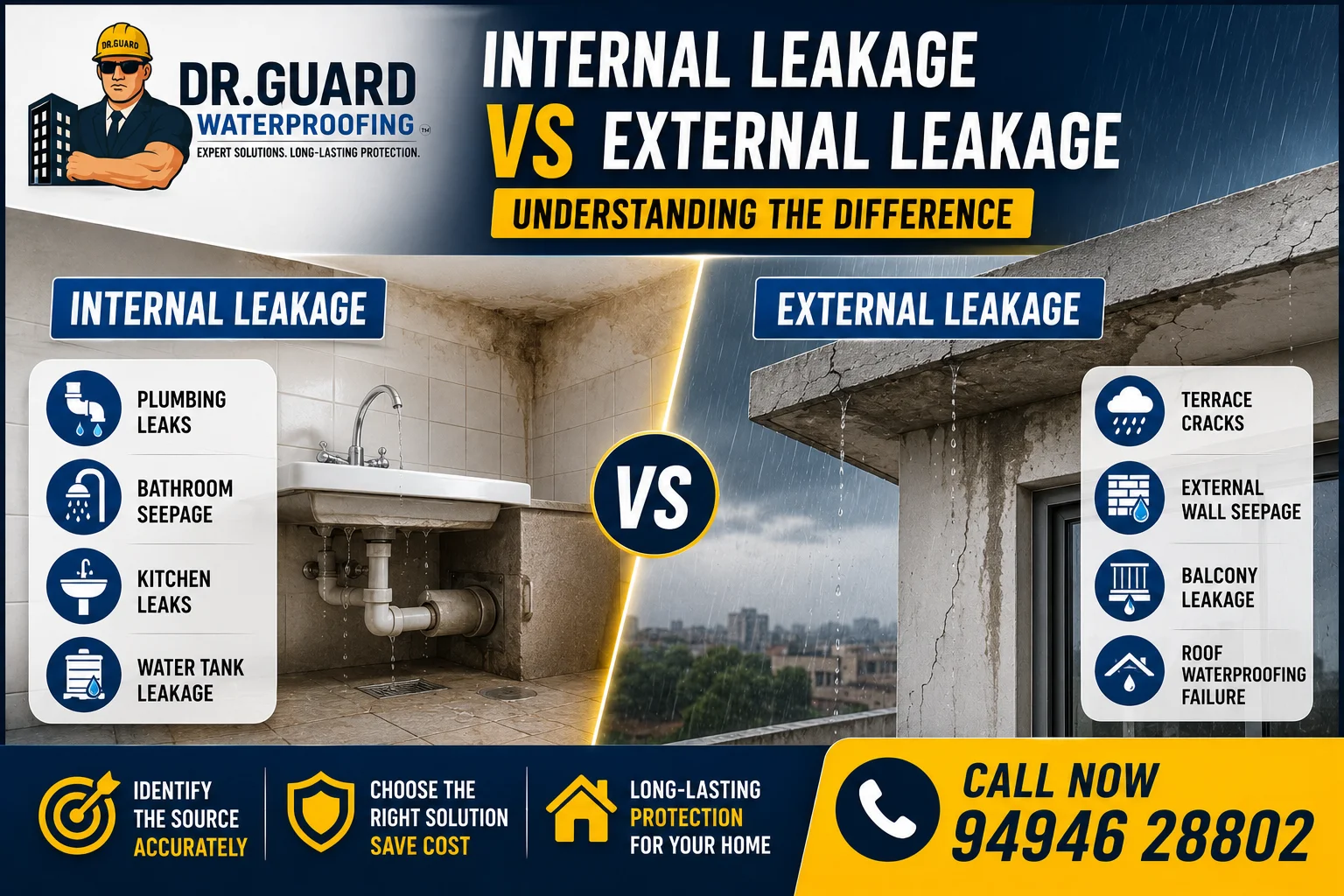
Understanding Internal Leakage vs External Leakage – Understanding the Difference can help homeowners diagnose problems more accurately, avoid unnecessary repairs, and choose the right waterproofing solution.
What is Internal Leakage?
Internal leakage occurs when water originates from within the building itself. The source is usually related to plumbing systems, bathrooms, kitchens, water tanks, or internal drainage lines.
Unlike rain-related leakage, internal leakage can occur throughout the year regardless of weather conditions.
Common Sources of Internal Leakage
- Leaking water supply pipes
- Bathroom seepage
- Kitchen plumbing leaks
- Faulty floor traps
- Overhead water tank leakage
- Drainage pipe damage
Internal leakage often develops gradually and can remain hidden for long periods.
What is External Leakage?
External leakage occurs when water enters the building from outside sources.
The most common cause is rainwater infiltration through terraces, external walls, balconies, windows, or structural cracks.
External leakage usually becomes more noticeable during the monsoon season.
Common Sources of External Leakage
- Terrace cracks
- Damaged waterproofing systems
- External wall seepage
- Balcony leakage
- Window frame gaps
- Roof waterproofing failure
External leakage is often seasonal and becomes severe during heavy rainfall.
Internal Leakage vs External Leakage – Key Differences
| Feature | Internal Leakage | External Leakage |
|---|---|---|
| Source | Inside the building | Outside the building |
| Weather Dependency | Occurs year-round | Usually worsens during rain |
| Common Areas | Bathrooms, kitchens, pipes | Terraces, walls, balconies |
| Detection | Plumbing inspection | Waterproofing inspection |
| Repair Method | Plumbing repair | Waterproofing treatment |
| Moisture Pattern | Continuous dampness | Seasonal dampness |
Understanding these differences is essential for proper diagnosis.
Signs of Internal Leakage
1. Dampness Throughout the Year
If damp patches remain visible even during dry weather, internal leakage may be the cause.
Unlike rain-related seepage, internal leaks do not depend on seasonal rainfall.
2. Increased Water Bills
A sudden increase in water consumption often indicates a hidden plumbing leak.
This is one of the clearest signs of internal leakage.
3. Bathroom or Kitchen Wall Dampness
Moisture around:
- Bathrooms
- Kitchen sinks
- Plumbing shafts
often points to internal leakage.
4. Water Stains Below Bathrooms
In apartments, leakage from upper-floor bathrooms frequently causes ceiling stains in lower units.
Signs of External Leakage
1. Leakage During Rainfall
If leakage appears only during monsoon or after heavy rain, external seepage is the most likely cause.
2. Damp External Walls
Water entering through cracks in exterior walls often creates damp patches indoors.
3. Ceiling Leakage After Rain
Top-floor apartments commonly experience leakage due to terrace waterproofing failure.
4. Mold Growth Near External Walls
Persistent moisture caused by rainwater penetration can lead to mold and fungus growth.
How to Identify Whether Leakage is Internal or External
Observe the Timing
Internal Leakage:
- Present throughout the year
- Not affected by weather conditions
External Leakage:
- Becomes worse during rainfall
- Often reduces during dry seasons
Timing can provide important clues about the source.
Check Nearby Water Sources
Inspect:
- Bathrooms
- Kitchens
- Water tanks
- Plumbing lines
If these areas are nearby, internal leakage may be responsible.
Inspect the Terrace and External Walls
Look for:
- Cracks
- Damaged waterproofing
- Water ponding
- Wall seepage
These issues usually indicate external leakage.
Why Correct Diagnosis is Important
Many homeowners waste money because they treat the wrong problem.
For example:
- Applying waterproofing will not solve a leaking pipe.
- Replacing plumbing will not stop rainwater entering through terrace cracks.
Accurate diagnosis helps ensure the correct repair method is used.
Modern Methods for Leakage Detection
Professional waterproofing companies use advanced tools to determine whether leakage is internal or external.
Thermal Scanning
Identifies hidden moisture inside walls and ceilings.
Moisture Meter Testing
Measures moisture levels and helps locate affected areas.
Plumbing Pressure Testing
Detects hidden pipe leakage.
Waterproofing Inspection
Evaluates terraces, walls, balconies, and waterproofing systems.
These methods provide accurate results without unnecessary demolition.
How to Fix Internal Leakage
Solutions may include:
- Plumbing repairs
- Pipe replacement
- Floor trap correction
- Bathroom waterproofing
- Water tank repairs
The exact solution depends on the source of leakage.
How to Fix External Leakage
Common solutions include:
- Terrace waterproofing
- Crack treatment
- External wall waterproofing
- Balcony waterproofing
- Joint sealing
Professional waterproofing helps prevent future water penetration.
Why Professional Leakage Detection Matters
Determining whether a leak is internal or external can be difficult without proper inspection.
Companies like Dr. Guard Waterproofing use advanced leakage detection techniques, thermal scanning, and waterproofing assessments to identify the exact source of moisture and recommend the most effective solution.
This helps homeowners avoid unnecessary repairs and recurring leakage problems.
Benefits of Identifying the Correct Leakage Type
- Faster repairs
- Lower maintenance costs
- Permanent leakage solutions
- Protection against structural damage
- Improved indoor comfort
- Prevention of mold and dampness
Also Read: Why Leakage Keeps Returning Even After Repairs
Conclusion
Understanding Internal Leakage vs External Leakage – Understanding the Difference is the first step toward solving water-related problems permanently. While internal leakage usually originates from plumbing systems and bathrooms, external leakage is often caused by rainwater entering through terraces, walls, and cracks.
Accurate diagnosis is essential because each type of leakage requires a different solution. By identifying the actual source and using professional waterproofing or plumbing services, homeowners can protect their properties from recurring damage and costly repairs.
Also, you can check out our social media handles on Instagram, YouTube.

